Equipment
Ingredients
Citrus Curd Base
- 3 egg yolks
- 60 g granulated sugar
- 40 ml lemon juice, freshly squeezed
- 20 ml orange juice, freshly squeezed
- 40 g unsalted butter, cubed
Genoise Sponge
- 4 eggs, room temperature
- 100 g granulated sugar
- 100 g cake flour, sifted
- 30 g unsalted butter, melted and slightly cooled
- 1 lemon, zested
- 1 orange, zested
Citrus Soak
- 50 g granulated sugar
- 30 ml lemon juice
- 30 ml orange juice
Whipped Cream Filling & Coating
- 500 ml heavy cream, cold
- 60 g powdered sugar, sifted
- 5 ml vanilla extract
Nutrition (per serving)
Method
Preheat your oven to 180°C/350°F. Line a 38x25cm jelly roll pan with parchment paper, leaving a slight overhang on the edges for easy removal. Do not grease the sides of the pan.
Prepare the citrus curd. In a small saucepan, whisk together the egg yolks, sugar, lemon juice, and orange juice. Cook over medium-low heat, whisking constantly until thickened enough to coat the back of a spoon. Remove from heat, whisk in the butter until smooth, and transfer to a bowl. Cover with plastic wrap directly touching the surface and chill completely.
Make the genoise sponge. In a stand mixer fitted with the whisk attachment, beat the whole eggs and granulated sugar on high speed until the mixture triples in volume, turns pale, and reaches the ribbon stage. This will take several minutes.
Gently fold the sifted cake flour into the egg mixture in three additions using a large spatula. In a small bowl, mix the melted butter, lemon zest, and orange zest with a large scoop of the batter to lighten the butter. Fold this butter mixture back into the main batter until just combined. Do not overmix.
Pour the batter into the prepared pan and gently level it with an offset spatula. Bake at 180°C/350°F until the cake is springy to the touch and just starting to pull away from the edges.
While the cake bakes, heavily dust a clean, smooth kitchen towel with powdered sugar. Immediately upon removing the cake from the oven, invert it onto the towel. Peel off the parchment paper. While still hot, roll the cake and towel together starting from the short end. Let it cool completely in this rolled shape.
Make the citrus soak. In a small saucepan, combine the sugar, lemon juice, and orange juice. Heat gently until the sugar is completely dissolved. Set aside to cool.
Prepare the cream. Whip the cold heavy cream, powdered sugar, and vanilla extract until stiff peaks form. Take one third of this whipped cream and gently fold it into the completely cooled citrus curd to create the filling.
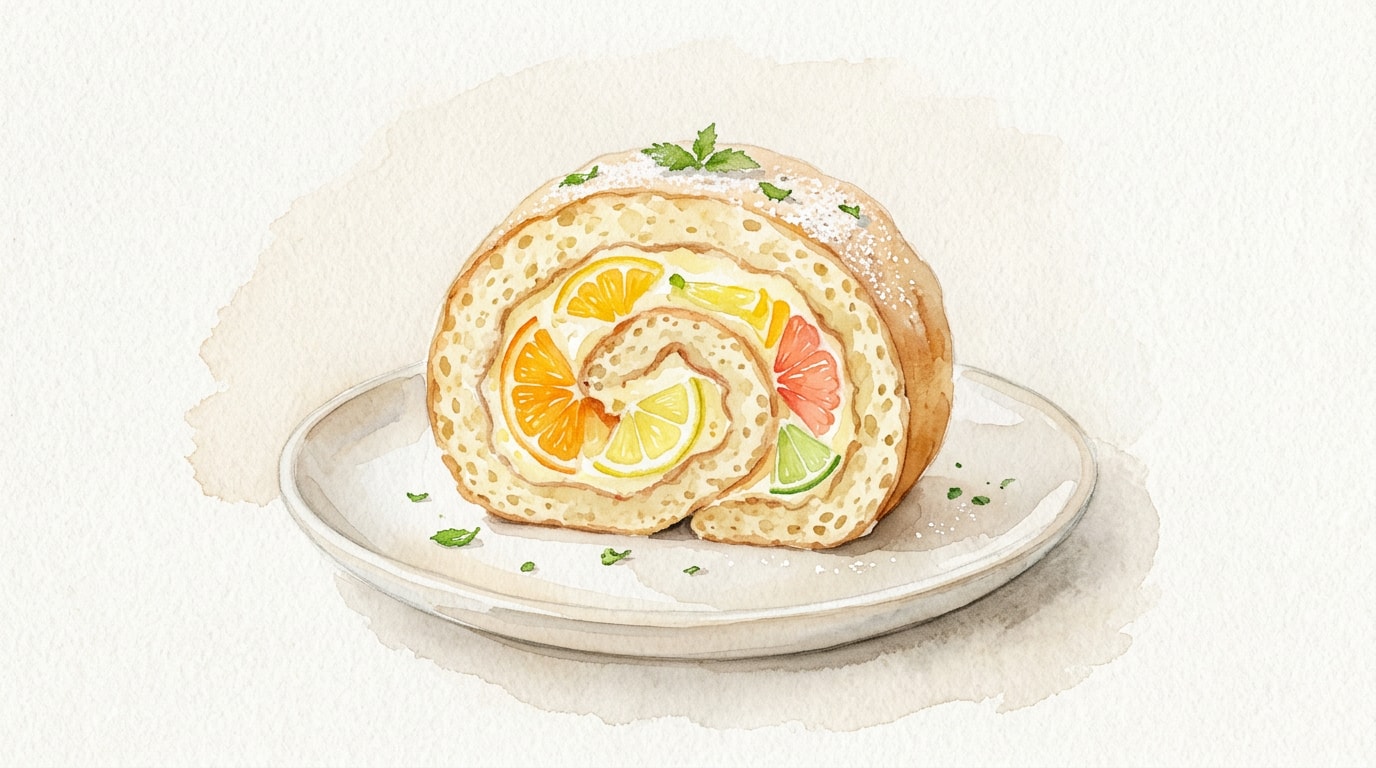
Carefully unroll the cooled cake. Brush the entire surface generously with the citrus soak. Spread the folded citrus cream filling evenly over the cake, leaving a small border at the edges. Roll the cake back up tightly, this time without the towel.
Use the remaining plain whipped cream to frost the exterior of the cake. For a winter Yule log, use a fork to drag lines through the cream to mimic tree bark, and dust with powdered sugar snow. For a spring look, smooth the cream with an offset spatula and garnish with fresh berries and edible flowers. Chill for at least 3 hours before slicing.
Chef's Notes
- Sacrificing a small amount of batter to mix with the melted butter before folding it into the main genoise helps emulsify the fat. Pouring pure melted butter directly into the aerated eggs will cause them to deflate instantly.
- The ribbon stage is crucial for a genoise, as it relies entirely on mechanical aeration. The eggs should look pale, thick, and voluminous.
- A heavy cream with a high fat content (35 percent or more) is required here so it holds its shape as both a filling and a coating. If your cream is thinner, add a tablespoon of mascarpone when whipping for extra stability.
- The citrus soak acts as an insurance policy. It not only injects a massive amount of flavor, but it also provides the moisture needed to keep the sponge flexible and prevent it from drying out in the fridge.
Storage
Refrigerator: 3 days — Keep in an airtight cake dome to prevent the cream from absorbing fridge odors.
Freezer: 1 month — Freeze uncoated. Wrap tightly in plastic wrap and foil. Thaw overnight in the fridge before coating.