Equipment
Ingredients
Dry Ingredients
- 375 g all-purpose flour
- 4 g baking powder
- 3 g baking soda
- 5 g fine sea salt
Wet Batter Ingredients
- 400 g granulated sugar
- 15 g lemon zest, freshly grated
- 225 g unsalted butter, room temperature
- 4 eggs, room temperature
- 50 g lemon flesh, minced
- 10 ml vanilla extract
- 240 g sour cream, room temperature
- 45 ml lemon juice, freshly squeezed
Lemon Soaking Syrup
- 60 ml lemon juice, freshly squeezed
- 50 g granulated sugar
Crackly Lemon Glaze
- 240 g powdered sugar, sifted
- 45 ml lemon juice, freshly squeezed
- 1 g fine sea salt
Nutrition (per serving)
Method
Preheat your oven to 175°C/350°F. Thoroughly grease the inside of the 10 to 12-cup Bundt pan using room temperature butter, ensuring every crevice is coated. Dust evenly with all-purpose flour, tapping out any excess.
In a medium mixing bowl, whisk together the all-purpose flour, baking powder, baking soda, and fine sea salt until evenly distributed.
In the bowl of a stand mixer, combine the granulated sugar and freshly grated lemon zest. Use your fingertips to massage the zest into the sugar for about 2 minutes, until the mixture is deeply fragrant, slightly damp, and resembles wet sand.
Add the room temperature unsalted butter to the lemon sugar. Fit the mixer with the paddle attachment and beat on medium-high speed until the mixture is exceptionally pale, light, and fluffy.
Reduce the mixer speed to medium. Add the eggs one at a time, allowing each to fully incorporate before adding the next. Scrape down the sides and bottom of the bowl with a rubber spatula halfway through. Mix in the finely minced lemon flesh and vanilla extract.
In a small jug or bowl, whisk the sour cream and 45ml of lemon juice together. With the mixer on its lowest speed, add the dry ingredients in three batches, alternating with the sour cream mixture in two batches, beginning and ending with the dry ingredients. Mix just until the last streaks of flour disappear.
Spoon the thick batter into the prepared Bundt pan. Smooth the top with a spatula and tap the pan firmly on the counter a few times to dislodge any air bubbles. Bake at 175°C/350°F for 55 to 65 minutes.
During the final 10 minutes of baking, prepare the soaking syrup. In a small saucepan, combine 60ml lemon juice and 50g granulated sugar over medium heat. Simmer gently just until the sugar completely dissolves, then remove from heat.
Remove the cake from the oven and let it cool in the pan on a cooling rack for exactly 10 minutes. While still in the pan, poke deep holes all over the exposed bottom surface of the cake using a wooden skewer. Use a pastry brush to paint half of the warm lemon syrup over the bottom, letting it soak in.
Carefully invert the warm cake onto the cooling rack. Poke more holes all over the top and sides of the cake. Brush the remaining syrup evenly over the exterior. Allow the cake to cool completely to room temperature before glazing.
Once the cake is completely cool, prepare the crackly glaze. In a mixing bowl, whisk the sifted powdered sugar, a pinch of fine sea salt, and 30ml of the lemon juice. Add the remaining 15ml of lemon juice drop by drop until you achieve an opaque, thick, yet pourable consistency.
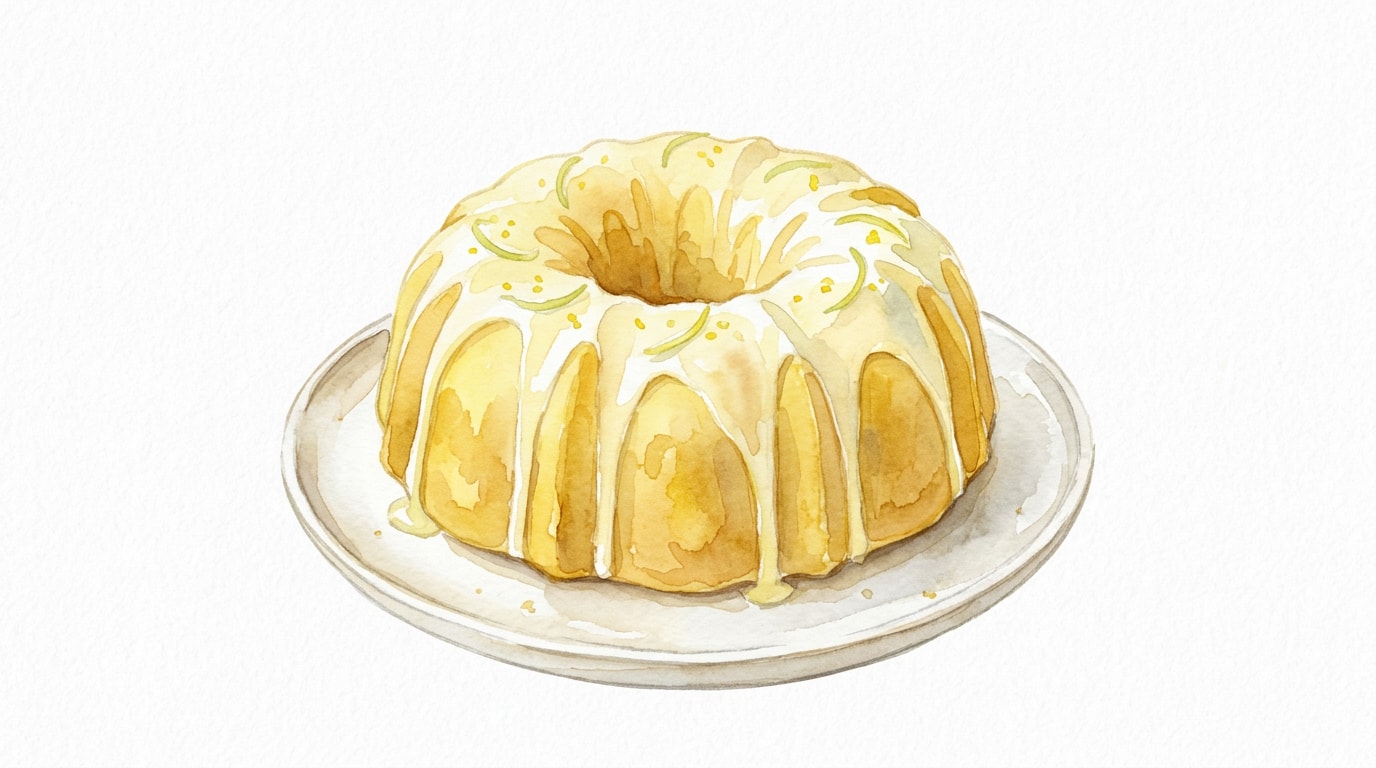
Spoon or pour the thick glaze generously over the top of the cooled cake, guiding it gently so it cascades down the fluted sides. Let the cake sit undisturbed at room temperature for at least 30 minutes so the glaze can dry into a firm, crackly shell.
Chef's Notes
- Rubbing the lemon zest into the granulated sugar is non-negotiable. This mechanical action ruptures the zest's cell walls, releasing essential oils that scent the entire batter far more effectively than stirring it in later.
- When chopping the whole lemon flesh, use a supreme cutting technique to entirely avoid the white pith, which contains intensely bitter compounds that will ruin the crumb's flavor profile.
- Baking spray with flour can be used as a shortcut for greasing the Bundt pan, but a pastry brush and soft butter ensures no detail of an intricate pan is missed.
- The soaking syrup serves a dual purpose: it imbues the cake with a massive hit of tart flavor and locks moisture inside the crumb, which extends the cake's shelf life.
- For the crispiest, crackliest glaze, ensure your powdered sugar is fully sifted and apply the glaze thick. The evaporation of the lemon juice leaves behind a beautiful crystallized shell.
Storage
Refrigerator: 5 days — Keep tightly wrapped in plastic wrap or stored in an airtight cake dome to prevent the crumb from drying out.
Freezer: 3 months — Freeze unglazed or with hardened glaze. Double wrap the whole cake or individual slices in plastic wrap, then aluminum foil.
Reheating: Thaw overnight in the refrigerator or at room temperature for 3 to 4 hours before serving. Do not heat if glazed, as the sugar shell will melt.