Equipment
Ingredients
Hot Water Crust Pastry
- 250 g all-purpose flour
- 100 g strong bread flour
- 100 g lard, cubed
- 120 ml water
- 5 g fine sea salt
- 1 chicken egg, beaten, for egg wash
Pork Filling
- 350 g pork shoulder, coarsely minced
- 100 g pork belly, finely minced
- 60 g smoked back bacon, very finely chopped
- 3 g fine sea salt
- 2 g ground white pepper
- 1 g ground mace
- 1 g fresh sage, finely chopped
Center & Jelly Finish
- 6 quail eggs
- 150 ml chicken stock, high-quality, warm
- 2 g gelatine leaf
Nutrition (per serving)
Method
Carefully lower the quail eggs into boiling water and cook for exactly 2 minutes and 15 seconds. Immediately transfer them to an ice bath to halt the cooking process. Once completely cold, gently peel the eggs and set them aside.
In a large mixing bowl, combine the minced pork shoulder, pork belly, smoked bacon, salt, white pepper, ground mace, and fresh sage. Knead the mixture together with your hands for a few minutes until it becomes tacky and cohesive.
Place the all-purpose flour, bread flour, and salt into a mixing bowl. In a saucepan, heat the water and cubed lard over medium-high heat until the lard is completely melted and the liquid reaches a rolling boil. Immediately pour the boiling mixture over the flours.
Stir the flour and liquid together vigorously with a wooden spoon until a shaggy dough forms. Once it is cool enough to handle, turn it out onto a work surface and knead gently until smooth. Work quickly, as hot water crust pastry must be shaped while warm.
Divide the warm dough into six equal pieces. Pinch off roughly one-third of each piece to reserve for the pie lids, keeping the reserved pieces covered under a warm, damp towel. Press the larger portions into the holes of a deep muffin tin, using your fingers to press the dough up the sides to form an even, distinct cup shape.
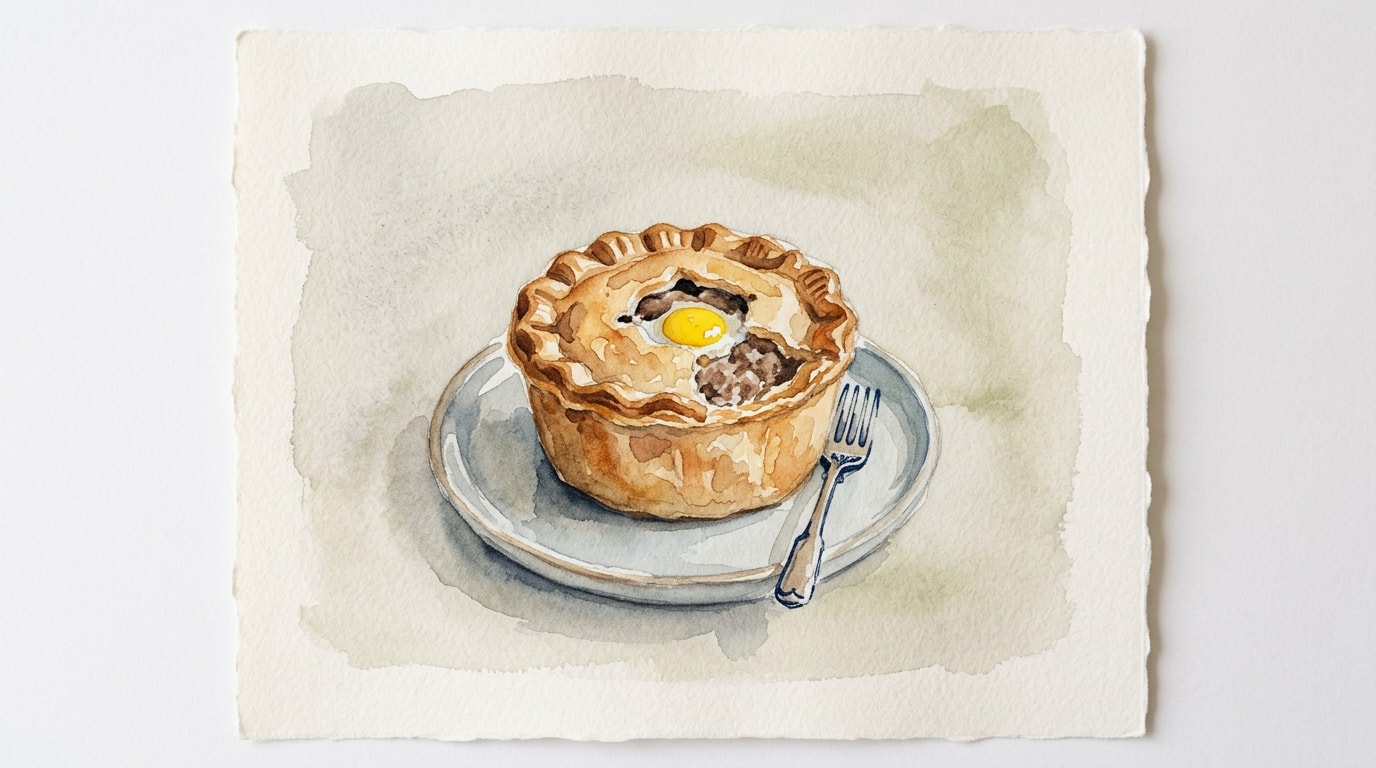
Place a small spoonful of the pork mixture into the bottom of each pastry case. Stand one peeled quail egg upright perfectly in the center, then carefully pack the remaining pork mixture around and over the egg, leaving a slight gap between the meat and the top edge of the pastry.
Roll out the reserved pastry balls to form flat lids. Brush the top inside edges of the pastry cases with the beaten chicken egg, place the lids on top, and crimp the edges firmly together to seal completely. Use a skewer to poke a 5mm steam hole directly in the center of each lid, then brush the entire top with the egg wash.
Bake in a preheated oven at 200 degrees Celsius (400 degrees Fahrenheit) for 20 minutes, then reduce the oven temperature to 180 degrees Celsius (350 degrees Fahrenheit) and bake for a further 25 minutes. Ensure raw meat handling protocols were followed prior to baking. The internal meat temperature must reach 74 degrees Celsius (165 degrees Fahrenheit).
Remove the pies from the oven, gently extract them from the muffin tin, and set them on a wire rack to cool completely for at least 2 hours. Meanwhile, soak the gelatine leaf in cold water until soft, then dissolve it into the warm chicken stock to create the savory jelly.
Using a small funnel or a syringe, carefully pour the slightly warm savory jelly through the central steam hole of each cooled pie until the cavity between the meat and pastry is completely filled. Transfer to the refrigerator and chill overnight to set.
Chef's Notes
- Using a deliberate mix of lean pork shoulder and fatty pork belly ensures the filling remains succulent while providing enough structure to slice cleanly.
- When boiling quail eggs, the timing of exactly 2 minutes and 15 seconds followed by an aggressive ice bath yields a perfectly cooked yolk that will remain tender during the secondary baking phase.
- Meat eaten cold requires significantly more seasoning than meat served hot. Do not shy away from the white pepper and mace; they provide the classic savory profile.
- The savory jelly serves a critical dual purpose: it fills the structural gap left when the meat shrinks during baking, and it helps preserve the pie by sealing out oxygen.
Storage
Refrigerator: 5 days — Keep tightly wrapped in parchment paper or in an airtight container.