Equipment
Ingredients
Genoise Sponge
- 6 eggs, room temperature
- 200 g granulated sugar
- 200 g all-purpose flour
- 60 g unsalted butter, melted and slightly cooled
- 10 ml vanilla extract
- 2 g salt
Coffee Soak
- 150 ml espresso, hot
- 50 ml coffee liqueur
- 30 g granulated sugar
Mascarpone Cream
- 500 g mascarpone cheese, cold
- 400 ml heavy cream, very cold
- 120 g powdered sugar, sifted
- 10 ml vanilla extract
Garnish
- 20 g unsweetened cocoa powder
- 40 g dark chocolate, shaved or finely grated
Nutrition (per serving)
Method
Preheat the oven to 175 degrees C or 350 degrees F. Grease two 20cm round cake pans and line the bottoms with parchment paper.
In a stand mixer fitted with the whisk attachment, beat the room temperature eggs, 200g of granulated sugar, and salt on medium-high speed until the mixture triples in volume, turns very pale, and reaches the ribbon stage. This will take about 8 to 10 minutes.
Using a fine mesh sieve, sift one third of the flour over the egg mixture. Gently fold it in using a silicone spatula, drawing a figure-eight motion from the bottom to the top to avoid deflating the eggs. Repeat with the remaining flour in two more batches.
Transfer about 1 cup of the batter into a small bowl and whisk it together with the melted butter and 10ml of vanilla extract until smooth. Gently fold this butter mixture back into the main batter just until incorporated.
Divide the batter evenly between the prepared 20cm round cake pans. Smooth the tops gently.
Bake at 175 degrees C or 350 degrees F for 25 to 30 minutes, or until the cakes are golden brown and spring back when lightly pressed in the center.
Remove from the oven and let cool in the pans for 10 minutes. Turn out onto a wire cooling rack, remove the parchment paper, and cool completely.
While the cakes cool, prepare the coffee soak. In a mixing bowl, combine the hot espresso and 30g of granulated sugar, stirring until dissolved. Stir in the coffee liqueur if using, then set aside to cool completely.
To make the mascarpone cream, place the cold mascarpone, heavy cream, powdered sugar, and 10ml of vanilla extract in a large mixing bowl. Beat on medium speed with an electric hand mixer or stand mixer just until stiff peaks form. Do not overmix or it will curdle.
Using a serrated knife, carefully slice each cooled cake in half horizontally to create four even layers.
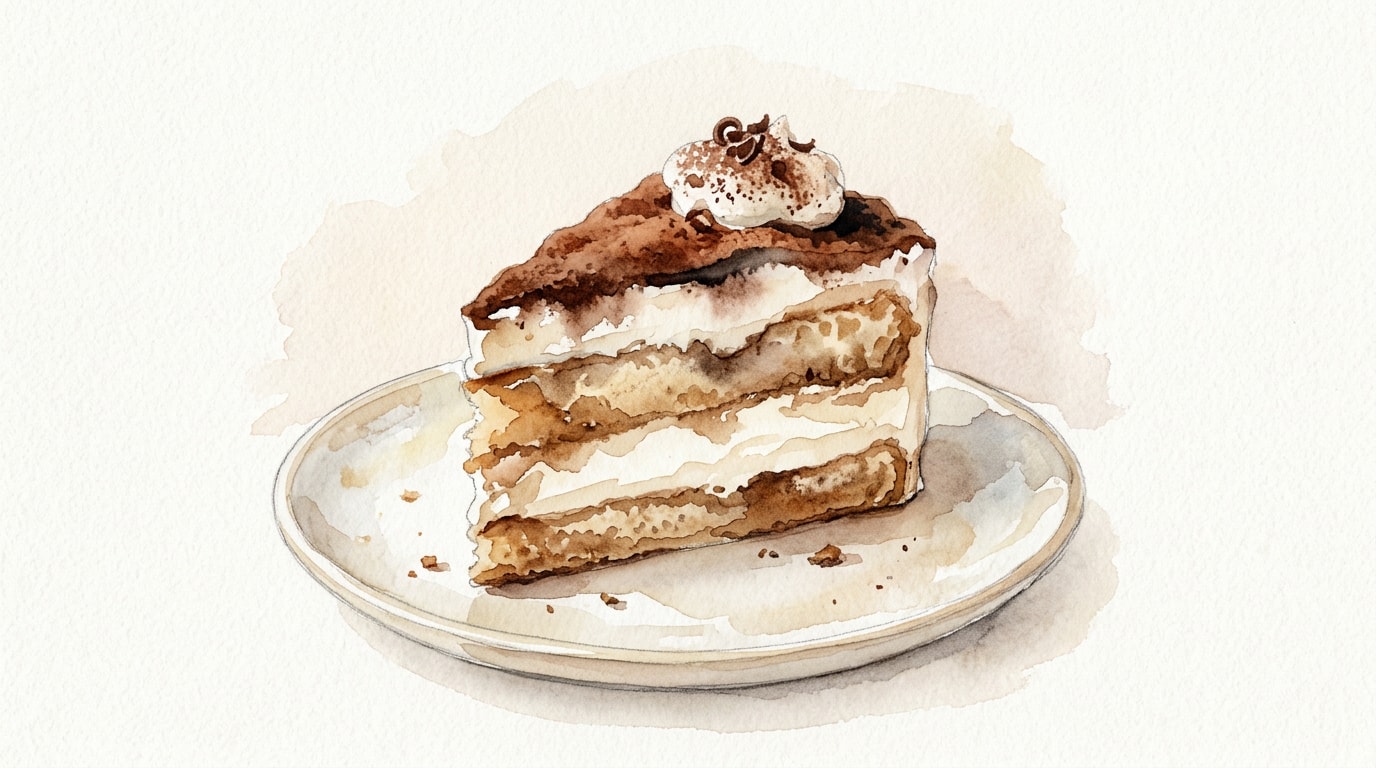
Place the first cake layer on a serving platter. Generously brush the top with the coffee soak using a pastry brush. Spread a layer of mascarpone cream about 1 centimeter thick evenly over the soaked cake using an offset spatula. Repeat this process with the next three layers.
Use the remaining mascarpone cream to frost the top and sides of the cake smoothly, or leave the sides bare for a naked cake look.
Refrigerate the assembled cake for at least 4 hours, or preferably overnight, to allow the layers to meld and the cream to set firmly.
Just before serving, use a fine mesh sieve to generously dust the top of the cake with unsweetened cocoa powder. Sprinkle the dark chocolate shavings over the cocoa.
Chef's Notes
- To achieve the highest volume when whipping eggs for genoise, you can warm the eggs and sugar gently over a double boiler to about 40 degrees C before whipping.
- Do not over-soak the very edges of the cake layers. The espresso syrup naturally migrates outward as the cake rests, and keeping the edges slightly drier prevents structural collapse.
- This recipe omits the raw egg yolks traditionally found in zabaglione. This substitution guarantees superior structural stability for a layer cake and ensures food safety for longer refrigeration.
- Always dust the cocoa powder right before serving. The moisture from the mascarpone cream will eventually hydrate the cocoa, turning it dark and less visually appealing over time.
Storage
Refrigerator: 3 days — Store in an airtight cake dome to prevent the mascarpone cream from absorbing fridge odors.