Equipment
* optional
Ingredients
Macerated Strawberries
- 600 g strawberries, hulled and halved
- 20 g caster sugar
- 10 ml lemon juice, freshly squeezed
Rose Pouring Custard
- 200 ml whole milk
- 100 ml heavy cream
- 4 egg yolks
- 40 g caster sugar
- 10 ml rose water
- 5 g vanilla bean paste
Nutrition (per serving)
Method
Combine the hulled strawberries, 20g caster sugar, and lemon juice in a mixing bowl. Toss gently and set aside at room temperature to macerate and release their juices.
In a medium saucepan, combine the whole milk, heavy cream, and vanilla bean paste. Heat over medium-low heat until steaming and tiny bubbles form around the edges, reaching approximately 80 degrees Celsius or 175 degrees Fahrenheit. Do not let it boil.
In a heatproof bowl, whisk the egg yolks and 40g caster sugar together until pale and slightly thickened.
Gradually pour the hot milk mixture into the egg yolks in a slow, steady stream while whisking continuously to temper the eggs and prevent scrambling.
Return the combined mixture to the saucepan. Cook over low heat, stirring constantly with a spatula, until the custard thickens enough to coat the back of a spoon and registers 82 degrees Celsius or 180 degrees Fahrenheit on a thermometer.
Immediately pour the custard through a fine mesh strainer into a clean heatproof bowl to remove any cooked egg bits and stop the cooking process.
Stir the rose water into the warm strained custard. Adjust the amount to taste, as rose water strength varies significantly by brand.
Cover the custard with plastic wrap pressed directly against the surface to prevent a skin from forming. Chill in the refrigerator until cool.
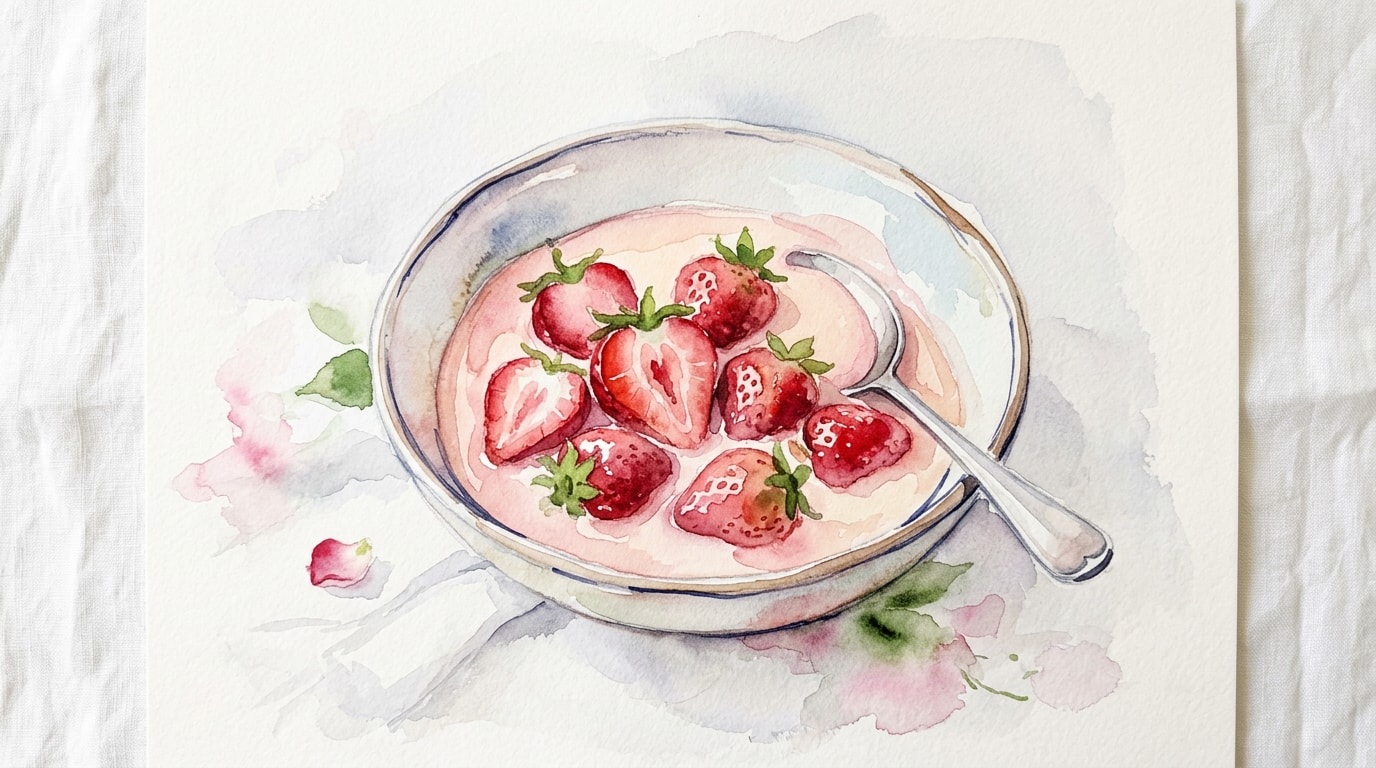
Divide the macerated strawberries among serving bowls and pour the chilled rose custard generously over the top.
Chef's Notes
- Rose water is highly volatile and its flavor can dissipate if boiled. Always stir it into the custard after it has been removed from the heat.
- Macerating the strawberries with a touch of lemon juice not only draws out their natural syrups but also provides a necessary acidic contrast to the rich, floral custard.
- For the creamiest texture, pass your egg yolks through a fine sieve before whisking them with sugar to remove the chalazae, which are the white stringy bits.
- Pressing plastic wrap directly onto the surface of the warm custard prevents a rubbery skin from forming as it cools.
Storage
Refrigerator: 3 days — Store custard in an airtight container with plastic wrap touching the surface.