Equipment
Ingredients
Dry Ingredients
- 180 g rice flour
- 40 g glutinous rice flour
- 10 g baking powder
- 3 g fine sea salt
Wet Batter Base
- 115 g cream cheese, softened at room temperature
- 50 g granulated sugar
- 60 g unsalted butter, melted and cooled slightly
- 240 ml full-fat coconut milk, well stirred
- 4 egg yolk, room temperature
Meringue
- 4 egg white, room temperature
- 2 g cream of tartar
- 60 g granulated sugar
Toppings and Wrapping
- 1 banana leaves
- 2 salted duck egg, cooked, shelled, and sliced into wedges
- 30 g parmesan cheese, freshly grated
- 20 g unsalted butter, melted
Nutrition (per serving)
Method
Using tongs, gently pass the banana leaf circles over a medium gas flame or hot electric burner for 2 to 3 seconds until they turn glossy and pliable. Press the wilted leaves into the cups of a jumbo muffin tin to line them completely.
Preheat the oven to 190°C/375°F. Position a baking rack in the lower middle position.
In a medium mixing bowl, whisk together the rice flour, glutinous rice flour, baking powder, and fine sea salt. Set aside.
In a large mixing bowl, beat the softened cream cheese and 50g of granulated sugar using an electric hand mixer until smooth and creamy. Beat in the egg yolks one at a time, followed by the melted butter and full-fat coconut milk until well combined.
Gradually add the dry ingredient mixture to the wet batter, mixing on low speed just until the batter is smooth and free of lumps. Do not overmix.
In a separate, perfectly clean mixing bowl, whip the egg whites and cream of tartar on medium speed until frothy. Gradually add the remaining 60g of granulated sugar, whipping on high speed until firm, glossy peaks form.
Using a silicone spatula, gently fold one-third of the whipped egg whites into the batter to lighten it. Delicately fold in the remaining egg whites in two batches, being careful to maintain as much air as possible.
Divide the airy batter evenly among the banana leaf-lined muffin cups, filling them almost to the top. Gently lay 2 to 3 wedges of salted duck egg on the surface of each cake.
Bake at 190°C/375°F for 15 minutes. Quickly and carefully remove the tin from the oven, sprinkle the grated Parmesan cheese evenly over the tops, and return to the oven. Bake for an additional 10 minutes, or until the cakes are puffed, deeply golden on top, and a toothpick inserted into the center comes out clean.
Remove the bibingka from the oven and immediately brush the tops generously with the extra melted butter while they are still piping hot.
Allow the cakes to cool in the tin for 10 minutes before carefully lifting them out using the edges of the banana leaves. Serve warm.
Chef's Notes
- Ensuring your cream cheese, coconut milk, and eggs are at room temperature is critical. Cold ingredients will cause the melted butter to seize, resulting in a lumpy batter.
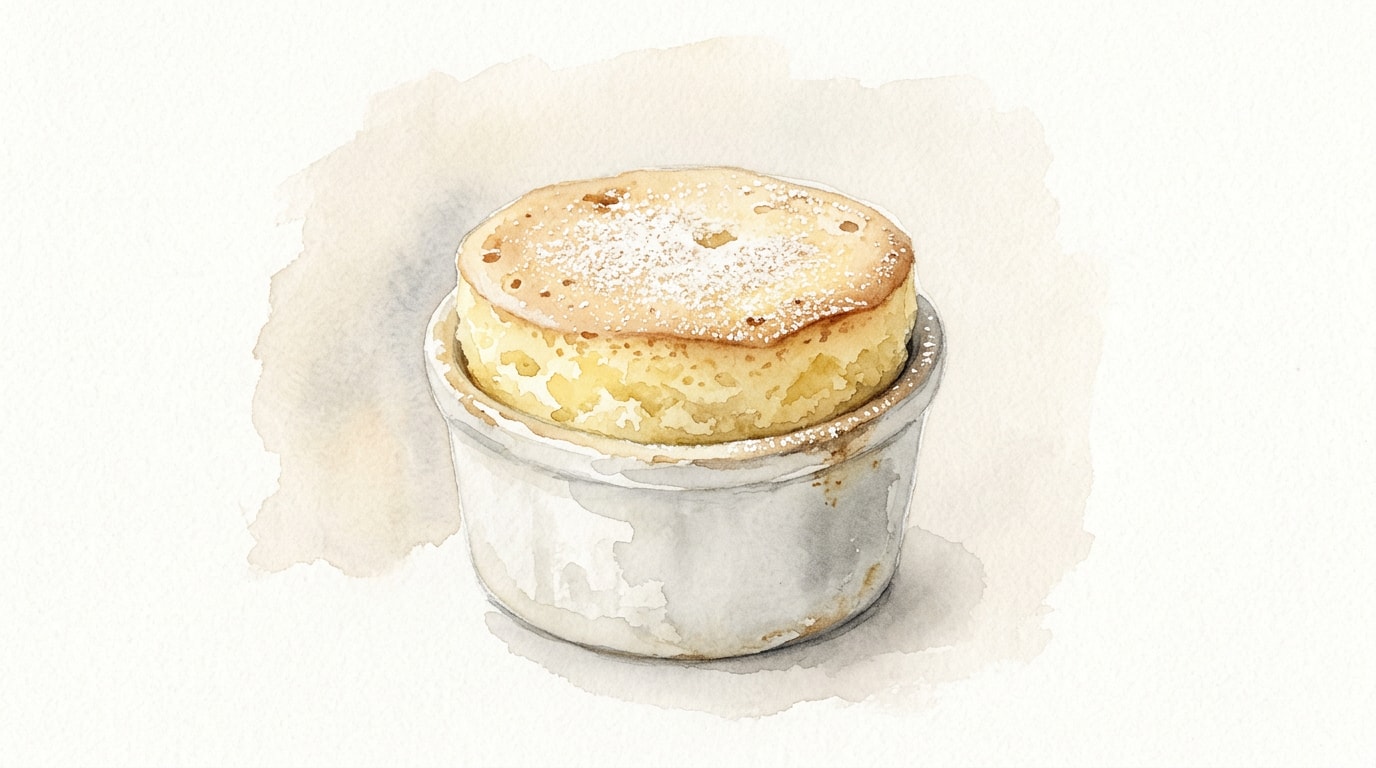
- Whipping the egg whites separately is a non-traditional step that transforms standard dense rice cake batter into a brilliant, soufflé-like hybrid. The cream of tartar provides acidic stabilization for the meringue.
- The subtle, tea-like aroma of toasted banana leaves is essential for authentic flavor. Do not skip the wilting step, as it also prevents the leaves from snapping.
- To accurately cut banana leaf circles without a template, find a bowl or large mug roughly 6 inches in diameter, place it over the washed leaf, and trace with a sharp paring knife.
- Salted duck eggs bring a rich, cured umami element that cuts through the sweetness and richness of the coconut milk and cream cheese. Look for them pre-cooked in Asian supermarkets.
Storage
Refrigerator: 3 days — Wrap tightly in plastic film or store in an airtight container to prevent the rice flour from drying out and becoming hard.
Freezer: 1 month — Wrap each cake individually in plastic film, then place in a freezer-safe bag.
Reheating: Microwave for 20 to 30 seconds wrapped in a lightly damp paper towel, or steam for 5 minutes until soft and warm.