Equipment
* optional
Ingredients
Dough
- 500 g bread flour, 12-14% protein content
- 325 ml water, cold (approx 10°C/50°F)
- 13 g fine sea salt
- 2 g instant yeast
- 15 ml olive oil
Nutrition (per serving)
Method
Place the cold water in your large mixing bowl. Add the instant yeast and stir gently to dissolve. (If using Active Dry Yeast, let it bloom for 5 minutes).
Add the bread flour to the water. Mix by hand or with a strong spoon until no dry flour remains and a shaggy, rough mass forms. Cover and let rest for 20 minutes.
Sprinkle the salt (and olive oil if using) over the dough. Knead inside the bowl or on a clean surface for 5-7 minutes until the dough becomes smooth, elastic, and passes the windowpane test.
Form the dough into a large tight ball. Place it back in the bowl, cover tightly, and let it rise at room temperature (approx 21°C/70°F) for 2 hours, or until it has increased in volume by about 50%.
Divide the dough into 3 equal pieces (approx 285g each). Shape each piece into a tight, smooth ball by pulling the surface taut and pinching the seam underneath.
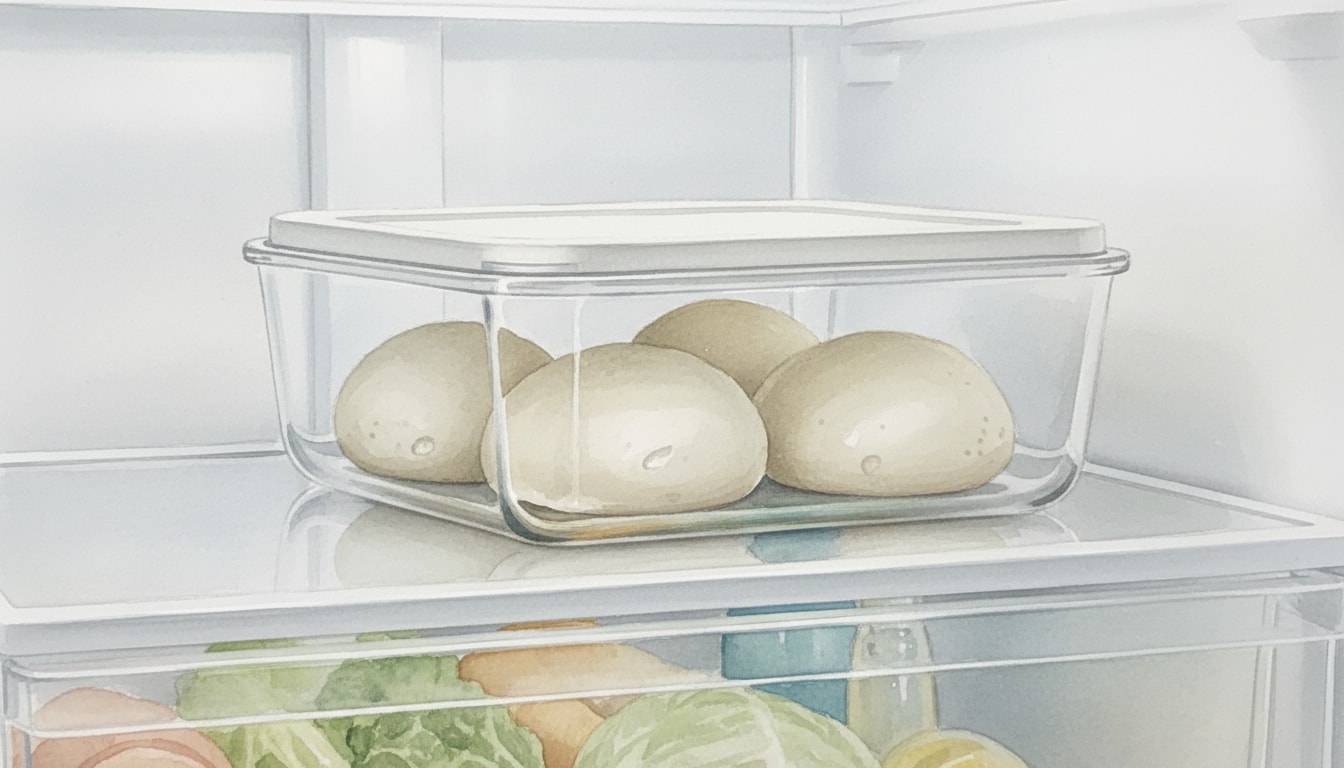
Lightly oil your individual storage containers or a baking tray. Place the dough balls inside, cover airtight, and place in the refrigerator for 24 to 72 hours.
On the day of baking, remove the dough from the fridge 2-3 hours before you plan to bake. The dough must come to room temperature to relax the gluten, otherwise, it will be impossible to stretch.
Chef's Notes
- Cold fermentation inhibits yeast activity while allowing enzymes (protease and amylase) to break down proteins and starches. This results in better browning and a crust that is easier to digest.
- If you want a more 'New York' style crust with distinct browning at lower home-oven temps (260°C/500°F), add 1 tsp of sugar or diastatic malt powder to the dry mix.
- Handle the dough gently after the cold ferment. Push air from the center to the rim (cornicione) to preserve those precious bubbles created during the long rest.
Storage
Refrigerator: 4 days — Best used between 48 and 72 hours; flavor creates diminishing returns after 96 hours.
Freezer: 3 months — Freeze after the balling stage. Thaw overnight in the fridge.