Equipment
Ingredients
Eggs
- 3 large eggs, room temperature
- 15 g unsalted butter, diced cold
- 2 g flaky sea salt
- 1 g black pepper, freshly cracked
- 3 g fresh chives, finely chopped
Toast
- 1 thick-cut bread, sliced
- 10 g unsalted butter, softened
Nutrition (per serving)
Method
Crack the eggs into a mixing bowl and whisk vigorously until the yolks and whites are completely homogenized and slightly aerated.
Place the diced cold butter into a small saucepan over medium-low heat. Once it begins to melt, pour in the whisked eggs.
Stir the eggs constantly with a silicone spatula, making sure to scrape the bottom and sides of the pan. If they begin to cook too quickly or stick, pull the pan off the heat for 20 seconds while continuing to stir.
While the eggs are cooking, toast the bread until golden brown.
Remove the eggs from the heat slightly before they reach your desired consistency, as they will continue to cook from residual heat. Immediately stir in the flaky sea salt.
Spread the softened butter evenly over the warm toast.
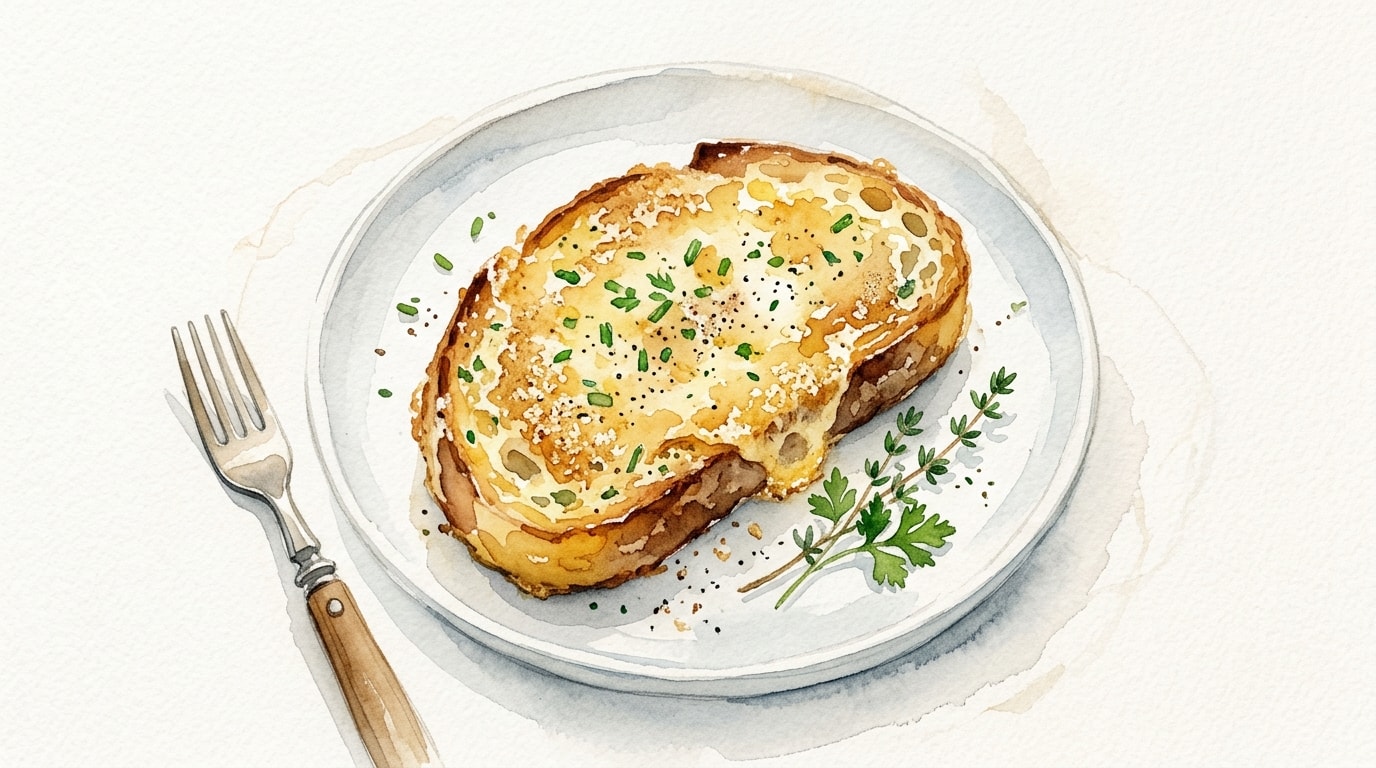
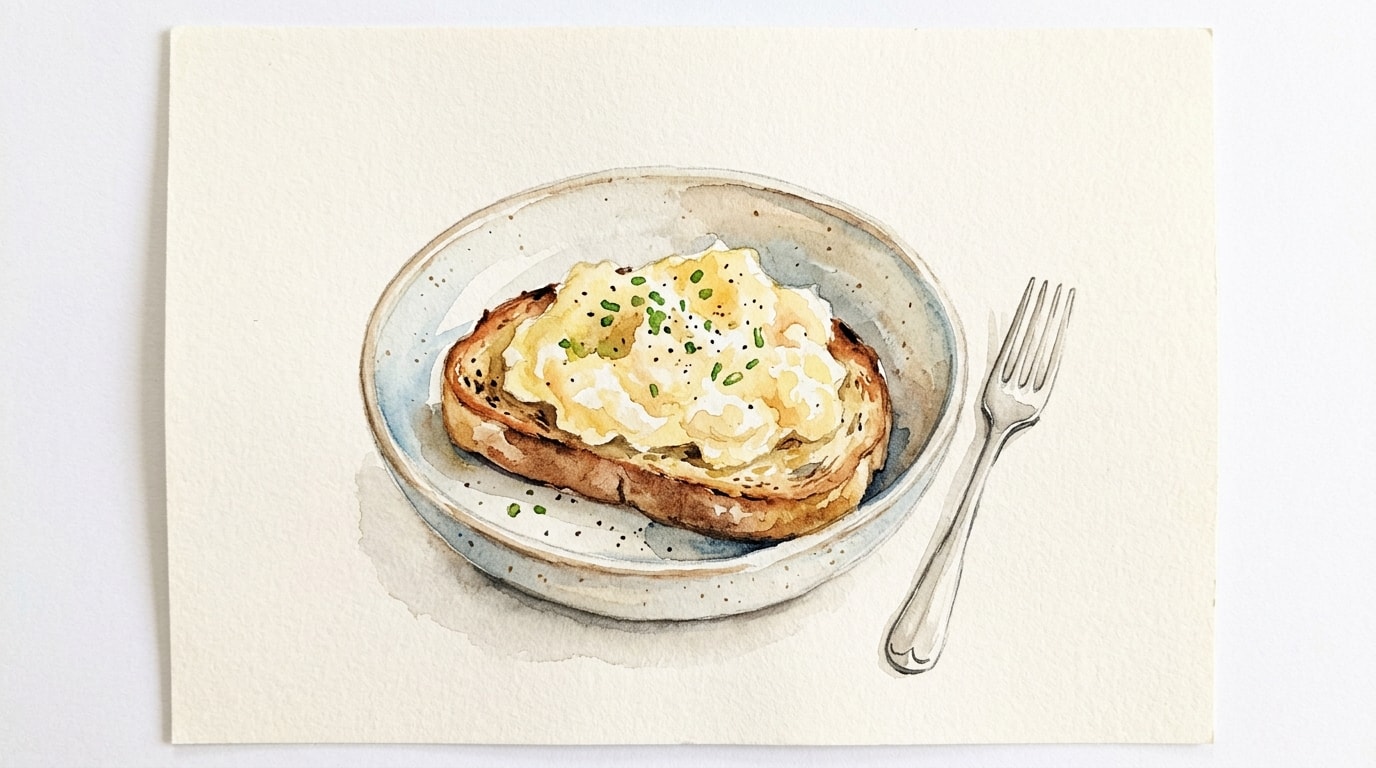
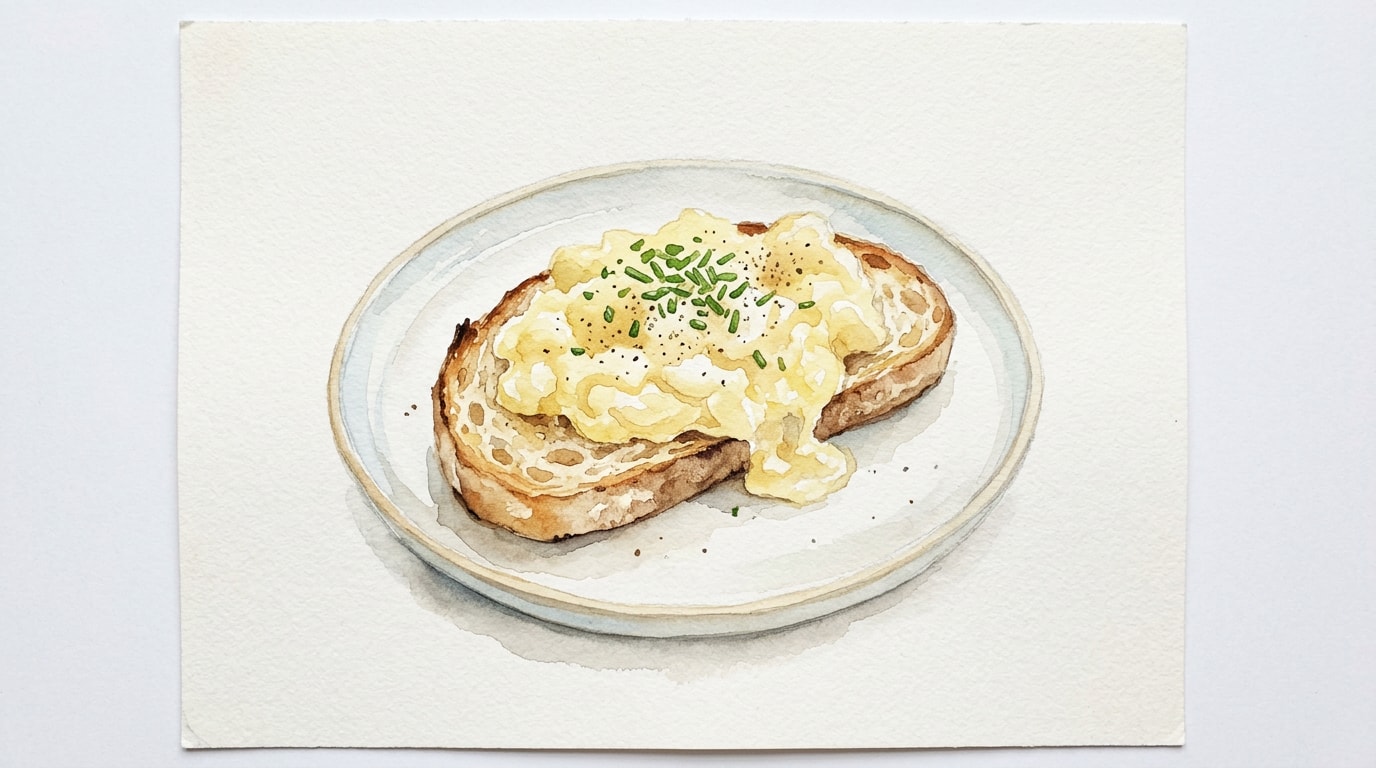
Gently spoon the scrambled eggs over the buttered toast. Garnish with cracked black pepper and finely chopped chives, if using. Serve immediately.
Chef's Notes
- Using a small saucepan rather than a wide skillet reduces the surface area, slowing down evaporation and resulting in much creamier eggs.
- Do not salt the eggs before cooking. Salting early can draw out moisture and cause the curds to become watery. Always season at the very end.
- Carry-over cooking is the most important concept in scrambled eggs. The residual heat of the pan and the eggs themselves will continue to cook the mixture for another 30 to 60 seconds after removal from the stove.
- For an extra decadent touch, stir in a teaspoon of crème fraîche or heavy cream right off the heat to halt the cooking process and add richness.