Equipment
Ingredients
Pudding Base
- 1200 g watermelon, cubed, seeds removed
- 80 g sugar
- 70 g cornstarch
Flavoring and Garnish
- 15 ml lemon juice, freshly squeezed
- 15 ml rose water
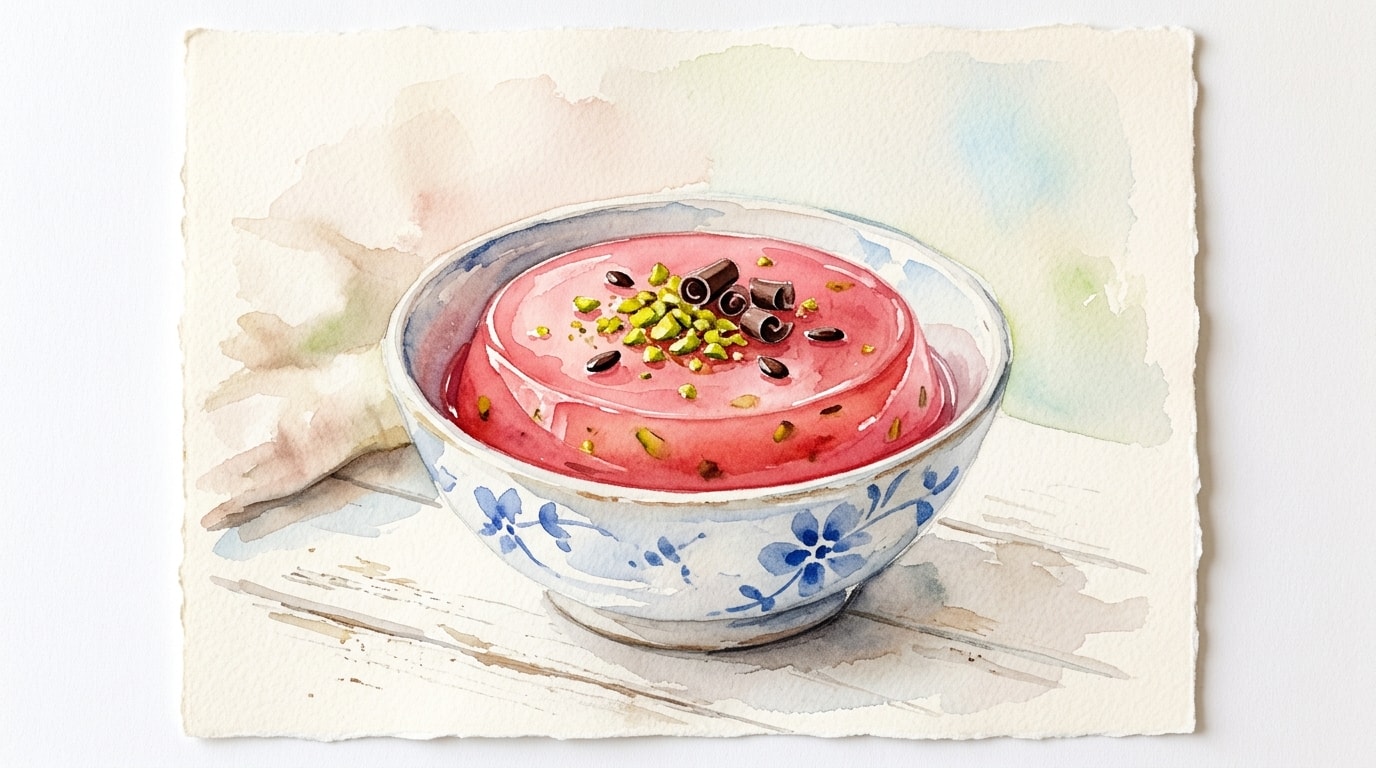
- 30 g pistachios, shelled, unsalted, roughly chopped
Nutrition (per serving)
Method
Place the cubed watermelon in a blender and puree until completely smooth.
Pour the pureed watermelon through a fine mesh strainer set over a bowl. Press gently to extract the juice and discard the fibrous pulp. Measure out exactly 800ml of the strained liquid.
In a medium saucepan off the heat, combine the sugar and cornstarch. Whisk in a small splash of the watermelon juice to form a smooth paste, then slowly whisk in the remaining juice until perfectly combined.
Place the saucepan over medium heat. Cook the mixture, whisking constantly to prevent the cornstarch from settling. Bring it to a gentle simmer around 90C or 195F. Once it thickens and changes from opaque pink to a deep, glossy translucent red, cook for 2 more minutes, then remove from heat.
Stir the fresh lemon juice and rose water into the hot mixture.
Divide the hot pudding evenly among four ramekins. Let them cool at room temperature for 30 minutes, then cover with plastic wrap and refrigerate until fully set.
Serve chilled, straight from the ramekins, garnished with the chopped pistachios.
Chef's Notes
- The quality of this dessert hinges entirely on the watermelon. Choose a heavy melon with a large yellow field spot for the best sweetness and flavor.
- For an ultra-smooth texture, skim the pink foam off the surface of the juice before cooking the mixture.
- If you wish to unmold the puddings onto small plates, lightly moisten the inside of the ramekins with cold water before pouring in the hot mixture.
- The most traditional Sicilian preparation uses fresh jasmine flowers instead of rose water. To do this, steep a handful of fresh, unsprayed jasmine blossoms in the cold watermelon juice overnight, then strain before proceeding with the recipe.
Storage
Refrigerator: 3 days — Cover tightly with plastic wrap directly touching the surface to prevent a skin from forming.