Equipment
Ingredients
Sago Base
- 100 g small tapioca pearls
- 1000 ml water
Pandan Palm Sugar Syrup
- 150 g palm sugar, chopped or shaved
- 100 ml water
- 2 fresh pandan leaves, tied into a knot
Coconut Milk Cream
- 400 ml full-fat coconut milk
- 1 g salt
Nutrition (per serving)
Method
Bring 1000ml of water to a rolling boil at 100°C/212°F in a medium saucepan. Slowly pour in the tapioca pearls while stirring continuously to prevent them from sticking together. Reduce heat to medium and simmer until the pearls are mostly translucent with a tiny white dot in the center.
Turn off the heat, cover the saucepan tightly with a lid, and let the pearls sit undisturbed in the hot water until they are completely translucent and the white cores have vanished.
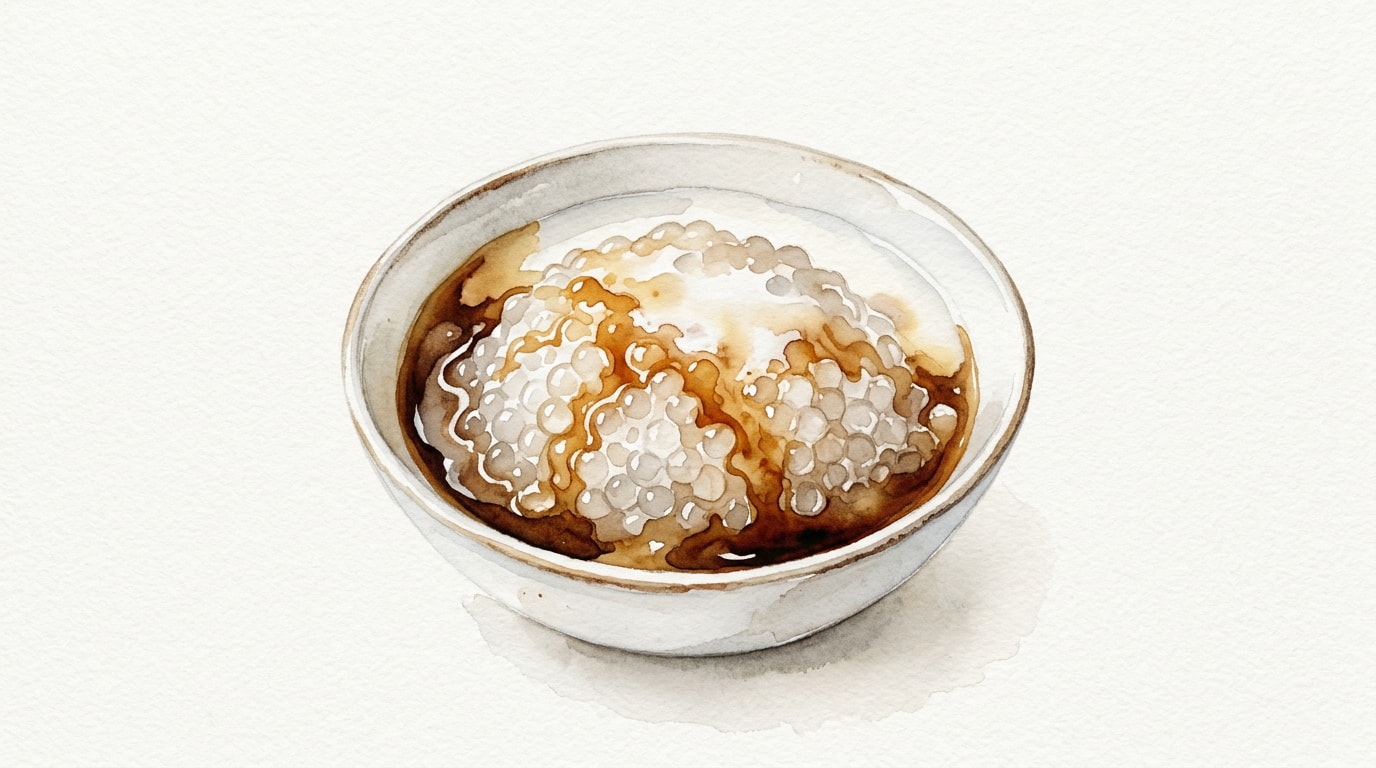
Pour the cooked sago through a fine mesh strainer. Rinse thoroughly under cold running water for a full minute, tossing gently. This stops the cooking process and removes excess surface starch. Divide the sago evenly among four serving bowls or glasses and chill in the refrigerator.
In a small saucepan, combine the palm sugar, 100ml of water, and the knotted pandan leaves. Heat over medium heat, stirring occasionally, until the mixture reaches a simmer at roughly 95°C/203°F and the sugar is completely dissolved. Continue to simmer for two minutes until slightly thickened. Remove the pandan leaves and let the syrup cool.
In a separate bowl, briskly whisk the full-fat coconut milk and salt together until the mixture is completely smooth and any separated coconut cream is fully incorporated.
To serve, pour a quarter of the salted coconut milk over each chilled portion of sago. Provide the cooled pandan palm sugar syrup on the side, or drizzle it directly into the bowls so diners can stir it in according to their preferred sweetness level.
Chef's Notes
- Always add tapioca pearls directly to boiling water, never cold. Adding them to cold water will cause them to instantly dissolve into a starchy paste.
- Rinsing the cooked pearls in cold water is a critical step; it halts the cooking process to preserve their chewiness and strips away sticky starch so they remain distinct.
- Authentic Gula Melaka has a complex, smoky caramel profile. If you must substitute dark brown sugar, consider adding a tiny fraction of molasses to mimic that earthy depth.
- A touch of salt in the coconut milk is not a mistake; it acts as a savory counterbalance that amplifies the richness of the coconut and the deep sweetness of the syrup.
Storage
Refrigerator: 3 days — Store the cooked sago, coconut milk, and syrup in separate airtight containers.