Equipment
Ingredients
Produce
- 40 g sweet basil, fresh leaves only, washed and thoroughly dried
- 20 g lemon basil, fresh leaves only
- 2 garlic, peeled
Pantry and Nuts
- 70 g pecan halves, raw
- 120 ml extra virgin olive oil, high quality
- 3 g kosher salt
- 1 g black pepper, freshly ground
Dairy and Citrus
- 50 g vegetarian parmesan cheese, freshly grated
- 15 ml lemon juice, freshly squeezed
Nutrition (per serving)
Method
Place the raw pecan halves in a dry skillet over medium heat, approximately 175C or 350F. Toast for 5 minutes, stirring frequently, until they become fragrant and slightly darker in color.
Remove the toasted pecans from the skillet immediately and transfer them to a plate to cool completely to room temperature. This takes about 10 minutes and prevents residual heat from oxidizing the delicate basil leaves.
Add the completely cooled pecans and peeled garlic cloves to the bowl of a food processor. Pulse several times until the mixture is coarsely chopped.
Add the sweet basil, lemon basil, grated vegetarian parmesan cheese, kosher salt, black pepper, and fresh lemon juice to the food processor. Pulse in short bursts until roughly combined, scraping down the sides with a spatula as needed.
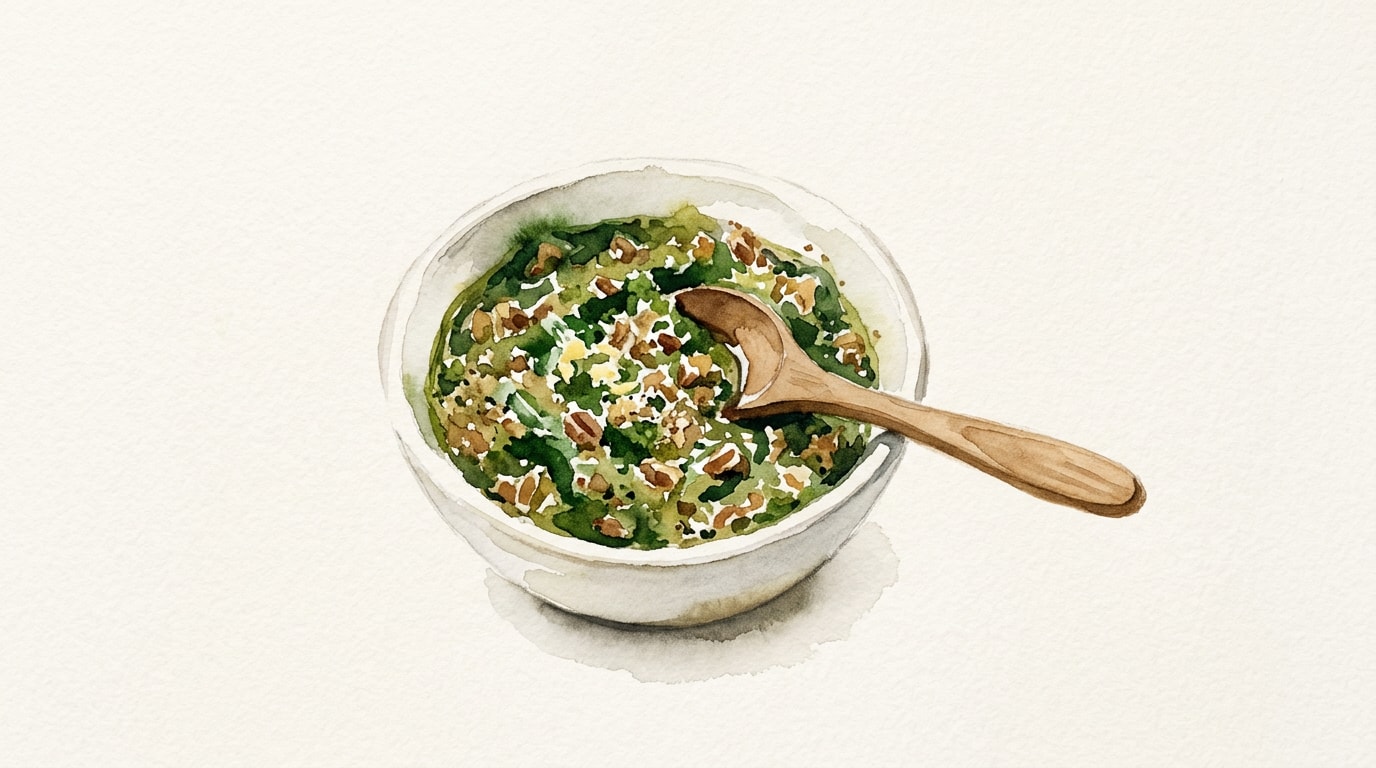
With the food processor running on a low setting, slowly drizzle the extra virgin olive oil through the feed tube. Process just until the oil is fully incorporated and an emulsified, slightly textured paste forms.
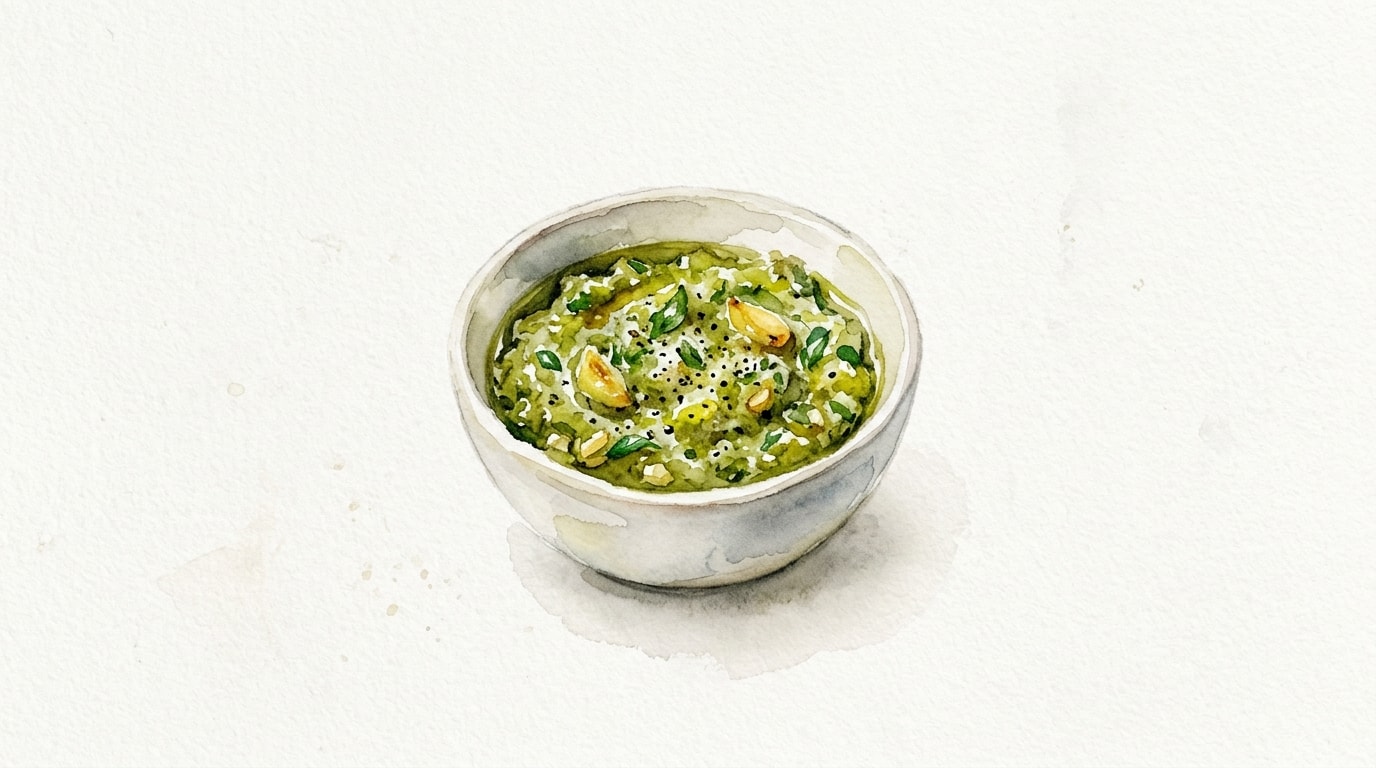
Taste the pesto and adjust the salt or lemon juice if necessary. Transfer to a serving bowl for immediate use, or an airtight container for storage.
Chef's Notes
- Toasting the pecans is crucial; it draws out their natural essential oils and deepens the overall flavor profile, providing a robust, buttery backbone that elevates the sauce.
- Using a blend of basil varieties introduces distinct flavor layers. The lemon basil adds bright, citrusy high notes, while sweet basil provides the classic anise-mint foundation.
- To preserve the vibrant green color of your pesto over several days, pour a thin layer of olive oil directly onto the surface before refrigerating. This creates a seal that blocks oxygen.
Storage
Refrigerator: 1 week — Store in an airtight container with a thin layer of olive oil poured over the top surface to prevent oxidation.
Freezer: 6 months — Portion into ice cube trays, freeze solid, then transfer to a freezer-safe bag.