Equipment
Ingredients
Sherbet Base
- 500 g fresh mango, peeled, pitted, and diced
- 150 g plain whole milk greek yogurt, chilled
- 80 g honey
- 15 ml lime juice, freshly squeezed
- 5 ml orange blossom water
Nutrition (per serving)
Method
Peel the mangoes, remove the flesh from the pits, and dice the fruit until you have 500 grams. Ensure the mangoes are exceptionally ripe to maximize natural sweetness and reduce ice crystallization.
Combine the diced mango, Greek yogurt, honey, lime juice, and orange blossom water in a blender. Puree on high speed until completely smooth and velvety, with no fibrous mango pieces remaining.
Transfer the blended mixture to a sealed container and chill in the refrigerator until thoroughly cold, preferably 4 degrees Celsius or 40 degrees Fahrenheit. This takes about 1 hour and is crucial for proper churning.
Pour the chilled mango base into an ice cream maker and churn according to the manufacturer instructions until it resembles thick soft-serve ice cream, typically 20 to 25 minutes.
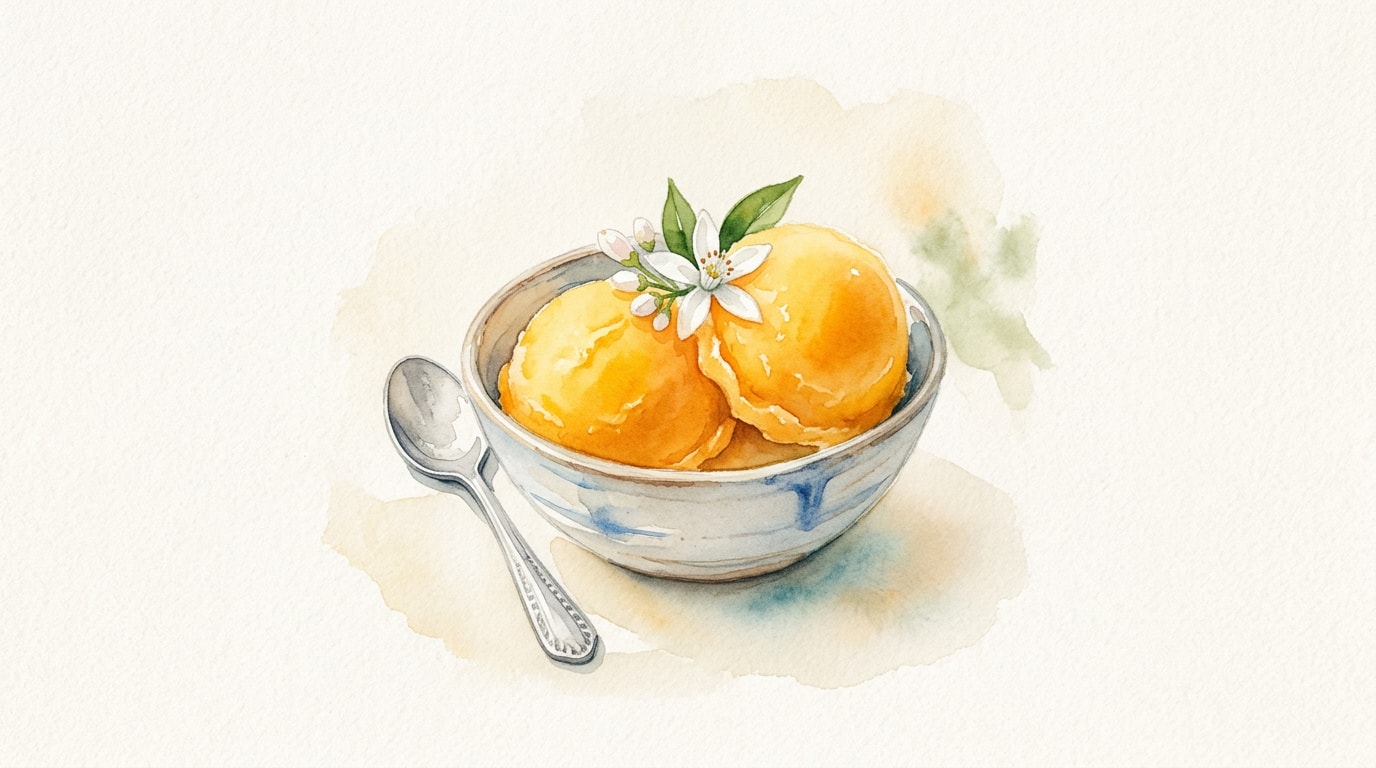
Transfer the churned sherbet to an airtight freezer container. Smooth the top and freeze until firm enough to scoop, approximately 3 hours.
Chef's Notes
- In Egypt, mango season is widely celebrated, and varieties like Zebdya or Awees are prized for their sweetness and smooth, non-fibrous flesh. Seek out Ataulfo or Honey mangoes as excellent substitutes if Egyptian varieties are unavailable.
- Orange blossom water, known as Ma Zahr in Arabic, is intensely aromatic. It should provide a haunting background note that elevates the mango, rather than overpowering it.
- Sherbets differ from sorbets by incorporating a small amount of dairy. The Greek yogurt here provides a subtle tang that balances the honey while lending a creamier mouthfeel than a traditional sorbet.
- If your mangoes are slightly fibrous, pass the blended puree through a fine-mesh sieve before chilling to ensure a luxuriously smooth final texture.
Storage
Freezer: 1 month — Store in an airtight container with a piece of parchment paper pressed directly onto the surface to prevent ice crystals.