Equipment
Ingredients
Crepe Batter
- 95 g all-purpose flour, sifted
- 2 egg whites, room temperature
- 2 egg yolks, room temperature
- 120 ml whole milk, room temperature
- 80 ml cold water
- 15 ml canola oil
- 15 g unsalted butter, melted and slightly cooled
- 2 g granulated sugar
- 1 g fine sea salt
For Cooking
- 15 g unsalted butter, softened
Nutrition (per serving)
Method
In a medium mixing bowl, use a whisk to vigorously mix the all-purpose flour, egg whites, egg yolks, half of the whole milk (60ml), granulated sugar, and fine sea salt until a completely smooth, thick paste forms.
Gradually whisk in the remaining whole milk, cold water, canola oil, and melted unsalted butter until the batter is thin and homogeneous. Let the batter rest at room temperature (around 20°C/68°F) to allow the gluten to relax and the flour to thoroughly hydrate.
Heat a 6-inch non-stick skillet over medium-high heat (surface temperature around 190°C/375°F). Lightly grease the pan with a small amount of the softened unsalted butter, wiping out any excess with a paper towel so only a sheer film remains.
Using a small ladle, pour about 30ml to 45ml of batter into the hot pan. Immediately tilt and swirl the 6-inch non-stick skillet in a circular motion to distribute the batter evenly across the bottom in a very thin, translucent layer.
Using a thin spatula, gently flip the crepe and cook the second side until a few light brown spots appear on the bottom. Ensure the crepe reaches an internal temperature of 74°C/165°F for food safety, especially for vulnerable populations, before transferring it to a serving plate.
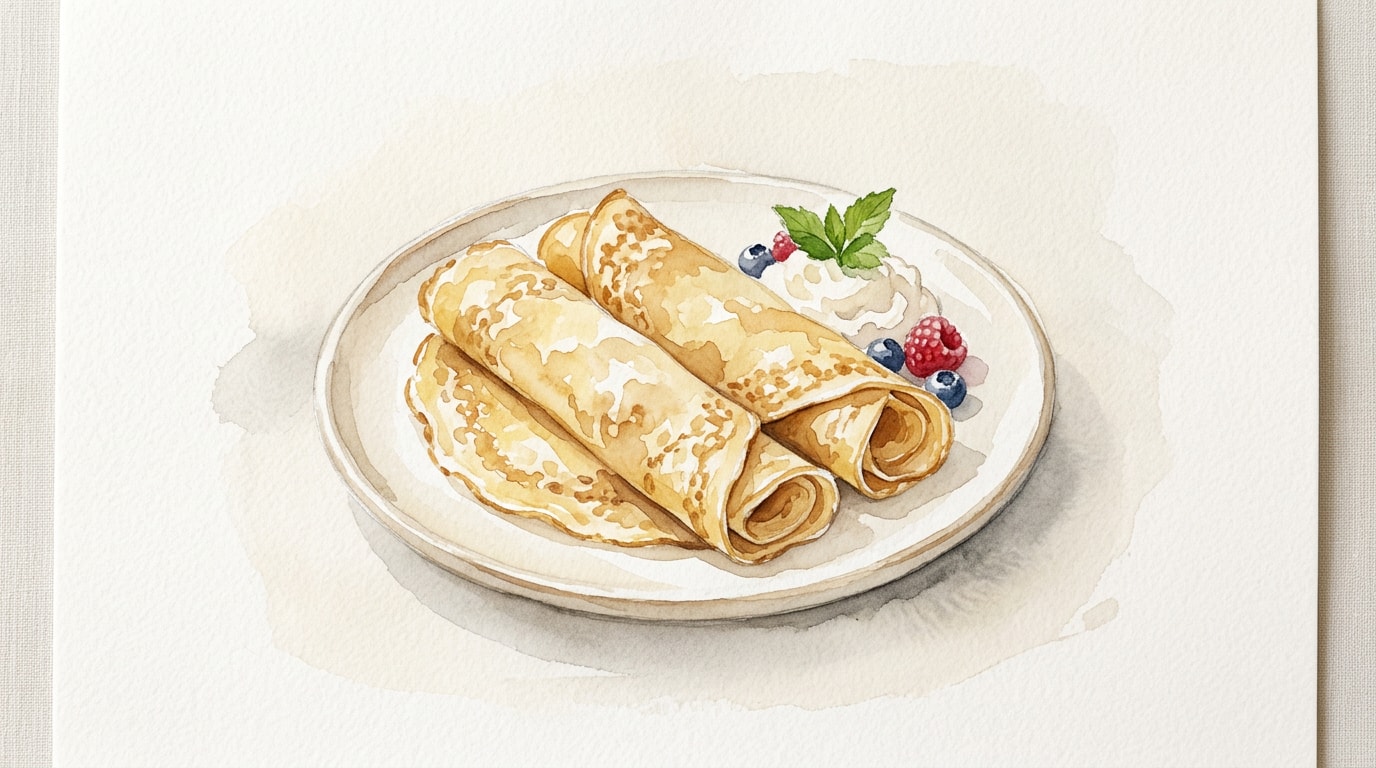
Repeat the process with the remaining batter, stacking the finished crepes directly on the serving plate. If the 6-inch non-stick skillet begins to smoke, reduce the heat slightly to prevent burning the butter between batches.
Chef's Notes
- Jacques Pepin's technique of initially forming a thick paste with the flour, eggs, and only half the milk is the master secret to a perfectly smooth, lump-free batter.
- The addition of a small amount of cold water lightens the batter considerably, resulting in an exceptionally delicate, lacy crepe that heavy cream or pure milk cannot achieve.
- Your pan should be hot, but not smoking. If the pan is too hot, the batter will set instantly before it can coat the bottom; if too cool, the crepe will stick, turn pale, and tear.
- The first crepe is traditionally considered a chef's treat or a test run to gauge the exact heat of the pan, so adjust your temperature accordingly for the rest of the batch.
Storage
Refrigerator: 3 days — Stack between sheets of parchment paper and wrap tightly in plastic wrap to prevent drying out.
Freezer: 2 months — Stack with parchment paper, wrap tightly in plastic wrap, then seal in a heavy-duty freezer bag.
Reheating: Warm gently in a non-stick skillet over medium-low heat for 15-20 seconds per side, or microwave covered with a damp paper towel for 10 seconds.