Equipment
Ingredients
Produce
- 600 g russet potatoes, peeled and diced into 1.5cm cubes
- 150 g yellow onion, finely diced
- 150 g red bell pepper, diced
- 10 g garlic, minced
- 10 g fresh parsley, finely chopped
Meat & Dairy
- 400 g leftover roast beef, diced into 1.5cm cubes
- 4 large eggs
Pantry
- 30 ml olive oil
- 60 ml beef broth
- 15 ml gluten-free worcestershire sauce
- 3 g smoked paprika
- 5 g kosher salt
- 2 g black pepper, freshly cracked
Nutrition (per serving)
Method
Using the chef's knife and cutting board, ensure all potatoes, onion, bell pepper, and roast beef are diced into uniform pieces. This guarantees even cooking and a balanced texture in every bite.
Heat the olive oil in the large cast iron skillet over medium-high heat until it shimmers but is not smoking.
Add the diced russet potatoes in an even layer. Let them cook entirely undisturbed for 5 minutes to develop a thick, crisp brown crust on the bottom.
Turn the potatoes with the spatula, flipping to expose the raw sides. Continue cooking for another 5 minutes until tender all the way through and browned on all sides.
Lower the heat to medium. Add the diced yellow onion and red bell pepper to the skillet, stirring with the spatula. Cook until softened and translucent, about 4 minutes.
Stir in the minced garlic and smoked paprika, cooking continuously just until highly fragrant, about 1 minute.
Fold in the diced leftover roast beef, gluten-free worcestershire sauce, kosher salt, and black pepper. Stir to combine and allow the meat to warm through. Ensure all protein reaches an internal temperature of at least 74°C/165°F.
Pour the beef broth into the skillet. Immediately scrape the bottom of the pan vigorously with the spatula to release the flavorful browned bits into the hash. Cook until the liquid has evaporated.
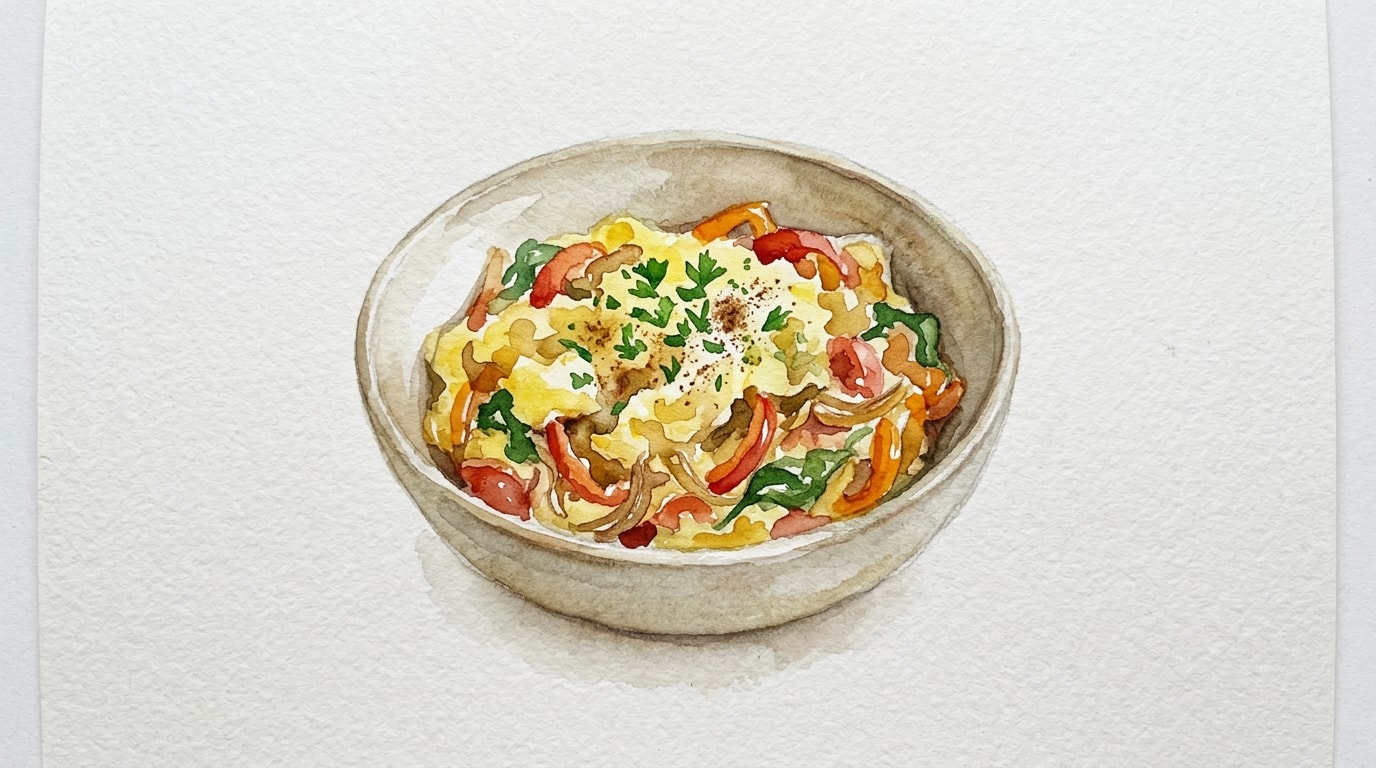
Using the back of the spatula, create four small wells in the hash. Crack one large egg into each well. Cover the skillet with the lid and cook until the egg whites are fully set. For traditional runny yolks, cook 3 to 4 minutes to an internal temperature of 63°C/145°F. Note: Vulnerable populations must use pasteurized eggs or cook eggs until the yolk is completely firm at 74°C/165°F to prevent foodborne illness.
Remove the skillet from the heat, sprinkle with finely chopped fresh parsley, and serve immediately straight from the pan.
Chef's Notes
- For the absolute best texture, parboil your diced raw potatoes in water with a pinch of baking soda for 3 minutes before draining, drying thoroughly, and frying. The baking soda breaks down the exterior starch, creating a microscopic slurry that fries into a vastly superior, glass-like crust.
- The use of a well-seasoned cast iron skillet is crucial here; it retains heat efficiently to deeply caramelize the potatoes and traps the savory fond on the bottom of the pan, which is then reincorporated when deglazing with beef broth.
- If your leftover roast beef was originally cooked well-done, consider swapping the cooking oil for beef tallow, duck fat, or clarified butter to reintroduce necessary rich, savory fats into the hash.
- Do not aggressively salt the potatoes early on if your leftover beef and its resting juices are already heavily seasoned. Taste the mixture right before adding the eggs and adjust.
Storage
Refrigerator: 3 days — Store hash without the eggs. Fry fresh eggs when reheating.
Freezer: 1 month — Potatoes may become slightly grainy upon thawing. Freeze without eggs.
Reheating: Reheat in a skillet over medium heat until potatoes crisp up again.