Equipment
Ingredients
Aromatics and Base
- 4 garlic, peeled
- 30 g pine nuts, lightly toasted and cooled
- 50 g fresh basil, washed, completely dried, and packed
Liquids and Seasoning
- 40 g parmigiano-reggiano, finely grated
- 45 ml extra virgin olive oil, chilled
- 60 ml chicken broth, chilled
- 2 g kosher salt
- 1 g black pepper, freshly cracked
Nutrition (per serving)
Method
Place the peeled garlic cloves and toasted pine nuts into the bowl of a food processor. Pulse several times until the mixture is coarsely chopped.
Add the completely dry fresh basil leaves, grated Parmigiano-Reggiano, kosher salt, and black pepper to the food processor. Pulse repeatedly until the basil is finely minced, stopping to scrape down the sides of the bowl with a silicone spatula as needed.
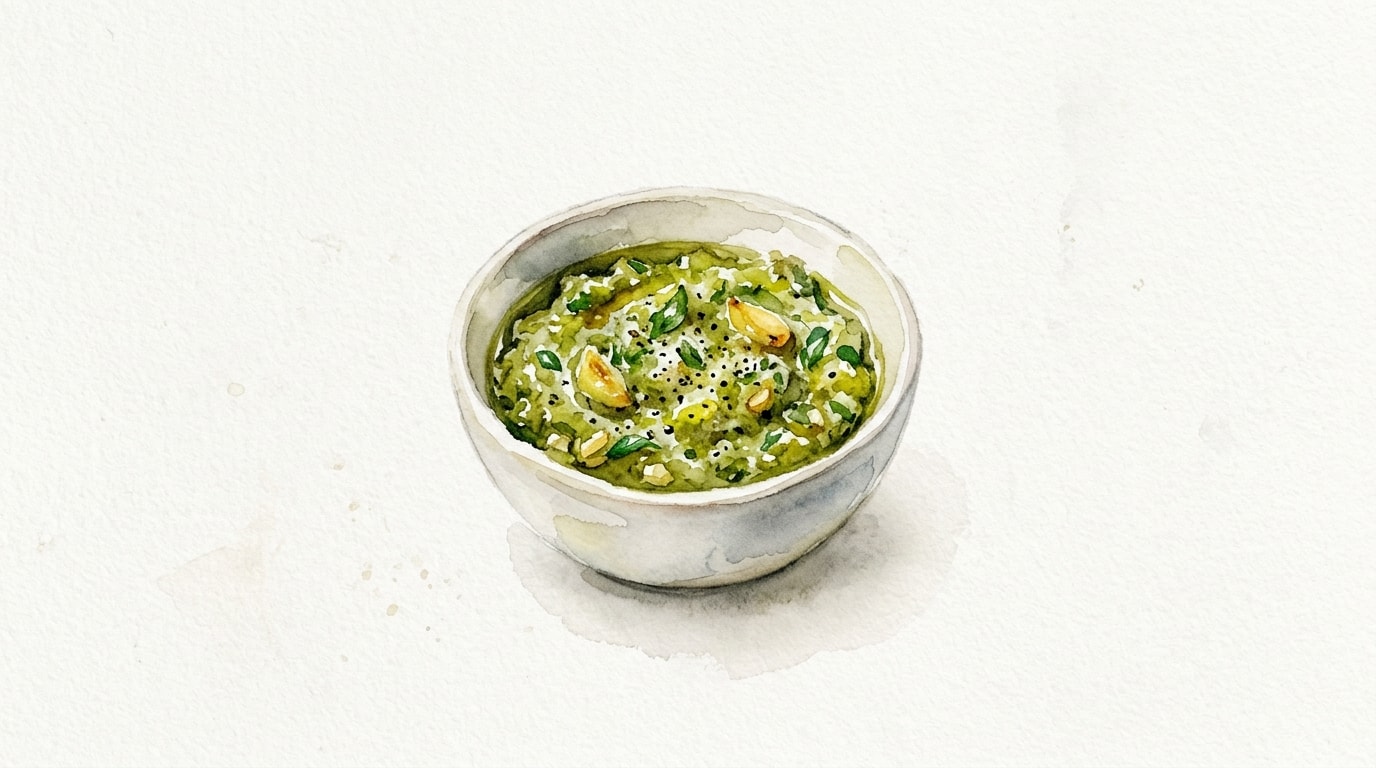
With the food processor running on low speed, slowly drizzle in the extra virgin olive oil followed immediately by the chilled chicken broth. Process just until the liquids are fully incorporated and a cohesive sauce forms.
Chef's Notes
- Using chicken broth in place of a portion of the traditional olive oil dramatically reduces the heavy, greasy mouthfeel while boosting the umami profile.
- Always chill your liquids before blending. The cold temperature slows down the oxidation of the basil, keeping your final sauce a stunning, vibrant green.
- If tossing this pesto with hot pasta, reserve some starchy pasta cooking water. Vigorously mix it with the pesto off the heat to create a luxurious, creamy coating that clings perfectly to every noodle.
- For the cleanest flavor, ensure your basil leaves are entirely dry before they touch the processor blades. Water droplets can dilute the emulsion and accelerate spoilage.
Storage
Refrigerator: 3 days — Store in an airtight container with a thin layer of olive oil on the surface to prevent oxidation.
Freezer: 3 months — Freeze in ice cube trays for easy portioning, but omit the cheese until thawing if possible for best texture.