Equipment
* optional
Ingredients
Vegetables
- 200 g kirby cucumbers, whole or spears
- 150 g carrots, peeled and sliced into sticks
- 150 g cauliflower, cut into small florets
- 100 g green beans, trimmed
Aromatics
- 4 garlic, crushed
- 10 g fresh dill, whole sprigs or heads
- 3 g black peppercorns, whole
- 3 g mustard seeds, whole yellow or brown
- 1 bay leaf
- 1 grape leaf or oak leaf
Brine
- 500 ml water, non-chlorinated / filtered
- 18 g kosher salt, iodine-free
Nutrition (per serving)
Method
Prepare the brine by dissolving the salt completely into the non-chlorinated water. Ensure the water is at room temperature.
Wash all vegetables thoroughly. Trim the blossom ends off the cucumbers (these contain enzymes that soften pickles). Cut carrots and cauliflower into pieces comparable in size to the cucumber spears to ensure even packing.
Place garlic, dill, peppercorns, mustard seeds, bay leaf, and the tannin leaf (if using) at the bottom of a clean 1-quart jar.
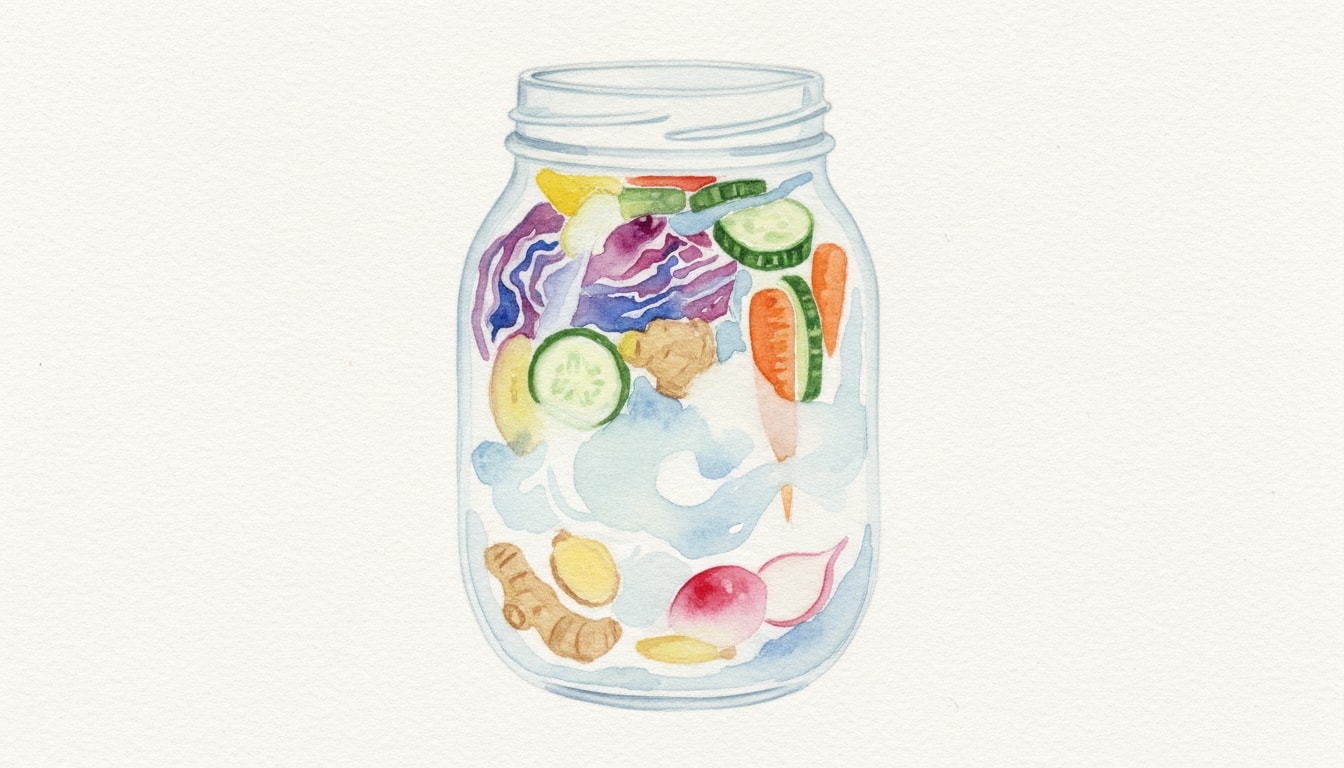
Pack the vegetables tightly into the jar, leaving at least 3 cm (1 inch) of headspace at the top. The tighter the pack, the less likely vegetables will float.
Pour the prepared brine over the vegetables until they are completely submerged, still maintaining headspace at the rim.
Place a fermentation weight on top of the vegetables to keep them submerged under the brine. If using a standard lid, tighten it loosely to allow gas to escape, or tighten fully and 'burp' daily. If using an airlock, set it up according to instructions.
Store the jar in a cool, dark place (ideally 18-22°C / 65-72°F) for 1 to 4 weeks. Check daily for mold and to ensure vegetables remain submerged.
Taste test after 1 week. Once the pickles reach your desired level of sourness and the vegetables are fermented through, transfer the jar to the refrigerator to slow the fermentation.
Chef's Notes
- Chlorine in tap water is the number one enemy of fermentation. Use filtered, distilled, or boiled-then-cooled water.
- The addition of a tannin-rich leaf (grape, oak, horseradish, or even a tea bag) helps maintain the crunchiness of the pickles by inhibiting enzymes that break down cell walls.
- Iodized salt can darken the pickles and inhibit beneficial bacteria. Always use pure kosher salt or sea salt.
- Fermentation is faster in warmer weather. In summer, check your pickles after 3-5 days; in winter, they may need 2-3 weeks.
Storage
Refrigerator: 6 months — Fermentation slows significantly but continues slowly; flavor deepens over time.