Equipment
Ingredients
Main
- 4 eggs
- 30 ml crème fraîche
- 15 g dijon mustard
- 5 g chives, finely sliced
- 1 g salt, to taste
- 1 g black pepper, freshly ground, to taste
- ½ g cayenne pepper, to taste
- 30 ml osetra caviar
Nutrition (per serving)
Method
Place eggs in a small saucepan and cover with water. Bring to a gentle simmer at approximately 95°C (203°F) and cook for 9 minutes.
Drain the water and peel the eggs while they remain warm. Slice each egg in half lengthwise.
Carefully remove the yolks and place them in a bowl. Arrange the white halves on a serving plate.
Mash the warm yolks with a fork until the texture is completely smooth.
Stir in the crème fraîche, mustard, and 3g of sliced chives. Season with salt, black pepper, and cayenne.
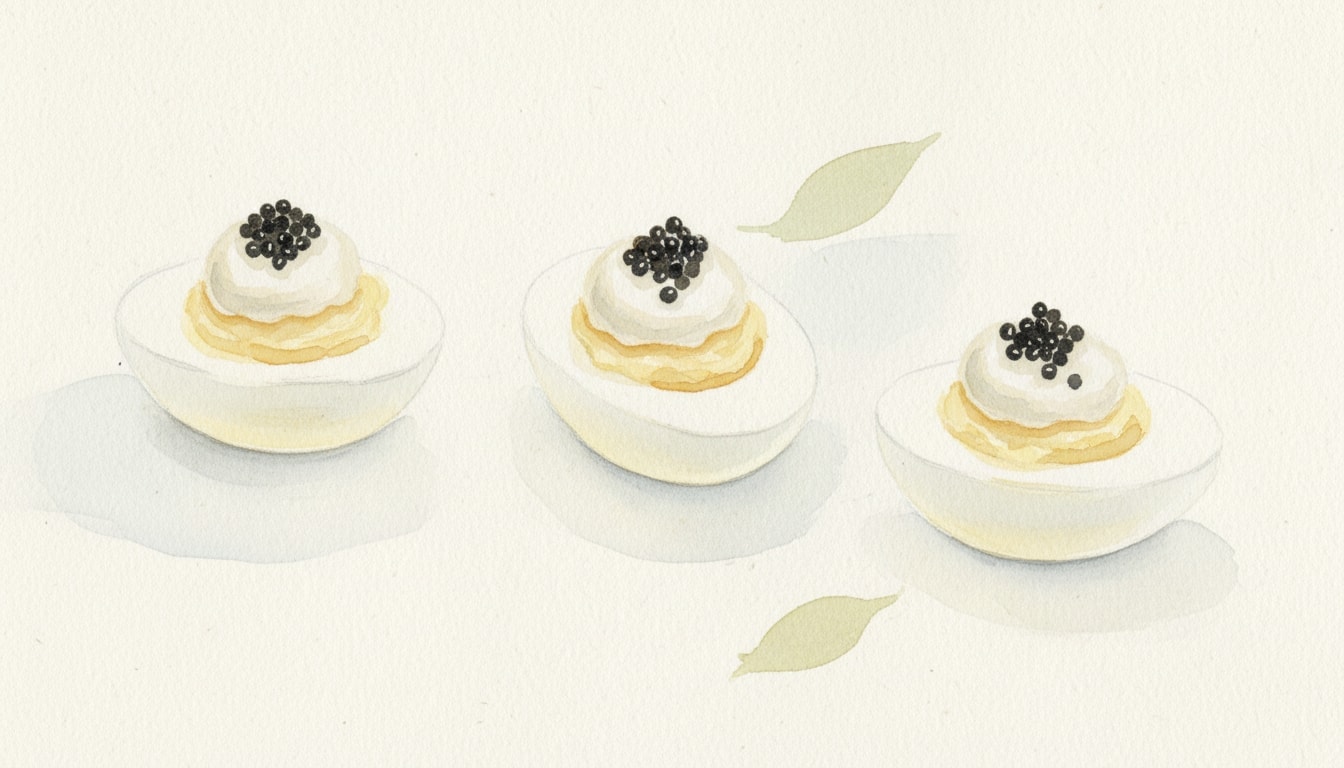
Transfer the yolk mixture to a pastry bag fitted with a small round tip. Pipe the filling into the cavities of the egg whites.
Place a small spoonful of caviar on top of each egg. Garnish with the remaining chive pieces and serve.
Chef's Notes
- For perfectly cooked hard-boiled eggs that peel easily, use eggs that are a few days old rather than fresh. The gentle simmer at 95°C (203°F) is key to avoiding overcooking and achieving a tender yolk.
- Mash the yolks while they are still warm; they will be much easier to incorporate into a smooth, creamy filling.
- A pastry bag allows for a more elegant and consistent presentation, but a small spoon can also be used to fill the egg white halves.
- Taste and adjust seasoning of the yolk mixture before piping. The saltiness of the caviar will complement the filling, so don't over-salt initially.
- Serve deviled eggs chilled or at room temperature. They are best enjoyed the day they are made, as the texture of the filling can change over time.
Storage
Refrigerator: 2 days — Store in an airtight container; add caviar just before serving.