Equipment
Ingredients
Aromatics & Dairy Base
- 480 ml heavy cream, cold
- 115 g unsalted butter, cubed
- 150 g light corn syrup
- 6 g flaky sea salt
- 1 vanilla bean, split and scraped
- 30 g whole espresso beans, lightly crushed
The Caramel
- 400 g granulated white sugar
Nutrition (per serving)
Method
Line an 8x8 inch baking pan with parchment paper, leaving an overhang on two sides for easy removal. Lightly coat the parchment with neutral oil or pan spray.
In a medium saucepan, combine the heavy cream, unsalted butter, corn syrup, sea salt, vanilla bean pod and seeds, and the optional crushed espresso beans. Bring to a gentle simmer over medium heat.
Remove the dairy mixture from the heat, cover, and let steep for 15 minutes. Afterward, pour the mixture through a fine mesh strainer to remove the vanilla pod and espresso beans. Return the strained liquid to a low heat to keep it very warm.
In a large, clean, heavy-bottomed saucepan over medium heat, sprinkle an even layer of the granulated sugar. As it begins to melt and liquefy at the edges, gently drag the melted portions toward the center using a heatproof spatula. Continue adding the remaining sugar in small increments until completely melted.
Continue cooking the pure melted sugar until it begins to smoke lightly and reaches a deep amber color, approximately 175°C or 350°F. Do not walk away, as it will transition from perfect to burnt in seconds.
Remove the pan from the heat. Carefully and extremely slowly, pour the warm dairy mixture into the caramelized sugar while whisking constantly. The mixture will bubble up violently and produce hot steam. If the sugar seizes into hard lumps, place the pan back over low heat and stir until entirely dissolved.
Attach the candy thermometer to the saucepan. Cook the combined mixture over medium-high heat, stirring constantly in a figure-eight motion to prevent scorching at the bottom. Continue cooking until the thermometer reads exactly 118°C or 244°F.
Immediately remove the pan from the heat and carefully pour the mixture into the prepared 8x8 inch pan. Do not scrape the bottom or sides of the saucepan, as any scorched bits will ruin the texture of the caramels.
Allow the caramel to cool and set undisturbed at room temperature for at least 4 hours, preferably overnight.
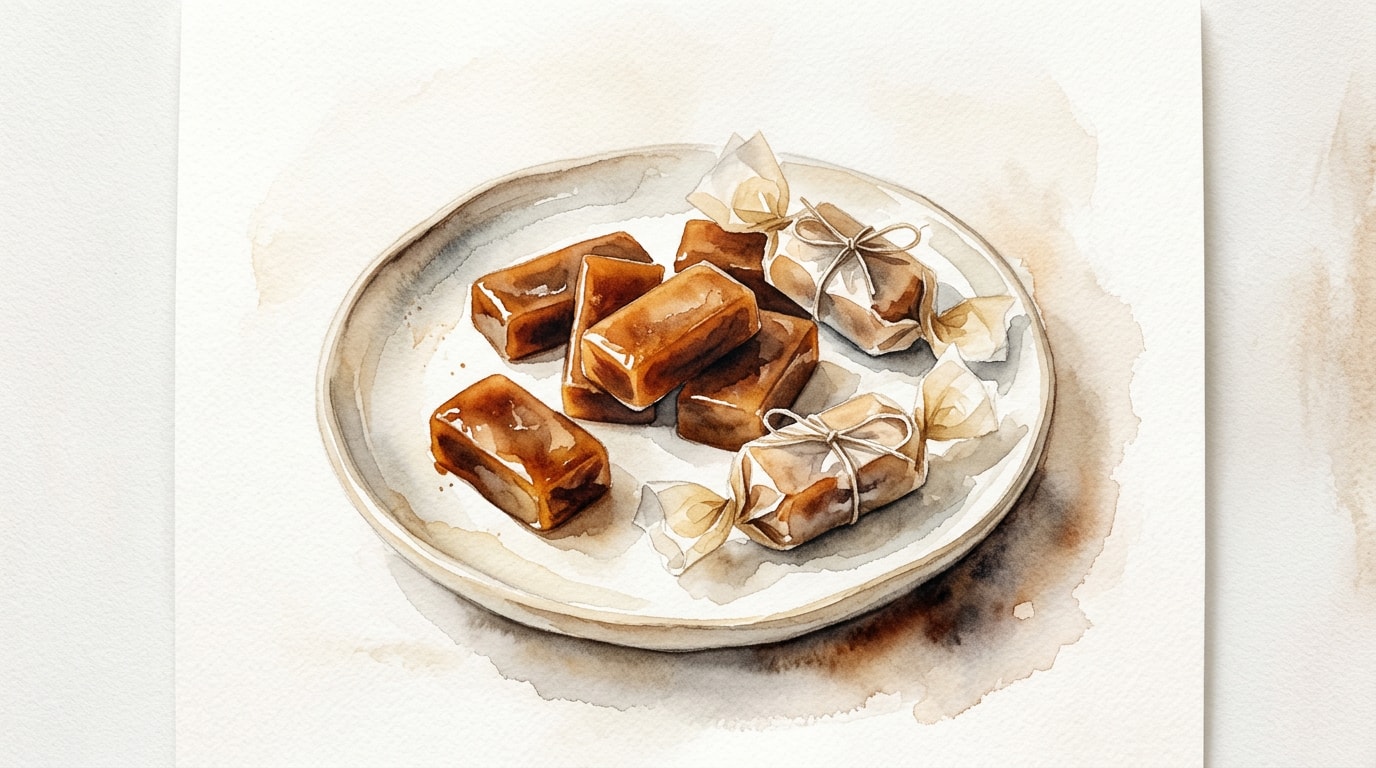
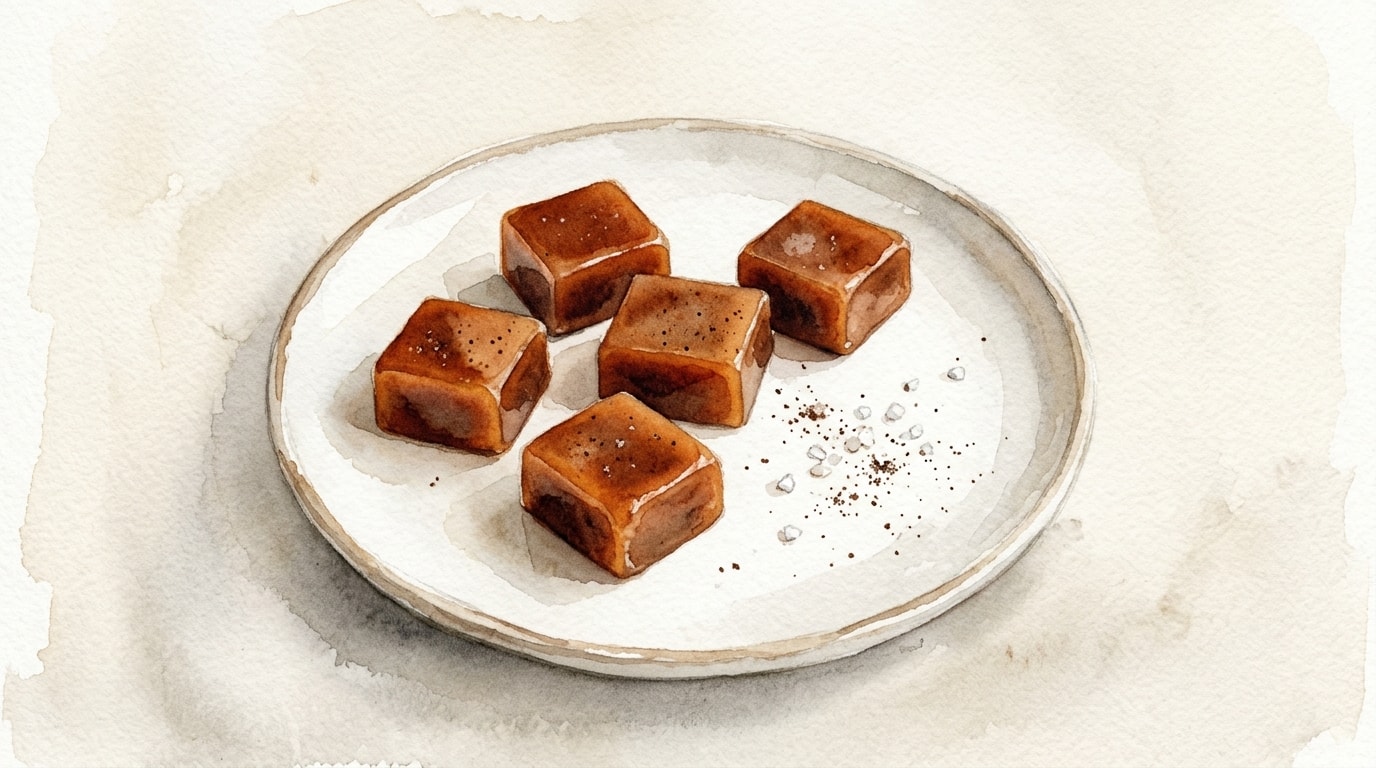
Once fully set, lift the caramel out of the pan using the parchment overhang. Use a sharp, lightly oiled knife to cut the block into 1-inch squares. Wrap each piece individually in wax paper or cellophane wrappers.
Chef's Notes
- Always calibrate your candy thermometer before beginning sugar work. Water boils at 100 degrees Celsius at sea level; note any variance on your thermometer and adjust your target temperature accordingly.
- Using a large pot is critical. When deglazing the 175-degree sugar with the warm dairy, the mixture will quadruple in volume due to the intense steam release.
- The dry caramelization step defines the depth of this recipe. Pushing the sugar to a dark, reddish amber provides a sophisticated bitterness that cuts through the extreme sweetness and fat of the final candy.
- Never scrape the bottom of your saucepan when pouring the finished caramel into your setting pan. Any overcooked or crystallized bits stuck to the bottom will instantly compromise the smooth texture of the batch.
Storage
Refrigerator: 1 month — Bring to room temperature before eating for the best texture.
Freezer: 3 months — Wrap extremely well to prevent moisture absorption.