Equipment
* optional
Ingredients
Yeast Dough
- 240 ml whole milk, warmed to 35C/95F
- 7 g active dry yeast
- 50 g granulated sugar
- 400 g all-purpose flour
- 4 g fine sea salt
- 56 g unsalted butter, melted and slightly cooled
- 1 large egg, room temperature
- 5 ml vanilla extract
- 1500 ml neutral oil
Vanilla Glaze
- 240 g powdered sugar, sifted
- 45 ml whole milk, room temperature
- 5 ml vanilla extract
- 1 g fine sea salt
Nutrition (per serving)
Method
Warm the milk to 35C/95F. In a small mixing bowl, combine the warm milk, active dry yeast, and 10g of the granulated sugar. Stir gently and let sit undisturbed for 10 minutes until a frothy layer forms on top.
In the bowl of a stand mixer, combine the remaining granulated sugar, flour, and fine sea salt. Pour in the frothy yeast mixture, melted butter, egg, and vanilla extract.
Using a dough hook attachment, knead the dough on medium-low speed for 5 to 7 minutes. The dough should become smooth, highly elastic, and clear the sides of the bowl while remaining slightly tacky at the bottom.
Transfer the dough to a lightly oiled mixing bowl. Cover tightly with plastic wrap or a clean kitchen towel and place in a warm, draft-free spot. Let proof for 1 hour, or until fully doubled in volume.
Gently punch down the dough to release the gas. Turn it out onto a lightly floured surface and roll it out to an even 1.5 cm thickness. Cut out doughnuts using a doughnut cutter, dipping the cutter in flour between presses to prevent sticking.
Transfer the cut doughnuts and doughnut holes to a baking sheet lined with parchment paper. Cover loosely with a towel and let rise for 45 minutes until they appear puffy, airy, and delicate.
Pour the neutral oil into a heavy-bottomed pot until it reaches a depth of at least 5 cm. Attach a deep-fry thermometer to the side and slowly heat the oil to 175C/350F over medium heat.
Carefully lower 2 to 3 doughnuts into the hot oil using a slotted spoon or spider, being careful not to overcrowd the pot. Fry for 1 minute per side until deep golden brown. Transfer to a wire cooling rack set over paper towels to drain.
While the first batch of doughnuts cools slightly, whisk together the sifted powdered sugar, milk, vanilla extract, and fine sea salt in a mixing bowl until completely smooth and free of lumps.
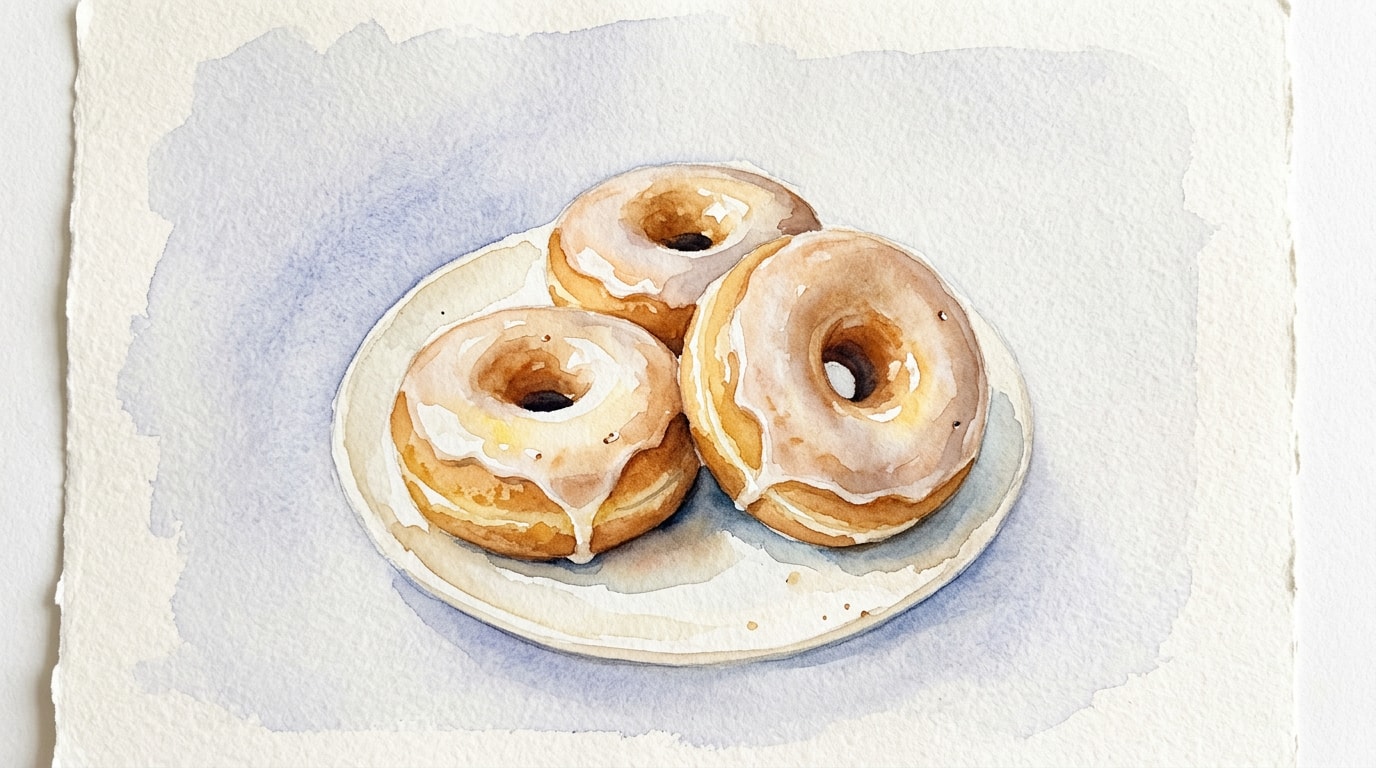
While the doughnuts are still warm but safe to handle, dip them halfway into the vanilla glaze. Lift, letting the excess drip back into the bowl, and place them glazed-side up on the wire rack. Allow 15 minutes for the glaze to set and form a delicate crust before serving.
Chef's Notes
- The hallmark of a perfect yeast doughnut is the 'equator ring' a pale band around the center. This indicates the dough proofed properly and was airy enough to float high in the oil.
- Do not skip sifting the powdered sugar. Unsifted sugar will create a lumpy glaze that won't coat the doughnut smoothly.
- Keep leftover dough scraps from your cutouts. You can gently press them together, let them rest for 15 minutes to relax the gluten, and cut out a few extra pieces.
- If your kitchen is cold during the winter, create a makeshift proofing box by placing your covered dough bowl inside an off oven with just the oven light turned on.
Storage
Freezer: 1 month — Freeze unglazed doughnuts in an airtight container. Thaw at room temperature and glaze before serving.
Reheating: Microwave an unglazed doughnut for 5 to 8 seconds to restore softness before eating.