Equipment
Ingredients
Custard Base
- 480 ml heavy cream, cold
- 1 vanilla bean, split lengthwise and seeds scraped
- 6 egg yolks, room temperature
- 100 g caster sugar
- 1 g kosher salt
Caramel Crust
- 50 g caster sugar
Nutrition (per serving)
Method
Preheat the oven to 150°C/300°F and bring a full kettle of water to a boil for the water bath.
Combine the heavy cream, vanilla bean seeds, and the empty vanilla pod in a medium saucepan. Heat gently over medium heat until it just begins to simmer, reaching about 80°C/175°F. Remove from heat, cover, and let steep for 15 minutes.
In a large mixing bowl, whisk the egg yolks, 100g of caster sugar, and kosher salt until the mixture becomes pale yellow and slightly thickened.
Remove the vanilla pod from the cream. Very slowly pour the hot cream into the egg yolk mixture while whisking constantly and vigorously to temper the yolks without scrambling them.
Pour the custard mixture through a fine mesh strainer into a clean pouring vessel to remove any accidentally coagulated bits of egg. Skim off any foam from the surface.
Place four ramekins into a roasting pan. Divide the strained custard evenly among the ramekins. Carefully pour the boiling water from the kettle into the roasting pan until it reaches exactly halfway up the sides of the ramekins.
Carefully transfer the roasting pan to the oven and bake for 35 to 40 minutes at 150°C/300°F. The internal temperature of the custard should reach 76°C/170°F.
Remove the ramekins from the water bath immediately and let them cool on a wire rack to room temperature for about 1 hour. Cover tightly with plastic wrap, ensuring the wrap does not touch the surface, and chill in the refrigerator for at least 4 hours.
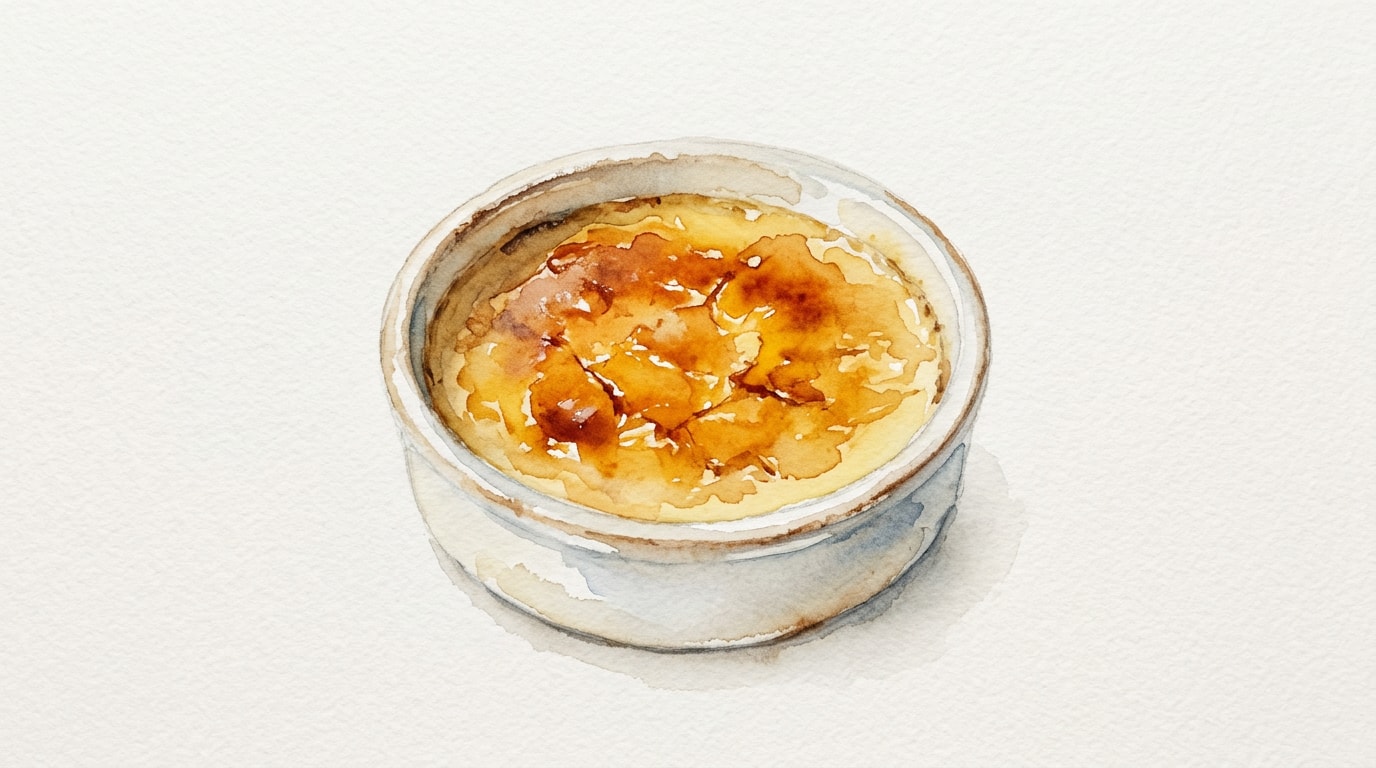
Uncover the cold custards and gently blot any condensation from the surface with a paper towel. Sprinkle about 12g of caster sugar in a thin, perfectly even layer across the top of each. Caramelize the sugar using a blowtorch, moving in slow circles until it forms a deep amber crust.
Chef's Notes
- Skimming the foam off your raw custard base before baking is essential. Bubbles left on the surface will bake into the top layer, leaving a pitted, uneven surface that burns easily when bruleed.
- A shallow, wide ramekin yields the best ratio of crunchy caramelized top to creamy custard bottom. Deep ramekins often leave you with too much custard per bite of crust.
- Moisture is the enemy of caramelized sugar. Always blot the surface of the set custard gently with a paper towel just before dusting with sugar to ensure a hard, glass-like snap.
- Let the bruleed crust rest for exactly 2 to 3 minutes before serving. This allows the liquid sugar to harden back into glass, but serves it while the top is slightly warm and the custard below is stone cold.
Storage
Refrigerator: 3 days — Store un-bruleed. The caramelized sugar crust will melt into liquid if stored in the refrigerator.