Equipment
Ingredients
Sticky Rice
- 300 g glutinous rice
- 1000 ml water
Sweet Coconut Sauce
- 400 ml coconut milk, full fat, well shaken
- 100 g white granulated sugar
- 3 g kosher salt
- 2 pandan leaves, fresh or frozen, tied in a knot
Garnish and Fruit
- 2 ripe mangoes, peeled and sliced
- 15 g split yellow mung beans, dry roasted in a pan until golden and crisp
Nutrition (per serving)
Method
Place the glutinous rice in a mixing bowl and rinse vigorously under cold running water until the water runs completely clear, removing the excess surface starch.
Submerge the rinsed rice in fresh cold water and leave it to soak at room temperature overnight, or for a minimum of four hours, to fully hydrate the grains.
Drain the soaked rice completely using a fine mesh strainer.
Transfer the rice to a steamer basket lined with cheesecloth. Steam over boiling water at 100°C/212°F until the grains are tender, glossy, and fully cooked through.
While the rice steams, combine the coconut milk, sugar, salt, and knotted pandan leaves in a saucepan over medium heat. Stir gently until the sugar completely dissolves, bringing it just to a light simmer.
Transfer the hot steamed rice to a clean mixing bowl. Pour three quarters of the hot coconut mixture over the rice, discarding the pandan leaves. Cover tightly and let rest so the grains absorb the liquid.
Return the saucepan with the remaining quarter of the coconut mixture to the stove. Simmer gently over medium-low heat to reduce and thicken it slightly to create a finishing sauce.
Peel the fresh mangoes and slice the bright orange flesh into thick diagonal pieces, discarding the flat central pit.
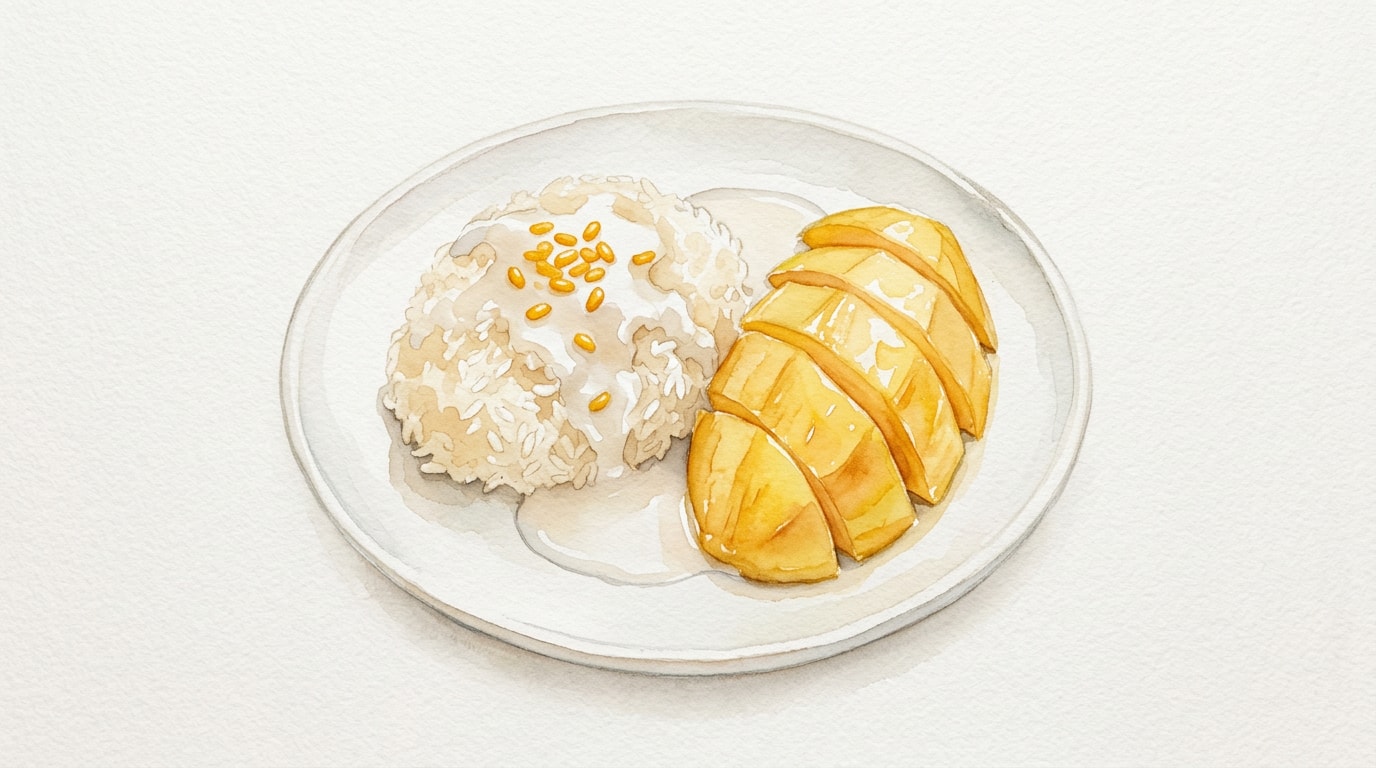
Plate a neat mound of the warm sticky rice alongside the sliced mango. Drizzle generously with the thickened coconut sauce and sprinkle with toasted yellow mung beans.
Chef's Notes
- Always pour hot coconut milk over hot rice. If either component is cold, the rice will not absorb the liquid properly and the texture will be greasy instead of rich and tender.
- Thai sweet rice or glutinous rice is essential for this recipe; regular jasmine rice or sushi rice will not provide the correct sticky, chewy texture.
- Look for Nam Dok Mai or Ataulfo mangoes. They have a completely smooth, butter-like flesh without the fibrous strings found in standard supermarket varieties.
- Do not skip the small amount of salt in the coconut sauce. The distinct salty-sweet contrast is the signature flavor profile of authentic Thai desserts.
Storage
Refrigerator: 1 day — Refrigeration hardens glutinous rice. Microwave briefly with a splash of water to soften before eating.
Reheating: Microwave the rice portion in 15-second bursts until just warm and soft.