Equipment
Ingredients
Emulsion Base
- 1 egg yolk, room temperature
- 5 g dijon mustard, room temperature
- 15 ml lemon juice, freshly squeezed, room temperature
- 3 g fine sea salt
The Oil
- 225 ml neutral oil
Nutrition (per serving)
Method
Shape the damp kitchen towel into a ring on your work surface and nestle the medium mixing bowl inside it to prevent sliding while whisking.
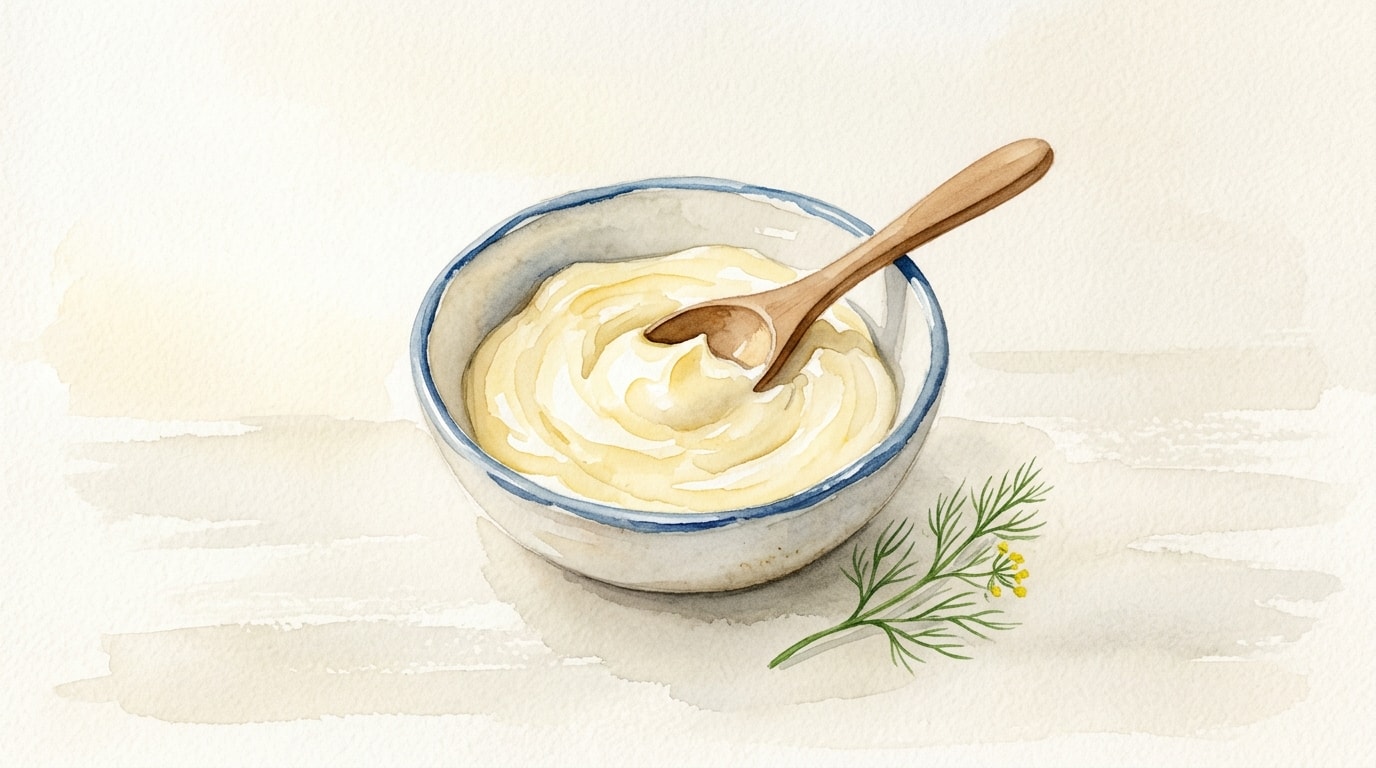
Combine the room temperature egg yolk, dijon mustard, lemon juice, and fine sea salt in the mixing bowl. Whisk vigorously until the mixture is pale yellow, slightly frothy, and completely homogenous.
Begin adding the neutral oil literally drop by drop while whisking constantly and vigorously. Ensure each drop is completely incorporated into the yolk base before adding the next.
Once about a quarter of the oil has been added and a thick, stable emulsion has formed, begin pouring the remaining oil in a very thin, steady stream while continuing to whisk vigorously.
Taste the mayonnaise and adjust the seasoning if necessary. If the mixture is too thick or stiff, whisk in warm water, one milliliter at a time, until the desired consistency is reached.
Chef's Notes
- Temperature plays a crucial role in forming stable emulsions. Cold eggs and mustard will resist binding with the oil.
- If you prefer an olive oil flavor, substitute no more than one quarter of the neutral oil with extra virgin olive oil. Agitating pure olive oil heavily can release polyphenols that make the final product extremely bitter.
- The mustard acts as a secondary emulsifier alongside the egg yolk due to its mucilage content, making the emulsion more robust and forgiving.
- Pasteurizing your eggs before making mayonnaise completely removes the risk of foodborne illness while maintaining the structural integrity of the yolk.
Storage
Refrigerator: 1 week — Store in a sanitized, airtight container in the coldest part of the refrigerator.