Equipment
Ingredients
Aromatics & Base
- 10 g shallot, finely minced
- 45 ml red wine vinegar
- 15 g dijon mustard
- 3 g kosher salt
- 1 g black pepper, freshly cracked
Oil
- 90 ml extra virgin olive oil
Nutrition (per serving)
Method
Place the finely minced shallot on the cutting board and ensure it is cut as small as possible to avoid harsh, raw chunks in the final dressing.
In a mixing bowl, combine the minced shallot, red wine vinegar, Dijon mustard, kosher salt, and black pepper. Whisk briefly to combine, then let the mixture rest for 5 minutes. This process macerates the shallots, removing their raw bite and allowing the salt to fully dissolve in the acid.
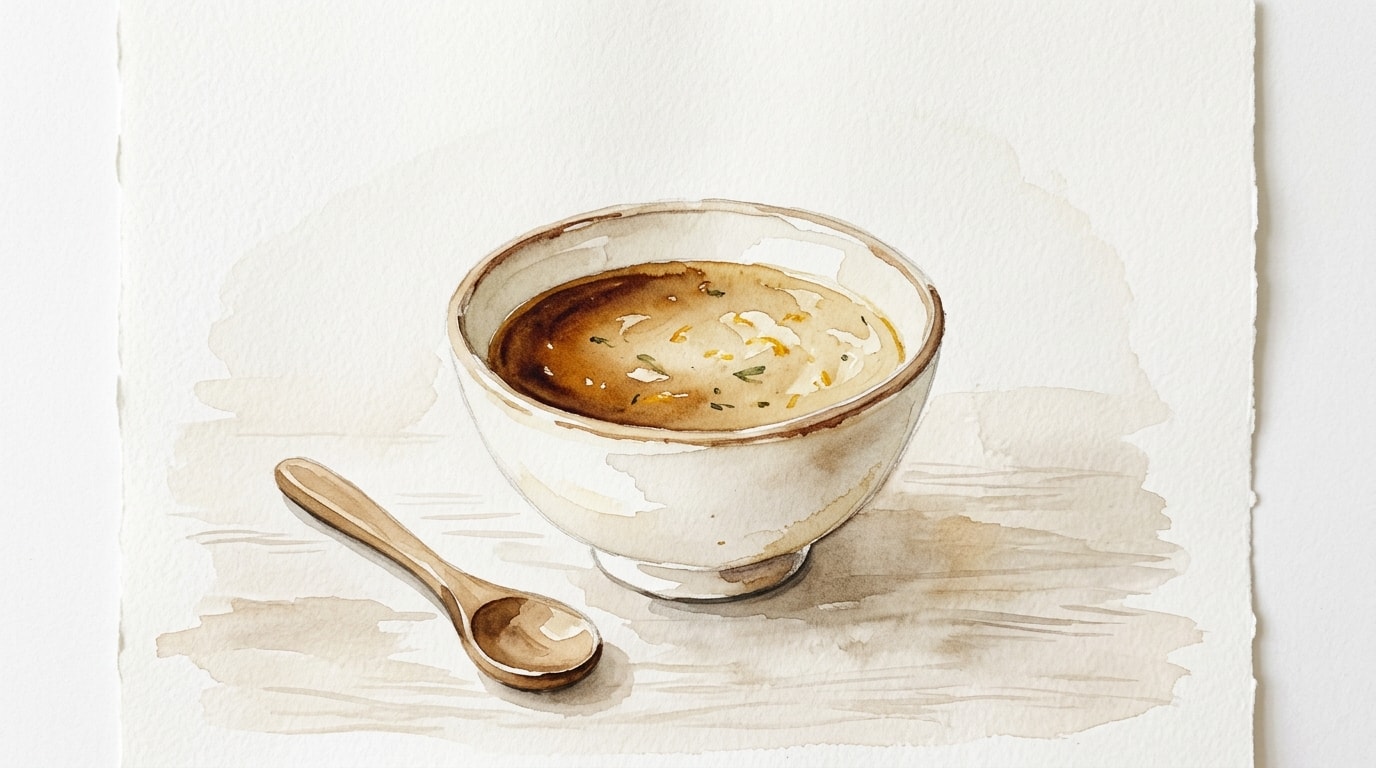
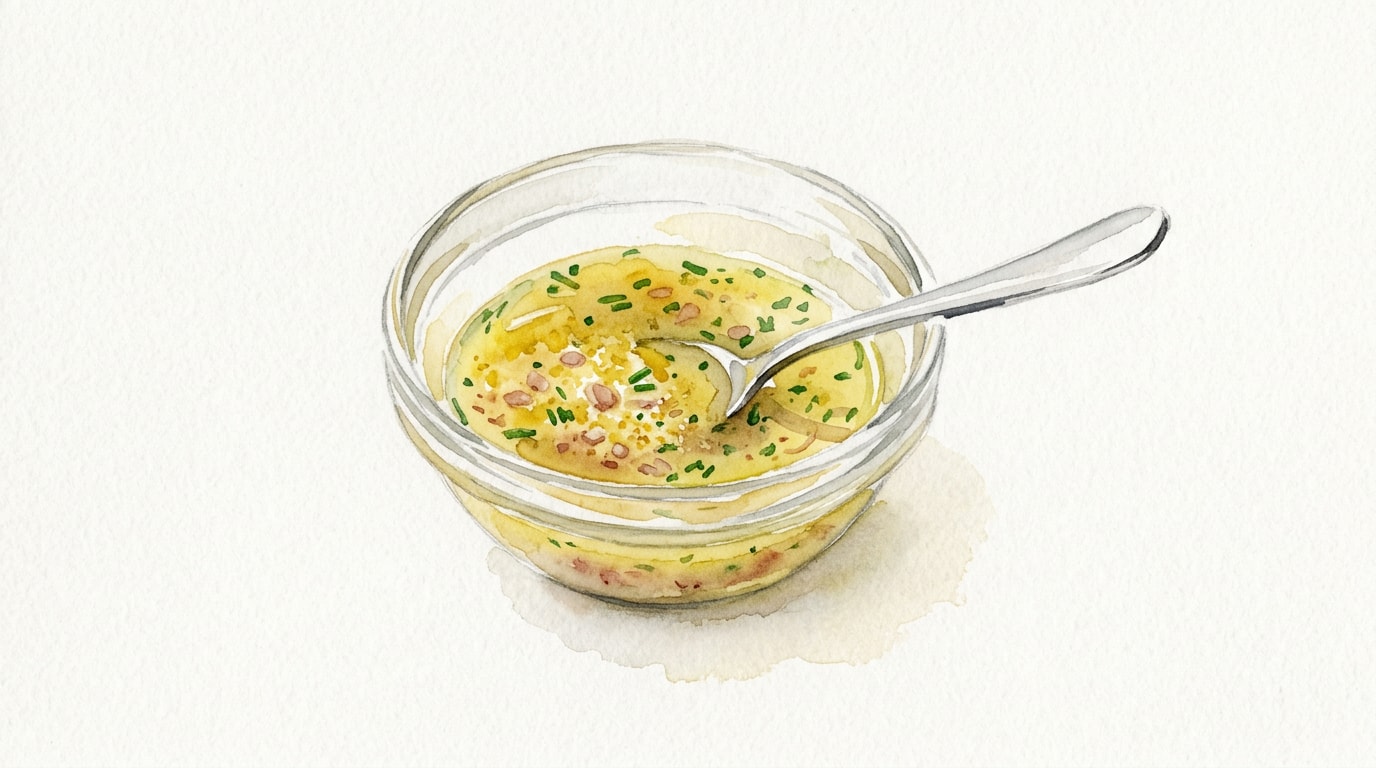
While whisking the vinegar mixture constantly, begin adding the extra virgin olive oil in a very slow, steady stream. Continue whisking vigorously until all the oil is incorporated and the dressing looks creamy, cohesive, and thickened.
Chef's Notes
- The golden rule of a classic vinaigrette is the 1 to 3 ratio: 1 part acid to 3 parts oil. Once you master this, you can adjust to a 1 to 2 ratio if you prefer a sharper, more punchy dressing.
- Dijon mustard is not just for flavor; it contains mucilage, which acts as a powerful natural emulsifier to help bind the water-based vinegar and the fat-based oil together smoothly.
- Always dissolve your salt in the vinegar before adding the oil. Salt dissolves readily in water and acid, but it will not dissolve in oil, leading to a gritty texture if added last.
- Macerating the shallots in the vinegar for 5 to 10 minutes gently pickles them, entirely mellowing out the sharp, sulfurous bite of raw alliums.
Storage
Refrigerator: 2 weeks — Olive oil will solidify when chilled. Let sit at room temperature for 15 minutes and whisk or shake vigorously before serving.