Equipment
* optional
Ingredients
Pate Sucree (Sweet Pastry)
- 250 g plain flour
- 100 g icing sugar
- 2 g salt
- 125 g unsalted butter, cold and cubed
- 1 egg, cold
Lemon Curd Filling
- 150 ml lemon juice, freshly squeezed
- 15 g lemon zest, finely grated
- 200 g granulated sugar
- 4 eggs
- 2 egg yolks
- 150 g unsalted butter, cubed, room temperature
Nutrition (per serving)
Method
Sift the plain flour, icing sugar, and salt into the bowl of a food processor.
Add the cold cubed butter and pulse the mixture until it resembles coarse breadcrumbs.
Add the whole egg and pulse briefly until the dough just begins to clump together into a ball.
Turn the dough out onto a work surface, shape it into a flat disc, and wrap it tightly in plastic wrap.
Chill the wrapped dough in the refrigerator for 1 hour to firm up the butter and relax the gluten.
Preheat the oven to 180°C (350°F).
Roll the chilled dough on a lightly floured surface to an even 3mm thickness, rotating a quarter turn after each roll to prevent sticking.
Carefully lift the dough into the tart tin, gently pressing it into the fluted edges without stretching. Trim any overhanging pastry, then thoroughly prick the base with a fork.
Chill the lined tart tin in the refrigerator for 30 minutes to minimize shrinkage during baking.
Line the chilled pastry case with parchment paper, ensuring it covers the edges, and fill completely to the brim with baking beans or pie weights.
Bake the tart shell at 180°C (350°F) for 15 minutes. Carefully remove the parchment and weights, then return to the oven for a further 10 to 12 minutes until the pastry is completely dry and deeply golden brown.
Transfer the baked tart shell to a wire rack and let it cool completely.
In a heatproof bowl, whisk together the fresh lemon juice, lemon zest, granulated sugar, whole eggs, and egg yolks until well combined.
Set the bowl over a saucepan of gently simmering water, ensuring the bottom of the bowl does not touch the water. Whisk constantly until the mixture thickens and registers 82°C (180°F) on an instant-read thermometer.
Immediately strain the thickened curd through a fine-mesh sieve into a clean bowl to remove the lemon zest and any small bits of cooked egg.
Allow the strained curd to cool slightly until it reaches 60°C (140°F).
Add the room-temperature butter cubes to the 60°C (140°F) curd. Using an immersion blender, blend the mixture for 2 to 3 minutes until an extremely smooth, glossy emulsion forms.
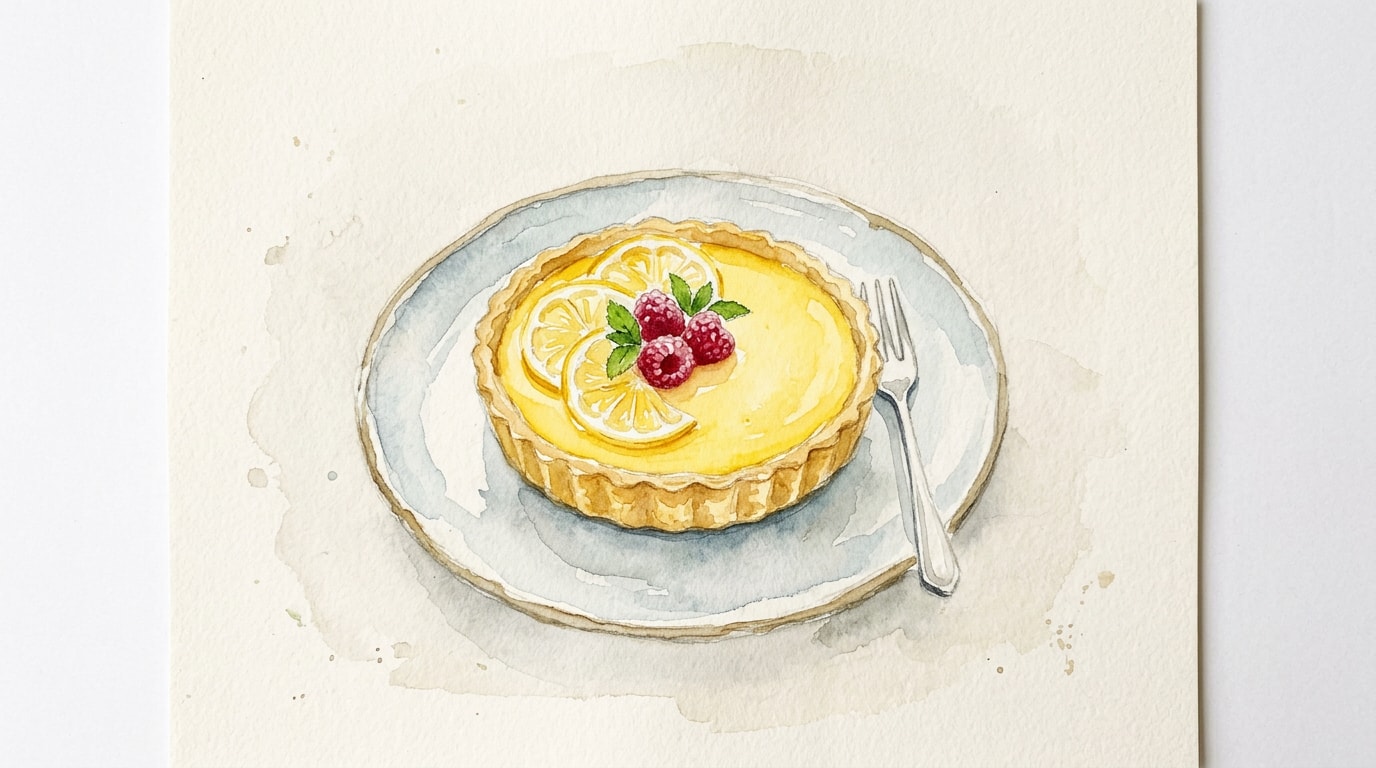
Pour the warm, emulsified lemon curd directly into the completely cooled tart shell. Gently tilt the tart to encourage the filling to settle into an even, flat layer.
Carefully transfer the filled tart to the refrigerator and chill for at least 2 hours, uncovered, until the curd is completely set.
Chef's Notes
- Temperature precision is the key to perfect curd. Emulsifying the butter at exactly 60C (140F) guarantees that the butter softens into the mixture without breaking, creating an incredibly silky texture.
- For the brightest, most intense lemon flavor, vigorously rub the lemon zest into the granulated sugar with your fingertips before adding the eggs. This abrasive action releases the essential citrus oils trapped in the zest directly into the sugar.
- Always use a non-reactive bowl (such as glass, ceramic, or stainless steel) when cooking lemon curd. Aluminum cookware reacts with the high acidity of the lemons, imparting a metallic taste and an unappetizing grayish-green tinge to the eggs.
- Blind baking the tart shell fully is absolutely crucial. Because the wet filling goes into the shell warm and sets in the fridge rather than baking in the oven, any underbaked pastry will immediately absorb moisture and become unpleasantly soggy.
Storage
Refrigerator: 3 days — Keep loosely covered. The pastry will gradually soften after the first day.