Equipment
Ingredients
Crepe Batter
- 125 g all-purpose flour, sifted
- 15 g granulated sugar
- 1 g salt
- 2 eggs, room temperature
- 300 ml whole milk, room temperature
- 30 g unsalted butter, melted and slightly cooled
Cooking and Serving
- 15 g unsalted butter
- 1 lemon, cut into wedges
- 30 g granulated sugar
- 60 g chocolate hazelnut spread
Nutrition (per serving)
Method
In a large mixing bowl, combine the sifted all-purpose flour, granulated sugar, and salt. Make a well in the center and add the room temperature eggs.
Whisk the eggs, gradually drawing in the dry ingredients from the sides of the well. Slowly pour in the whole milk while whisking continuously to prevent lumps. Stir in the melted butter until the batter is smooth and resembles heavy cream. Pour through a fine mesh strainer if any lumps remain.
Cover the bowl with a clean towel or plastic wrap. Let the batter rest at room temperature for at least 30 minutes to allow the flour to hydrate and the gluten to relax.
Preheat a non-stick skillet or crepe pan over medium heat until the surface reaches approximately 190°C/375°F. Lightly grease the pan with a small amount of unsalted butter, wiping out any excess with a paper towel.
Pour about 40ml of batter into the center of the hot pan. Immediately lift the pan off the heat and tilt it in a circular motion to spread the batter into an even, thin layer across the bottom. Return to the heat and cook for 1 to 2 minutes.
Slide a thin spatula under the crepe, gently flip it over, and cook for an additional 30 seconds on the second side. Transfer the cooked crepe to a warm plate and cover with a clean towel. Repeat with the remaining batter, greasing the pan lightly only when necessary.
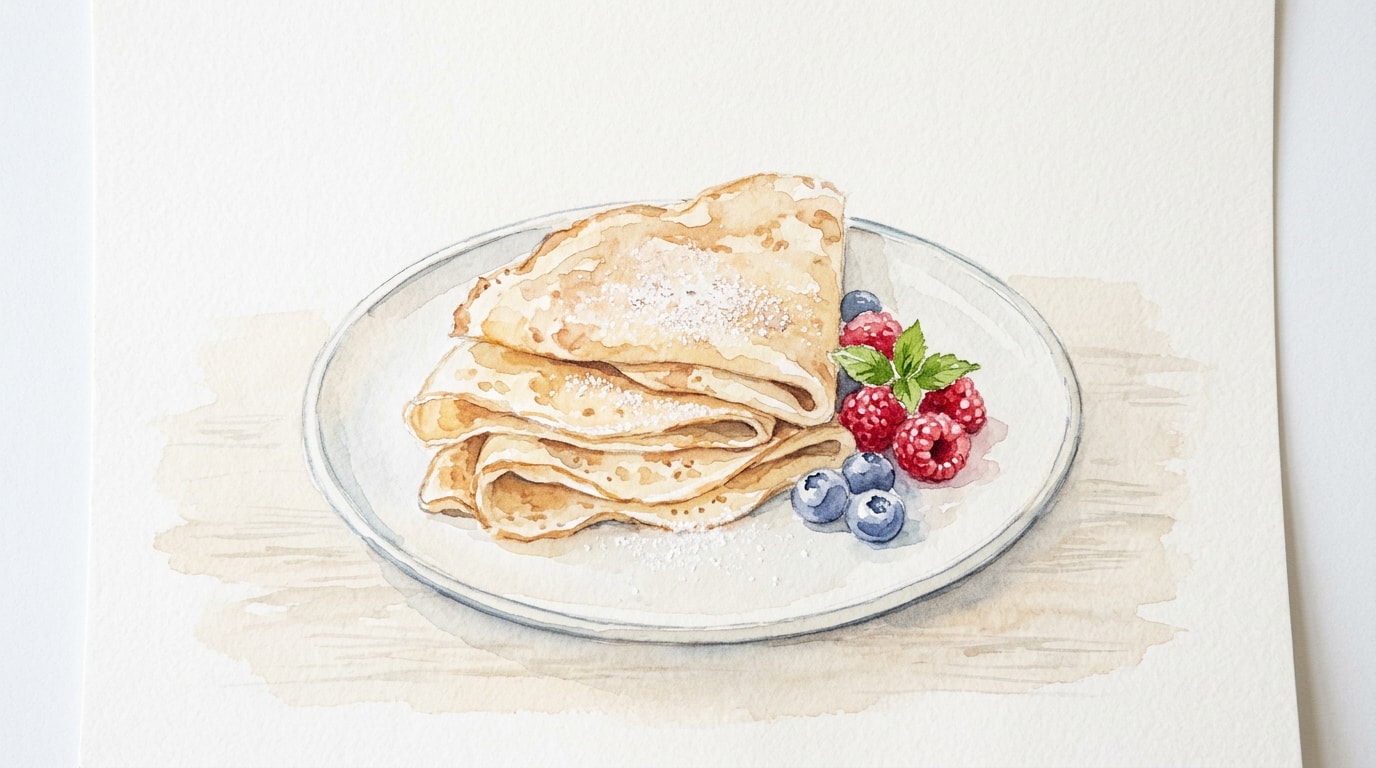
Serve the crepes warm. For a traditional preparation, squeeze fresh lemon juice over the flat crepe, sprinkle generously with granulated sugar, and fold into quarters. Alternatively, spread an even layer of chocolate hazelnut spread over one half of the crepe before folding.
Chef's Notes
- Resting the batter is not optional. It gives the starch molecules time to absorb the liquid and allows the gluten formed during mixing to relax, which guarantees tender crepes that do not tear easily.
- The first crepe is traditionally considered a sacrifice to the pan. It is used to test the temperature and the butter level, so do not be discouraged if it turns out messy or thick.
- For the thinnest, most delicate crepes, master the two-handed technique: pour the batter from your ladle with one hand while simultaneously lifting and tilting the pan in a smooth circular motion with your other hand.
- If you prefer perfectly uniform edges for a highly presentable dessert, you can trim the cooked crepes using a round template or an inverted plate, though rustic, lacy edges are considered authentic.
Storage
Refrigerator: 3 days — Stack cooked crepes with parchment paper between each layer and wrap tightly in plastic wrap.
Freezer: 2 months — Thaw overnight in the refrigerator before reheating.
Reheating: Warm individually in a skillet over low heat for 30 seconds per side, or microwave a stack of 3 for 15 seconds.