Equipment
* optional
Ingredients
Base and Soak
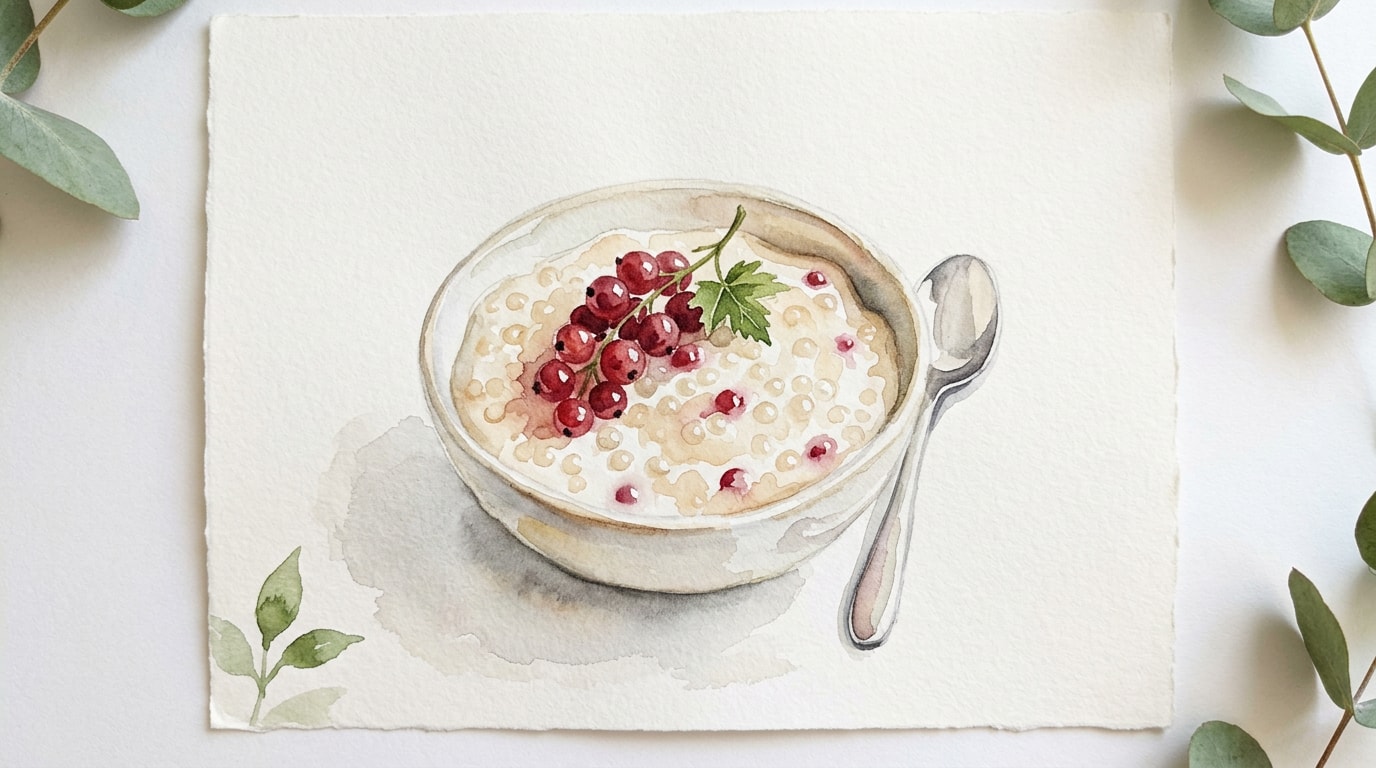
- 75 g small pearl tapioca
- 700 ml whole milk, cold
- 2 g kosher salt
Custard and Flavorings
- 2 eggs, room temperature
- 100 g granulated sugar
- 50 g dried currants
- 5 ml vanilla extract
Nutrition (per serving)
Method
Combine the tapioca pearls, whole milk, and salt in a medium saucepan. Let sit at room temperature for 30 minutes to hydrate the tapioca.
In a separate mixing bowl, vigorously whisk together the eggs and granulated sugar until pale and fully combined.
Place the saucepan with the hydrated tapioca and milk over medium heat. Bring to a gentle simmer, stirring constantly with a rubber spatula to prevent scorching on the bottom. Reduce heat to low and cook for 5 minutes.
Gradually whisk about 120ml of the hot milk mixture into the egg and sugar mixture in a slow, steady stream to temper the eggs.
Pour the tempered egg mixture back into the saucepan. Cook over medium-low heat, stirring constantly, until the pudding thickens slightly and coats the back of a spoon, reaching 76C/170F. Do not let it boil.
Remove the saucepan from the heat. Stir in the dried currants and vanilla extract.
Transfer the pudding to a large bowl or individual serving dishes. Let cool for 15 minutes to thicken further, then serve warm, or press plastic wrap flush against the surface and chill until cold.
Chef's Notes
- Ensure you are using small pearl tapioca, not instant tapioca or large boba pearls. Instant tapioca requires no soaking and cooks in minutes, which will turn to mush with these instructions.
- For an extra decadent touch, substitute 120ml of the whole milk with heavy cream.
- Plumping the currants in warm water or a splash of spiced rum for 10 minutes before adding them to the pudding adds bursts of flavor and a softer texture.
- The pudding will continue to thicken significantly as it cools due to the starches in the tapioca and the egg proteins. Do not overcook trying to achieve a fully set pudding in the pan.
Storage
Refrigerator: 3 days — Press plastic wrap directly against the surface to prevent a skin from forming.