Equipment
Ingredients
Congee Base
- 150 g jasmine rice, rinsed well and drained
- 1500 ml chicken broth
- 500 ml water
- 15 g fresh ginger, peeled and finely julienned
- kosher salt
Chicken Marinade
- 300 g boneless skinless chicken thighs, cut into thin strips
- 15 ml light soy sauce
- 1 g ground white pepper
Garnishes
- 10 ml toasted sesame oil
- 20 g scallions, finely sliced
- 30 g fried shallots, store-bought or homemade
- 10 g fresh cilantro, roughly chopped
Nutrition (per serving)
Method
Place the jasmine rice in a fine mesh sieve and rinse under cold running water until the water runs completely clear. Drain well and set aside.
In a medium bowl, combine the sliced chicken thighs, light soy sauce, and white pepper. Toss to coat evenly and set aside to marinate at room temperature. Wash hands and surfaces thoroughly after handling the raw chicken to prevent cross-contamination.
In a large pot or Dutch oven, combine the drained rice, chicken broth, water, and half of the julienned ginger. Place over high heat and bring the mixture to a vigorous boil.
Reduce the heat to low, partially cover the pot with a lid, and simmer gently for 60 minutes. Stir the porridge every 15 minutes, making sure to scrape the bottom of the pot to prevent the rice from scorching.
Remove the lid and vigorously whisk the congee for 1 to 2 minutes. This mechanical agitation shatters the remaining rice grains and releases their starches, resulting in an exceptionally silky texture.
Stir the marinated chicken strips into the simmering congee. Poach gently for 5 to 7 minutes until the chicken is completely opaque and cooked through, reaching an internal temperature of 74 degrees Celsius (165 degrees Fahrenheit).
Taste the congee and season with kosher salt as needed. The amount of salt required will depend heavily on the sodium content of your chicken broth.
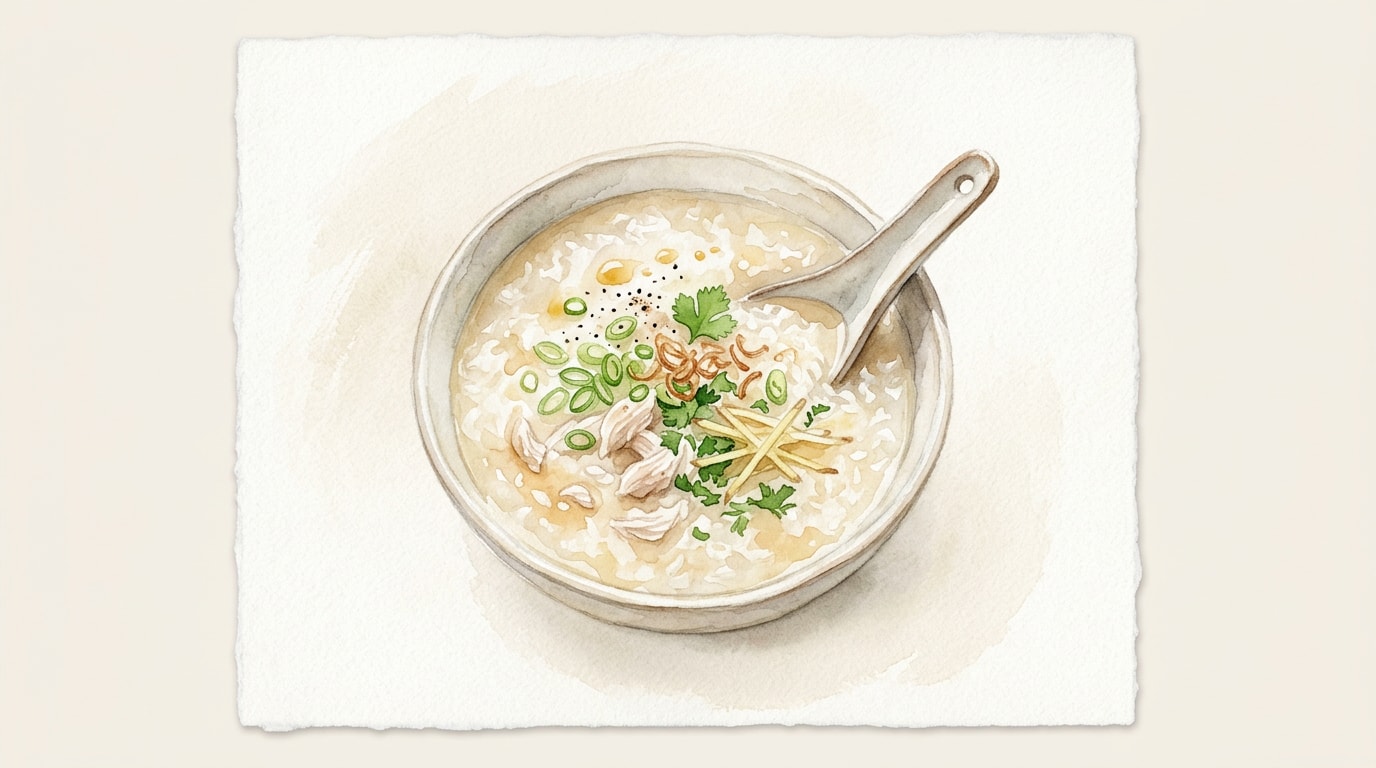
Ladle the hot congee into warm bowls. Drizzle each portion with a few drops of toasted sesame oil, then generously top with the remaining fresh ginger, sliced scallions, chopped cilantro, and a handful of crispy fried shallots.
Chef's Notes
- To cut the cooking time in half, you can wash your rice, drain it, and freeze it overnight in a ziplock bag. The freezing process micro-fractures the cellular structure of the rice grains, allowing them to break down and bloom much faster when introduced to boiling broth.
- For the most authentic flavor and gelatinous mouthfeel, use a high-quality homemade chicken bone broth. Commercial boxed broths lack natural gelatin, which contributes heavily to the luxurious texture of a great congee.
- Do not skip the whisking step at the end. While stirring with a wooden spoon prevents burning, vigorously whisking actually emulsifies the shattered rice starches with the water and fat, transforming a watery rice soup into a homogenous, silky porridge.
- The ratio of liquid to rice determines the thickness. This recipe uses roughly a 13-to-1 ratio for a medium-thick congee. For a thinner, soupier style typical of certain regional Chinese variations, increase the water by an additional 250ml.
Storage
Refrigerator: 5 days — Store in an airtight container. The congee will thicken significantly as it cools.
Freezer: 3 months — Freeze in individual portions for easy defrosting.
Reheating: Add a splash of water or chicken broth and reheat gently on the stove over low heat, or in the microwave, stirring frequently until simmering.