Equipment
Ingredients
Egg Base
- 3 large eggs, beaten
- 375 ml dashi stock, room temperature or cool
- 5 ml soy sauce, usukuchi (light color) preferred
- 5 ml mirin
- 2 g salt
Fillings
- 60 g chicken thigh, cut into 1cm cubes
- 4 shrimp, peeled and deveined
- 2 shiitake mushrooms, sliced thin
- 4 kamaboko (fish cake), sliced
- mitsuba (japanese parsley)
Nutrition (per serving)
Method
Prepare the steamer by filling a pot with 2-3cm of water and bringing it to a boil. Once boiling, reduce heat to low to maintain a gentle simmer. Wrap the pot lid with a kitchen towel (tie the ends on top) to prevent condensation from dripping onto the custard.
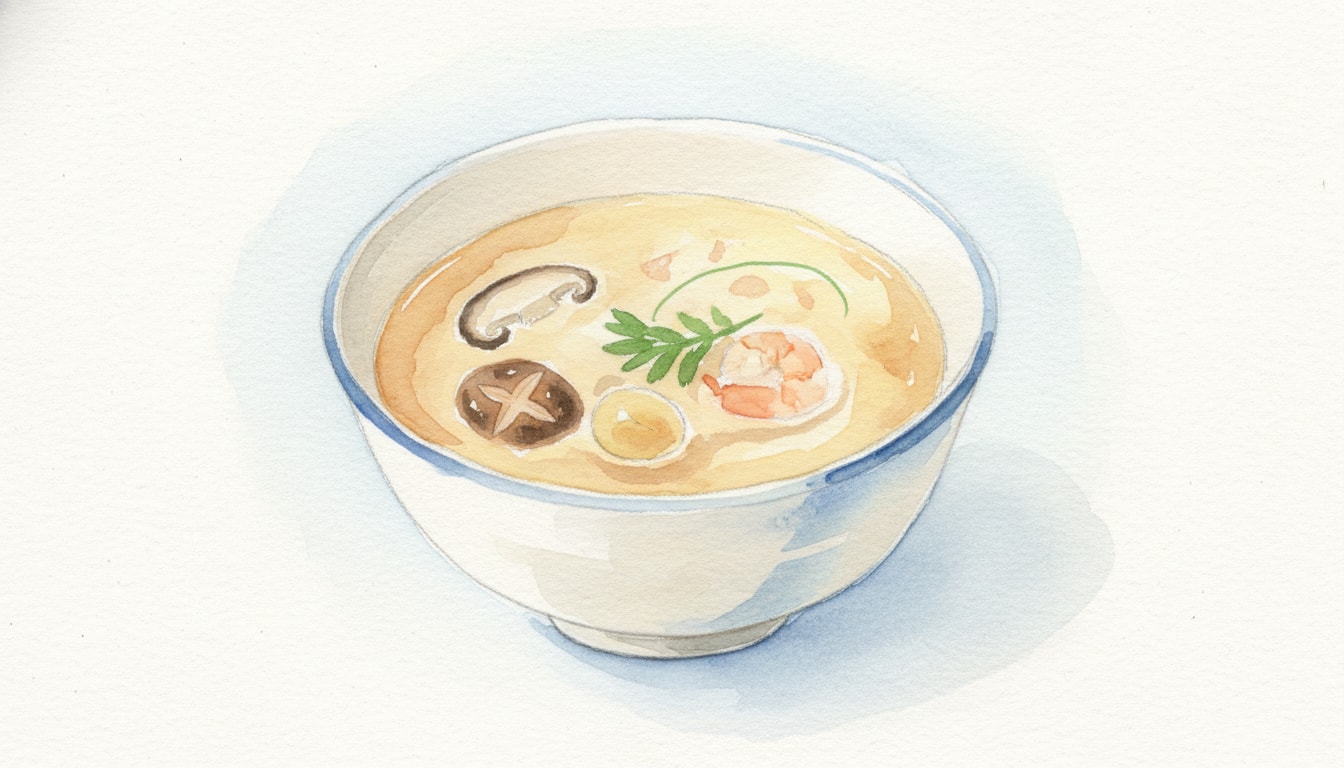
Season the small chicken pieces with a pinch of salt and a drop of soy sauce. Place one piece of chicken, one shrimp, sliced mushrooms, and fish cake into the bottom of each of the 4 heat-proof cups.
In a mixing bowl, gently whisk the eggs to break up the yolks without creating excess foam. Add the dashi stock, soy sauce, mirin, and salt. Mix gently to combine.
Pour the egg mixture through a fine mesh strainer into a spouted measuring cup or bowl. This step is critical to remove chalaza and air bubbles for a silky texture.
Gently pour the strained egg mixture into the prepared cups over the fillings, filling them about 3/4 full. If surface bubbles appear, pop them with a torch or the tip of a spoon.
Place cups in the steamer. Cover with the towel-wrapped lid. Steam on LOW heat for 12-15 minutes. The water should be gently simmering, not violently boiling. Ensure chicken reaches an internal temperature of 74°C/165°F and the custard is set.
Carefully remove the cups from the steamer. Garnish with fresh mitsuba or parsley. Serve immediately while hot.
Chef's Notes
- The 'golden ratio' for chawanmushi is typically 1 part egg to 2.5 or 3 parts dashi stock by weight. Weigh your eggs (shell-off) to calculate the perfect dashi amount.
- Wrapping the lid in a cloth is non-negotiable; water droplets falling on the custard will create a pitted, cratered surface.
- If you don't have dashi, a high-quality chicken broth can work, though it changes the profile from Japanese traditional to a Chinese-style steamed egg.
- For an even smoother finish, cover individual cups with foil before placing the main lid on the pot.
Storage
Refrigerator: 2 days — Best eaten fresh, but can be refrigerated and eaten cold or gently reheated.
Reheating: Steam gently on low heat for 5 minutes until warm.