Equipment
Ingredients
Congee Base
- 150 g jasmine rice, rinsed and drained
- 1500 ml chicken stock or water, unsalted
- 10 ml peanut oil
- 3 g salt, fine
Pork and Marinade
- 100 g lean pork loin, cut into thin matchsticks or slices
- 10 ml light soy sauce
- 5 g cornstarch
- 1 g white pepper, ground
Aromatics and Additions
- 2 century eggs, peeled and diced
- 15 g fresh ginger, peeled and finely julienned
- 20 g spring onions, finely sliced, white and green parts separated
Finishing
- 10 ml toasted sesame oil
- g salt
- g white pepper
Nutrition (per serving)
Method
Place the rinsed and drained jasmine rice in a bowl. Add the peanut oil and 3g of salt, mixing thoroughly until every grain is coated. Let this mixture rest for at least 15 minutes. This step breaks down the rice structure for a silkier texture.
In a separate small bowl, combine the thinly sliced pork loin with the light soy sauce, cornstarch, and 1g of white pepper. Stir well to coat the pork completely and set aside to marinate.
In a large heavy-bottomed pot, bring the chicken stock or water to a rolling boil at 100°C/212°F. Add the marinated rice along with the white parts of the spring onions and half of the julienned ginger.
Once the liquid returns to a boil, reduce the heat to low. Maintain a gentle simmer for 45 to 60 minutes. Leave the pot partially covered and stir every 10 minutes to prevent the rice from sticking to the bottom, until the grains have broken down into a creamy porridge.
Turn the heat up slightly to a medium simmer. Stir in the marinated pork, separating the pieces with a wooden spoon. Cook for 2 to 3 minutes until the pork is opaque and cooked through, reaching an internal temperature of 74°C/165°F.
Gently fold in the diced century eggs and cook for 1 more minute just to warm them through. Remove the pot from the heat.
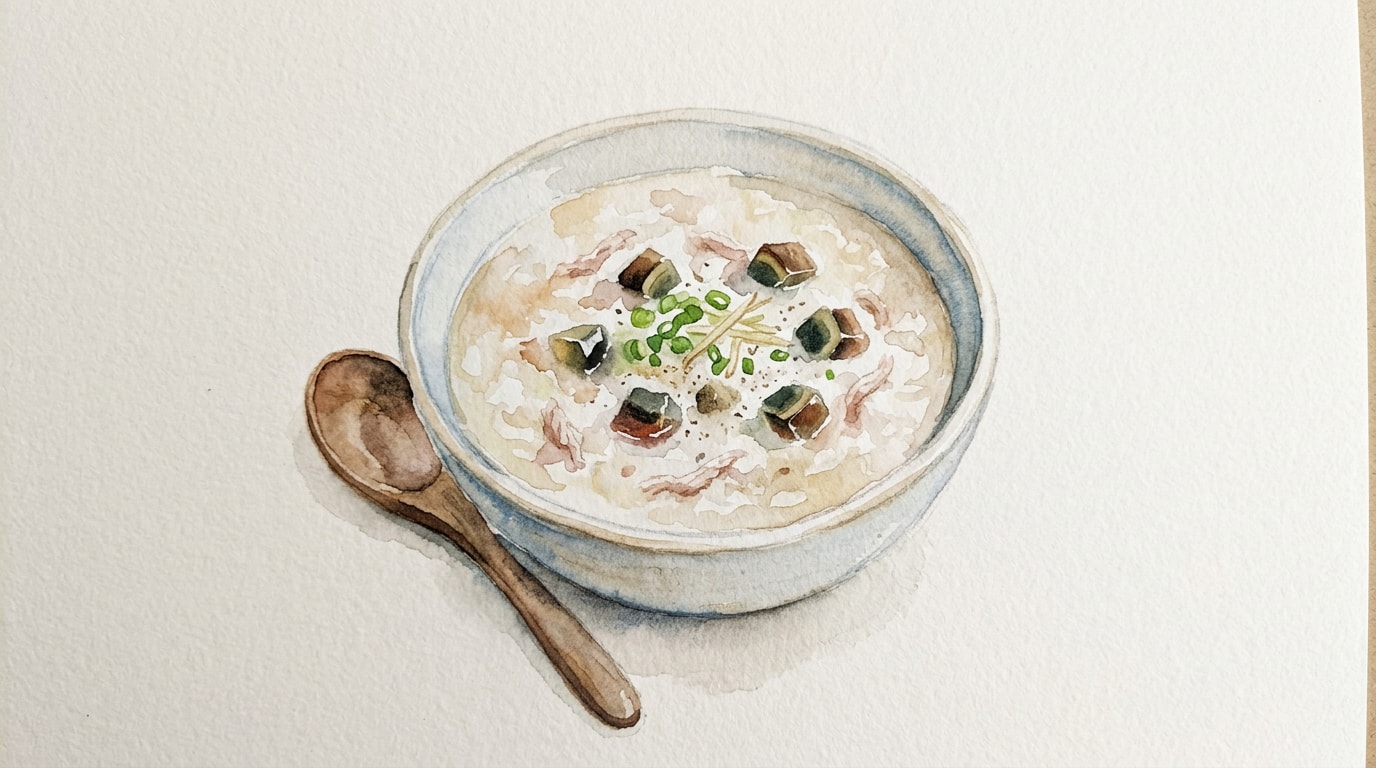
Taste the congee and season with additional salt and white pepper as needed. Ladle into individual bowls, and garnish with the remaining julienned ginger, the green parts of the spring onions, and a drizzle of toasted sesame oil.
Chef's Notes
- For an even faster cooking time, wash and freeze your rice overnight. The expanding ice crystals break the cellular structure of the grain, allowing it to cook into a silky congee in half the time.
- Century eggs have a distinct alkaline flavor due to the curing process. If the yolk is too runny for your preference, you can boil the eggs in their shells for 5 minutes before peeling and dicing.
- Macerating the raw rice with oil and salt is a classic Cantonese technique. The oil coats the grains and helps them shatter gracefully into the water rather than turning into clumpy mush.
- Always use white pepper rather than black pepper for traditional Chinese congee; it provides an earthy, floral heat that pairs perfectly with the sharpness of fresh ginger.
Storage
Refrigerator: 3 days — Store in an airtight container. The congee will thicken significantly as it cools.
Freezer: 1 month — Freeze in individual portions. The texture of the century egg may become slightly rubbery after freezing.
Reheating: Reheat gently in a pot over medium-low heat, adding 50-100ml of water or stock per serving while stirring to loosen the consistency.