Equipment
Ingredients
Cocoa Meringue Shell
- 4 egg whites, room temperature
- 220 g caster sugar
- 15 g dutch-processed cocoa powder, sifted
- 5 g cornstarch
- 5 ml white vinegar
- 20 g dark chocolate, finely grated
Bittersweet Chocolate Mousse
- 150 g bittersweet chocolate, chopped
- 3 egg yolks
- 3 egg whites
- 30 g caster sugar
- 150 ml heavy cream, cold
- 1 g salt
Nutrition (per serving)
Method
Preheat your oven to 150°C (300°F). Line a baking sheet with parchment paper and draw a 20cm (8-inch) circle on the underside of the paper to use as a guide.
In a spotlessly clean stand mixer bowl, whip the 4 egg whites on medium speed until soft peaks form.
Gradually add the 220g of caster sugar to the egg whites, one tablespoon at a time, whipping continuously until the meringue is thick, glossy, and the sugar is completely dissolved.
Sift the cocoa powder and cornstarch over the meringue. Add the white vinegar and grated dark chocolate. Gently fold together with a silicone spatula until just combined.
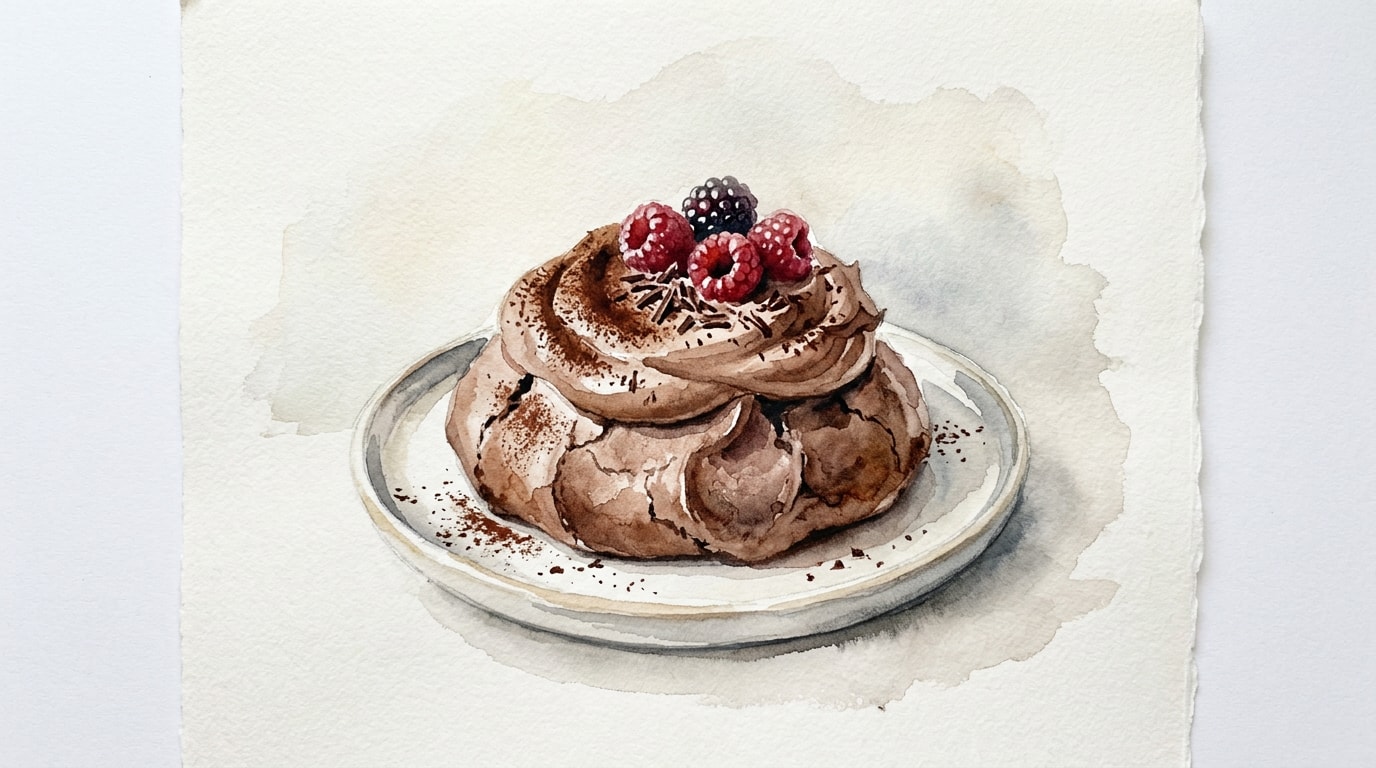
Spoon the meringue onto the parchment paper inside the traced circle. Use the spatula to create a nest shape with slightly higher edges and a dip in the center to hold the mousse later.
Place the baking sheet in the oven and immediately reduce the temperature to 120°C (250°F). Bake for 75 minutes without opening the oven door.
Turn the oven off completely. Leave the pavlova inside to cool completely with the door slightly ajar. This prevents the meringue from cracking due to sudden temperature changes.
While the pavlova cools, melt the bittersweet chocolate in a double boiler over simmering water. Once smooth, remove from heat and let it cool slightly for 5 minutes.
Vigorously whisk the egg yolks into the slightly cooled melted chocolate until fully incorporated. The mixture will thicken slightly.
In a separate clean bowl, whip the 3 egg whites with the salt until frothy. Gradually add the 30g of caster sugar and whip until medium peaks form.
In another bowl, whip the heavy cream until soft peaks form. Do not overbeat, or the final mousse will be grainy.
Gently fold one-third of the egg whites into the chocolate mixture to lighten it. Then carefully fold in the remaining egg whites, followed by the whipped cream, until no streaks remain.
Cover the mousse and chill in the refrigerator for at least 2 hours to set.
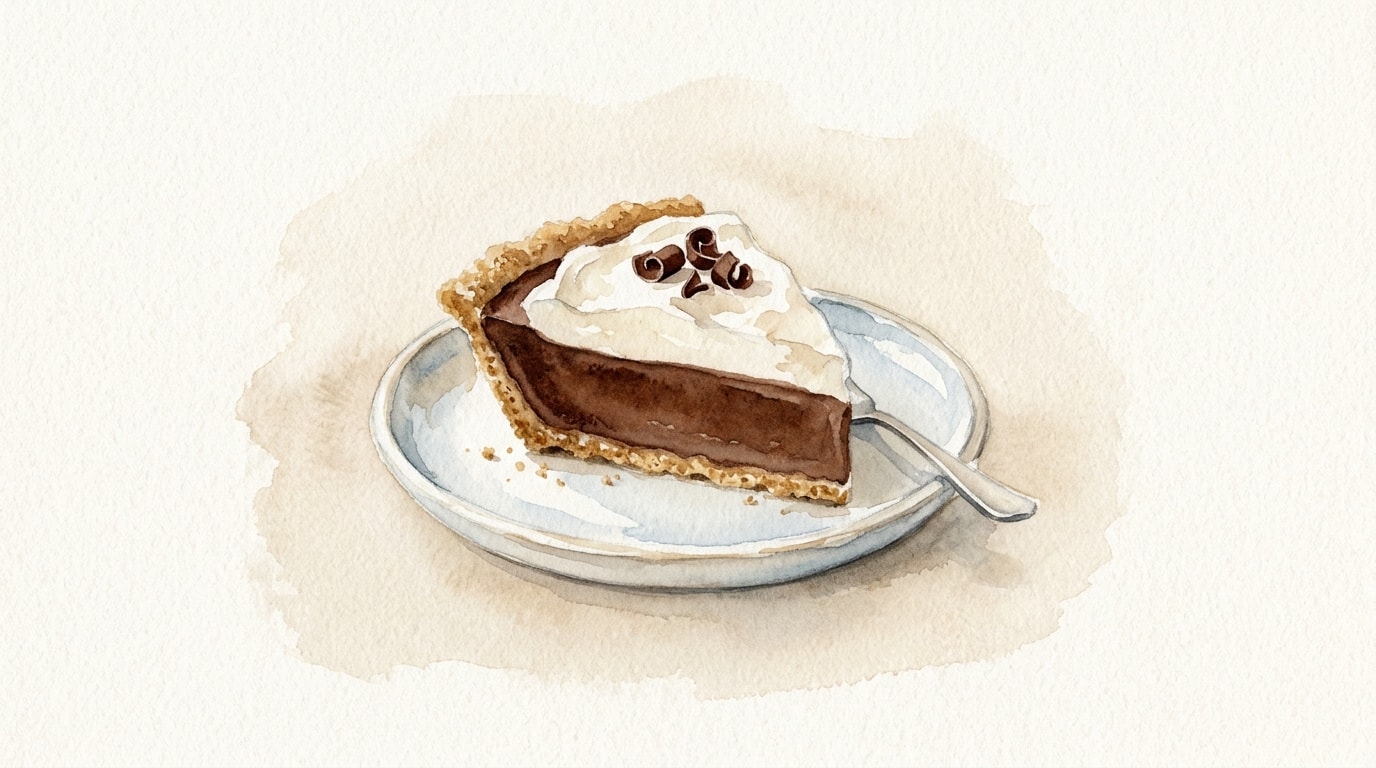
Just before serving, carefully transfer the cooled cocoa pavlova shell to a serving platter. Generously spoon or pipe the chilled bittersweet chocolate mousse into the central dip of the meringue.
Chef's Notes
- Acid is essential in a pavlova to stabilize the egg whites and create the distinctive marshmallow interior. Cornstarch assists in absorbing excess moisture, securing that iconic chewy texture.
- For the ultimate textural contrast, grate a small amount of dark chocolate directly into the meringue batter. It leaves tiny, intense pockets of melted chocolate throughout the baked shell.
- Raw egg safety is paramount. If you are serving vulnerable groups, you must use pasteurized in-shell eggs or cartons of liquid pasteurized egg whites and yolks for the mousse.
- Caster sugar dissolves much faster than granulated sugar. If you only have granulated, pulse it in a food processor a few times to create a finer texture.
- Always use a glass or metal bowl for whipping egg whites. Plastic bowls hold onto invisible layers of fat, which will completely prevent the whites from aerating.
Storage
Refrigerator: 2 days — Store the mousse separately if possible. Assembled pavlova will absorb moisture and lose crispness after 12 hours.