Equipment
Ingredients
Chilies
- 80 g dried mild chilies
- 20 g dried spicy chilies
Spices & Aromatics
- 5 g coriander seeds, whole
- 5 g caraway seeds, whole
- 5 g cumin seeds, whole
- 20 g garlic, peeled
- 5 g kosher salt
Liquids
- 80 ml extra virgin olive oil
- 20 ml fresh lemon juice
Nutrition (per serving)
Method
Wearing disposable gloves, remove the stems from all the dried chilies. Slice them open and shake out the seeds to reduce excess bitterness and unmanageable heat.
Place the stemmed and seeded chilies into a heatproof bowl. Pour boiling water (100 degrees Celsius / 212 degrees Fahrenheit) over them until completely submerged. Weigh them down with a small plate if they float. Let sit until fully pliable and softened.
While the chilies soak, place a dry skillet over medium heat. Add the coriander, caraway, and cumin seeds. Toast them, stirring continuously, until they release their natural oils and become aromatic.
Transfer the toasted spices to a spice grinder or mortar and pestle. Grind them into a fine powder.
Drain the softened chilies thoroughly in a colander. Discard the soaking liquid, as it can be quite bitter.
In a food processor, combine the drained chilies, ground spice mixture, garlic cloves, salt, and lemon juice. Pulse repeatedly until a coarse paste begins to form.
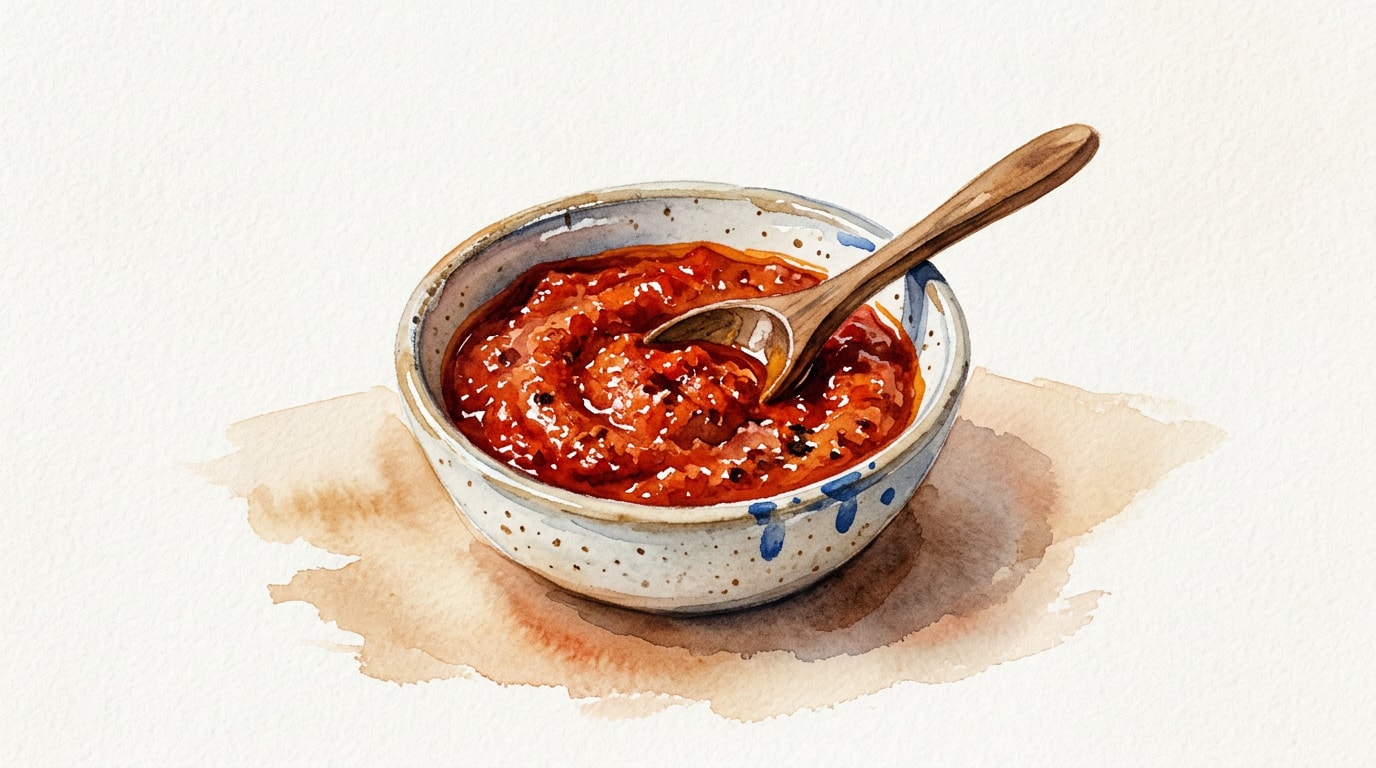
With the food processor running on low, slowly drizzle in 60ml of the extra virgin olive oil. Process until the mixture reaches a smooth but slightly textured consistency. Transfer to a jar and pour the remaining 20ml of olive oil over the top to seal.
Chef's Notes
- Toasting whole spices is non-negotiable for authentic harissa. Pre-ground spices lack the volatile essential oils that give this paste its signature aromatic depth.
- The caraway seed is the defining flavor profile that separates harissa from standard chili pastes. Do not substitute or omit it.
- When jarring the harissa, always ensure the inside rim of the jar is wiped completely clean before adding the oil layer. Any exposed paste above the oil line will act as a bridge for mold.
- For an umami boost, swap the lemon juice for half a chopped preserved lemon peel. This adds a traditional, fermented citrus note distinct to Moroccan cuisine.
Storage
Refrigerator: 3 weeks — Keep the surface covered with a thin layer of olive oil to prevent oxidation and mold.
Freezer: 3 months — Freeze in an ice cube tray, then transfer the frozen cubes to an airtight bag for easy portioning.