Equipment
Ingredients
Sandwich Components
- 2 japanese milk bread, thick slices
- 2 eggs, room temperature
- 1 cooked ham, thin slice
- 15 g kewpie mayonnaise
- 10 g unsalted butter
- 1 g salt
- 1 g white pepper
Nutrition (per serving)
Method
Crack the eggs into a small mixing bowl. Add the salt and white pepper, then beat vigorously until completely smooth.
Spread the mayonnaise evenly over one side of each slice of the milk bread, ensuring coverage reaches from edge to edge.
Melt the butter in a non-stick skillet over medium heat, approximately 160°C/320°F. Pour in the beaten eggs, immediately tilting and swirling the pan to create a thin, even circle.
While the center of the egg is still slightly wet, use a spatula to fold the four edges of the omelet inward toward the center, forming a square roughly the exact size of your bread slice.
Push the folded omelet to one side of the skillet. Place the ham slice in the empty space and cook briefly until just warmed through, about 30 seconds. Ensure all protein reaches an internal safety temperature of 74°C/165°F.
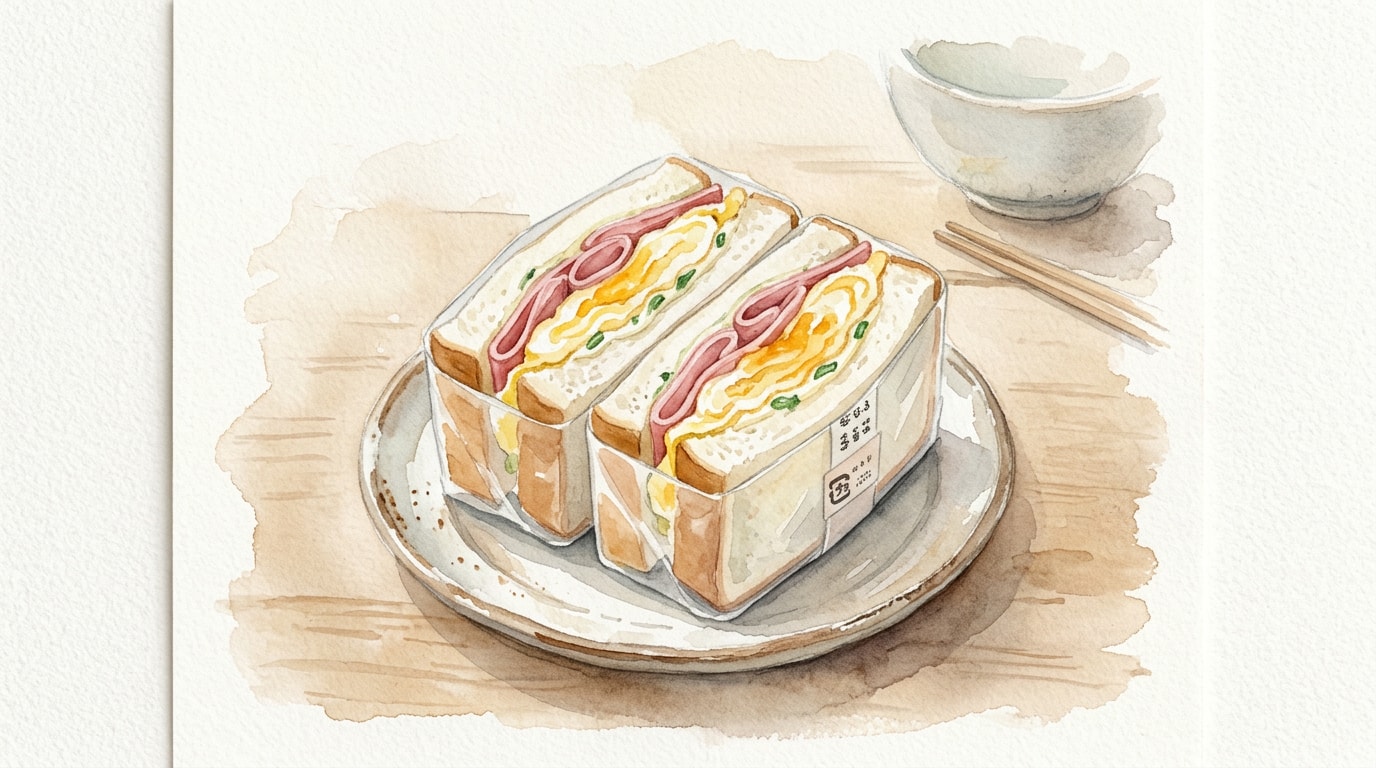
Place the hot folded omelet onto the mayonnaise-coated side of one piece of bread. Top with the warmed ham, then close the sandwich with the remaining slice of bread, mayonnaise side down.
Gently press down on the top of the sandwich to adhere the layers. Slice in half diagonally to reveal the cross-section, and serve immediately.
Chef's Notes
- Using Japanese milk bread (shokupan) is critical for achieving the authentic convenience store texture. Its high moisture content and pillowy soft crumb contrast perfectly with the warm, savory filling.
- Kewpie mayonnaise is highly recommended. It contains primarily egg yolks rather than whole eggs, and incorporates distinctive vinegars and seasonings, giving it a much richer, more savory umami profile than standard western mayonnaise.
- For the fluffiest omelet result, do not overcook the thin layer before folding. The residual heat will finish cooking the inside layers of the folded square.
- White pepper provides a distinct, earthy background heat common in East Asian flavor profiles. Using it instead of black pepper maintains the traditional pristine visual appeal and authentic taste of the dish.