Equipment
Glass jar with tight lid
or Small mixing bowl and wire whisk
Measuring spoons
Ingredients
9 servings
Vinaigrette Base
- 100 ml extra virgin olive oil
- 35 ml white wine vinegar
- 5 g dijon mustard, smooth
- 2 g fine sea salt
- 1 g black pepper, freshly ground
Nutrition (per serving)
99
Calories
0g
Protein
0g
Carbs
11g
Fat
0g
Fiber
0g
Sugar
93mg
Sodium
Method
01
Add the white wine vinegar, smooth Dijon mustard, fine sea salt, and freshly ground black pepper to the glass jar.
2m
02
Pour the extra virgin olive oil into the jar over the vinegar mixture.
1m
03
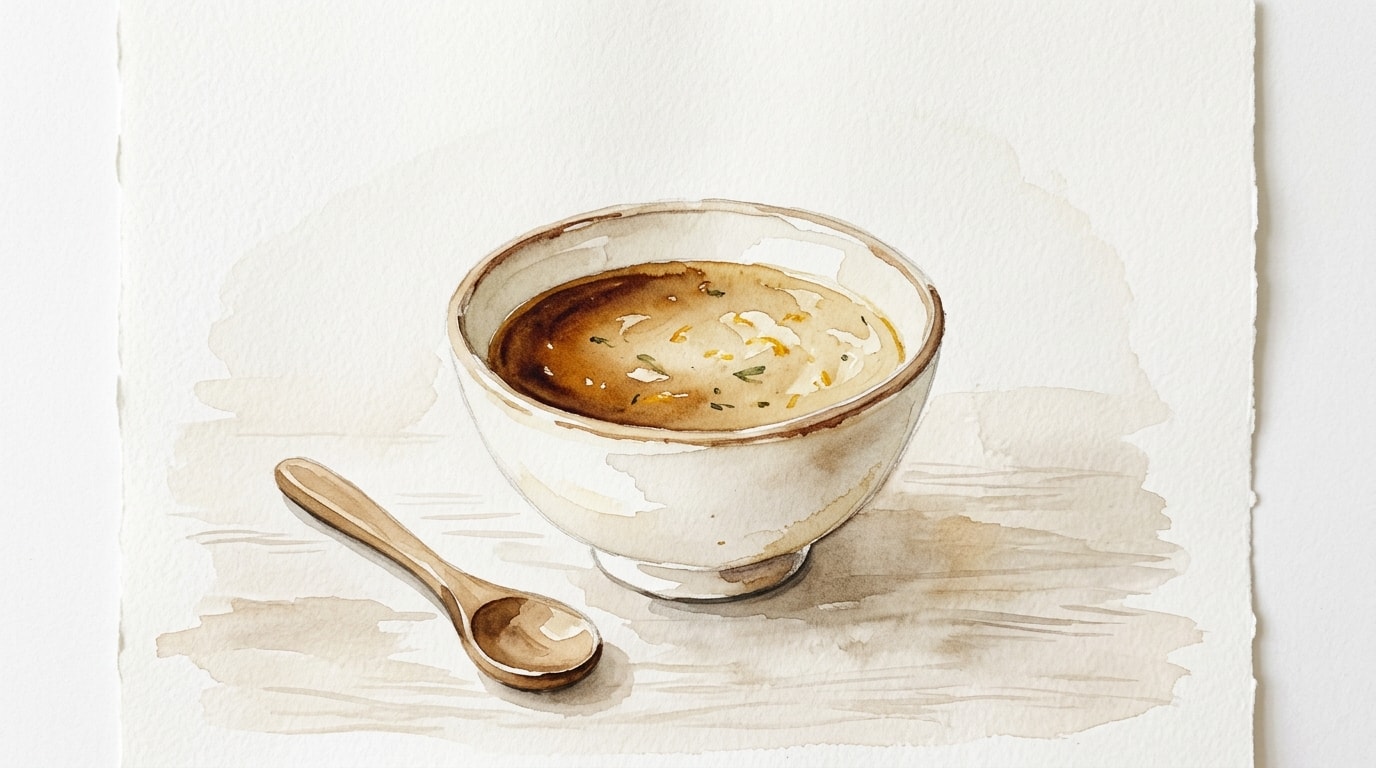
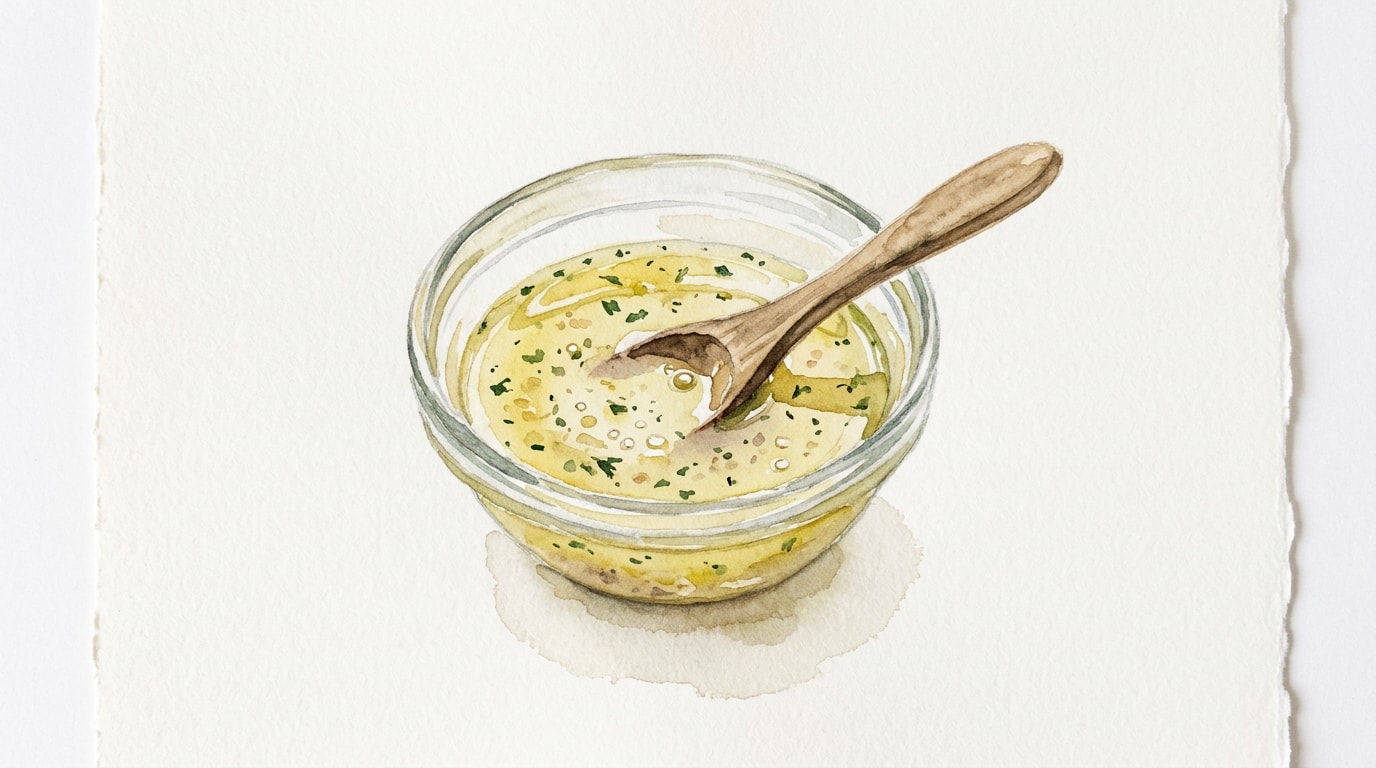
Seal the jar tightly with its lid. Shake vigorously for 15 to 20 seconds until the mixture is fully opaque, slightly thickened, and perfectly unified.
1mLook for: Opaque, cloudy, and homogeneous with no separated layers of oil and vinegarFeel: Slightly thicker and more viscous than the pure oil
Chef's Notes
- The golden ratio for a classic vinaigrette is traditionally 3 parts oil to 1 part vinegar. This recipe uses slightly less oil to allow the bright, acidic punch of the vinegar to shine through.
- Dijon mustard is essential not just for its sharp, complex flavor, but because it contains natural mucilage which acts as a powerful surfactant, stabilizing the emulsion so the oil and vinegar do not immediately separate.
- Since this dressing is raw and unheated, the quality of your extra virgin olive oil is paramount. Use an oil with grassy, peppery notes that you would happily eat with just a piece of bread.
- To build on this base recipe, consider macerating finely minced shallots or garlic in the vinegar for 10 minutes before adding the oil. The acid tempers the harsh allium bite, leaving only sweet, savory complexity.
Storage
Refrigerator: 2 weeks — Olive oil will solidify in the fridge. Let it sit at room temperature for 15 minutes and shake vigorously before use.